
Reviewed · PUB CRAWLS & BAR NIGHTS
Citybeering – Walk with funny and interesting stories while having local beers
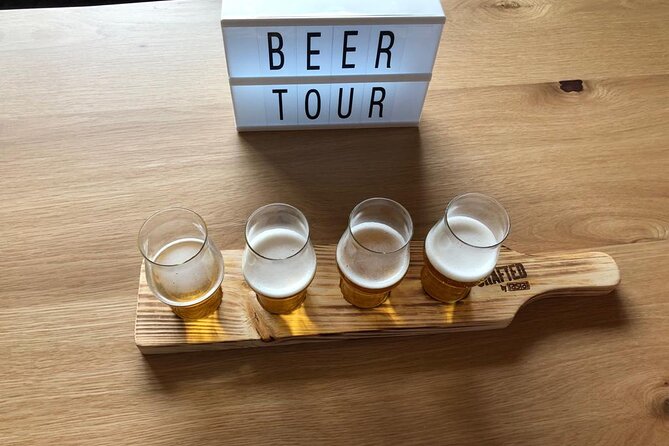
Hamburg changes flavor fast, like a good pint. This Citybeering walk pairs funny local stories with stops that explain how this city grew from Hanseatic power to party-and-port life, all while you’re tasting local beers along the route. It’s an easy, low-pressure way to get your bearings without turning your day into a museum sprint.
I especially like the way the itinerary is built around landmarks you’ll actually want to look at, starting at Hamburg Town Hall and rolling through waterfront views, historic churches, and the famous harbor steps. And I like the human touch from the guide: Bela has been known to adjust the pace when someone has a tough schedule, like a triathlon, so the experience stays fun instead of rushed. One consideration: the tour includes drinking, so if you start early, you may want to plan for a slower morning pace.
In This Review
- Key highlights worth planning for
- How Citybeering turns a walk into a story you can remember
- Timing and route reality: a 2–3 hour beer walk that still feels doable
- Starting at Hamburg Town Hall: where the city’s civic power shows
- Rathausmarkt: the square that looks outward to the water
- Jungfernstieg: people-watching built into the street
- Deichstraße and the preserved old-town feel
- St. Michael’s Church (Michel): the Hanseatic shipping symbol
- Through the Portuguese Quarter feel: small business and harbor pubs
- St. Pauli Landungsbrücken: harbor steps with real port energy
- The Alter Elbtunnel: engineering you can feel under your feet
- St. Pauli: adult entertainment district and nightlife edge
- Park Fiction: ending with art that has a point
- Beer + humor: how the guide style changes the value
- Price and value: is $46.13 a fair deal?
- Who this tour suits best (and who should skip it)
- Should you book Citybeering in Hamburg?
- FAQ
- How long is the Citybeering walk in Hamburg?
- Is the tour offered in English?
- Where does the tour start and end?
- Is a mobile ticket provided?
- Are admissions required for the stops?
- How large are the groups?
Key highlights worth planning for
- English-first guidance that keeps the storytelling clear while you walk
- A compact route (2–3 hours) with frequent, meaningful photo stops
- Harbor sights plus real city texture, not just big-ticket buildings
- The old-meets-weird mix from St. Michaelis (Michel) to St. Pauli
- A finale at Park Fiction, where Hamburg’s art-and-social side shows up
- Small group size (max 15), so questions don’t get lost
How Citybeering turns a walk into a story you can remember
Citybeering is basically a guided stroll with a purpose: you see key Hamburg places and you get the jokes, quirks, and context that make them click. The trick is that it’s not a formal lecture. The guide tells stories while you move, so you’re constantly switching between looking at architecture, watching the streets, and refocusing on the next point.
This format works well when you want history, but not the heavy kind. Hamburg is one of those cities where the buildings matter, but the details make it. A tour like this gives you those details in small chunks, and you’re free to linger where something catches your eye.
Line up another night out on the Kiez


Timing and route reality: a 2–3 hour beer walk that still feels doable
The duration is about 2–3 hours, and that matters because the stops are spaced so you can keep up. You’re also not committing your whole day. That’s a big deal in Hamburg, where you might want to do a harbor cruise, shop around the center, or just take a long evening stroll.
It’s also listed as having a maximum of 15 travelers, which usually means you’ll get a more natural group vibe. With a smaller group, the guide can actually steer the pace and respond to questions without feeling like they’re herding cats.
One practical thought: because the experience includes local beers, I’d treat it like part of your day’s plan, not something to squeeze in right before a strict dinner reservation. If you’re easily affected by alcohol, go slow, drink water between stops, and keep your photos coming.
Starting at Hamburg Town Hall: where the city’s civic power shows
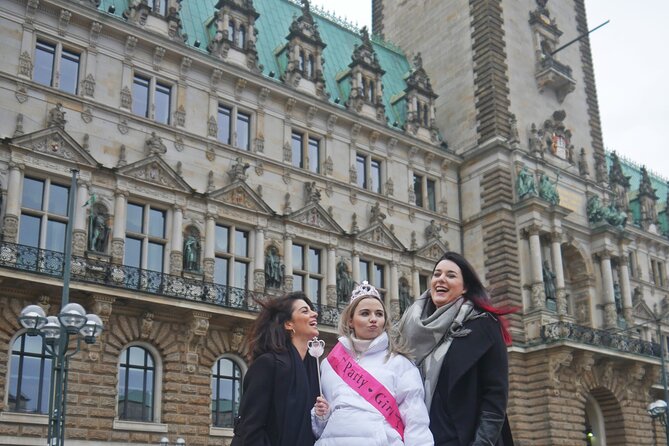
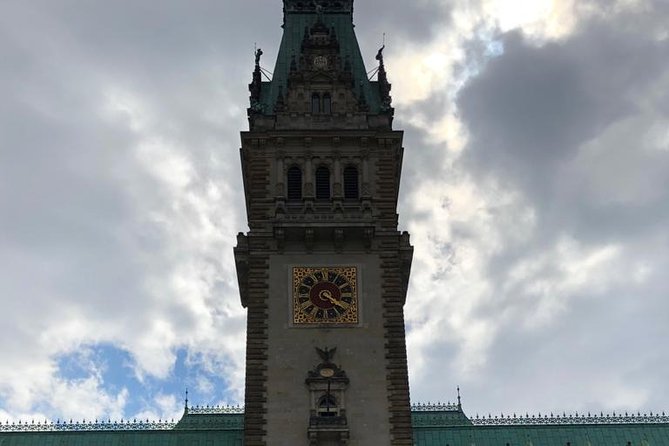
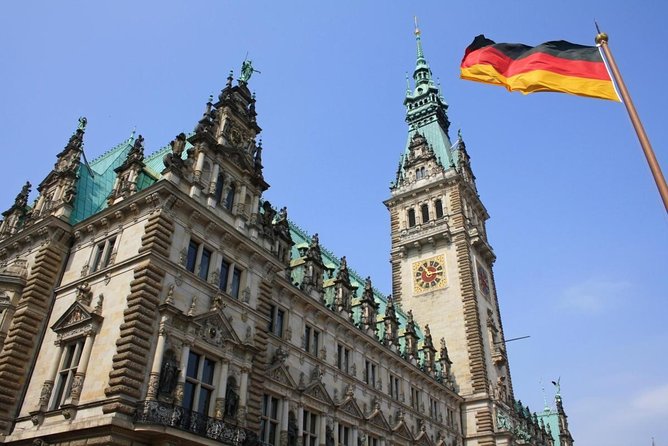
Your walk starts at Hamburg Town Hall (Rathaus) near Rathausmarkt. This building isn’t just pretty wallpaper. It’s the seat of Hamburg citizenship and the Senate of the Free and Hanseatic City of Hamburg, and the scale is meant to communicate authority.
What I like here is how quickly the tour gives you a mental map of the city’s identity. You learn that the Rathaus was built from 1886 to 1897 in a Neo-Renaissance style, which helps you understand why the architecture feels so formal even in modern Hamburg.
The stop is short, but that’s smart. You get the main idea and then you move on before you lose momentum.
Rathausmarkt: the square that looks outward to the water
From the Town Hall, you head to Rathausmarkt, where the key detail is the design inspiration. The market layout is modeled after St. Mark’s Square in Venice, including the idea of opening to the water. In other words: Hamburg borrows a famous European visual language, then adapts it to its own Alster setting.
If you pay attention here, you’ll understand something useful about the city: Hamburg likes order, geometry, and strong ensembles. The square and the surrounding buildings were designed as part of a bigger plan back in 1842, with elements meant to relate to the Little Alster and the street and bridge network around it.
Jungfernstieg: people-watching built into the street
Next comes Jungfernstieg, along the southern bank of the Inner Alster. This is described as a place where the key activity is seeing and being seen. That line hits because Hamburg downtown often feels calm on the surface, but people-watching reveals a lot.
What you get from this stop is a quick cultural cue. Jungfernstieg isn’t just a place to pass through. It’s a social corridor, and the tour uses that to shift you from “look at architecture” to “watch how the city lives.”
Cover more of Hamburg on foot



Deichstraße and the preserved old-town feel
At Deichstraße, you get something that’s surprisingly rare in big cities: an old Hamburg town-house ensemble that’s still preserved. The street has historical value, and it’s also meant to be tourist-relevant, which usually means it’s photogenic and easy to appreciate on foot.
There’s also mention of the Cremon storage group preserved on the other side of the Nikolaifleet. Even if you don’t know what you’re looking at at first glance, this kind of stop helps you connect the dots between merchant life and the built environment.
The only drawback here is also part of why it’s effective: the stop is brief. If you love digging deeply into old town architecture, you might want to come back later on your own and slow down.
St. Michael’s Church (Michel): the Hanseatic shipping symbol
Now you hit St. Michael’s Church, known by many as Michel. It’s the main evangelical church of St. Michaelis and the most famous church building in Hamburg. It’s also considered a key baroque church in northern Germany.
The tour points out why it became such a city symbol: its architecture is visible from afar, and it ties to Hamburg’s shipping identity on the Elbe. That’s the kind of context I actually value on a trip. It’s not just “pretty building,” it’s “this is what mattered to people here.”
You’ll spend just a few minutes, but it’s enough time to orient yourself. And if you’re the type who likes church architecture, this is one of the strongest stops on the whole walk.
Through the Portuguese Quarter feel: small business and harbor pubs
Between Michel and the harbor area, the tour route passes through a quarter known for small businesses and gastronomy. The story you get here is that harbor pubs helped give the area a nickname like The Coast back in the 1950s and 1960s. Later, the number of cafés and restaurants grew a lot, with around 40 establishments mentioned by 2011.
I like this stop because it’s not just postcard Hamburg. It’s the daily-life Hamburg layer: where people grabbed a drink, where visitors and locals mixed, and how the city’s food scene expanded over time.
If you’re hoping for quiet, church-and-palace calm, this is where the mood shifts. That’s also why it’s fun. The walk keeps moving with the city’s actual energy.
St. Pauli Landungsbrücken: harbor steps with real port energy
Next up: St. Pauli Landungsbrücken, the big landing stage for passenger ships on the northern edge of Hamburg’s port. This is the heart of that classic harbor view—jetties along the Elbe between Niederhafen and St. Pauli Fischmarkt.
What makes this stop valuable on a beer-and-stories tour is that you get to switch scale. You go from formal downtown spaces to working-waterfront realism. The guide uses the location to reinforce Hamburg’s connection to shipping and movement, not just civic pride.
The stop is long enough to look around and take in the ships, but not so long you stall out. That balance is part of why the whole thing stays light.
The Alter Elbtunnel: engineering you can feel under your feet
Then you reach the Elbtunnel, specifically the older one that opened in 1911. It’s about 426.5 meters long and runs under the Norderelbe, connecting the St. Pauli harbor edge to the island of Steinwerder.
This is one of the most “wait, that’s cool” moments in the route. It’s described as a technical sensation when it opened, and now it’s a listed building. It’s also used by pedestrians and cyclists as a public route, with limited vehicle use.
Even if you don’t care about engineering, this is a great breather stop. You’re physically moving through a landmark, and it gives you that Hamilton-on-water feeling Hamburg is famous for.
St. Pauli: adult entertainment district and nightlife edge
After the tunnel, the walk reaches St. Pauli, famous worldwide for red-light district energy. The tour frames the area as one packed with bars, pubs, clubs, strip clubs, brothels, and similar entertainment.
I appreciate that the guide doesn’t pretend this is a sleepy neighborhood. It’s not. It’s a place where the city’s nightlife and tourist curiosity overlap, and you’ll feel that instantly in the street vibe.
One consideration: if you’re sensitive to adult themes or prefer quiet sightseeing, you might feel uncomfortable here. The time is short, so you can manage it. Just know this part of the walk leans into what the district is known for.
Park Fiction: ending with art that has a point
Your tour ends at Park Fiction in Schauermanns Park near Pinnasberg. Park Fiction is described as an artistic and socio-political project that’s been going since the mid-1990s.
What I like about ending here is the contrast. You finish after the civic monuments, the harbor infrastructure, and the nightlife zone, and you land in an art space with a message. It turns the walk from a sightseeing loop into a more complete Hamburg snapshot: tradition, commerce, and social experimentation all in one day.
If you like street art or projects tied to community change, this final stop is a satisfying landing.
Beer + humor: how the guide style changes the value
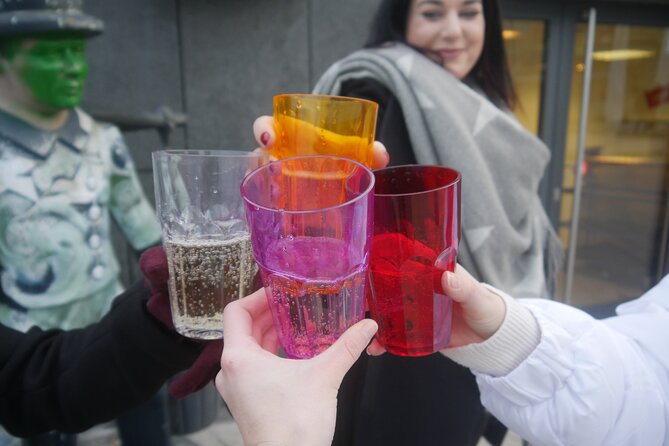
The heart of Citybeering is the combination of local beer and humor. The provided guide example, Bela, shows why this format can work: he adjusts pacing for real-life needs like a triathlon. That’s exactly what you want from a walking tour. The stories are the spice, but the guide’s flexibility keeps the meal from turning into a chore.
So when you book, you’re not just paying for beer and landmarks. You’re paying for someone to connect them in a way that’s easy to follow while you walk.
Price and value: is $46.13 a fair deal?
At $46.13 per person for about 2–3 hours, this is priced like a guided experience with a beverage element. For me, the value depends on what you want from your day.
If your goal is quick orientation in central Hamburg plus a few unforgettable stops like the Rathaus, St. Michael’s Church, the Landungsbrücken harbor area, and the Elbtunnel, then the price makes sense. You’re getting a route that would take longer to research, and you’re getting story context you’d never find in a basic photo hunt.
If you’re not a beer drinker, or you prefer long museum-style time, you might feel like you’re paying for a format you don’t care about. But for a first-time visitor who wants fun learning, this is a strong use of time.
Who this tour suits best (and who should skip it)
This experience is a good fit if you:
- want a walkable route that hits major Hamburg sights fast
- like storytelling more than facts-only sightseeing
- enjoy a relaxed beer stop as part of the tour flow
- want something in English with a small group size
I’d consider skipping if:
- you dislike drinking in public settings
- you’re worried about the atmosphere around St. Pauli
- you want a long, slow museum day rather than a compact 2–3 hour overview
Should you book Citybeering in Hamburg?
I think you should book if you want a practical, story-led way to see a lot of Hamburg without feeling locked into a heavy itinerary. The route hits the civic core, the Alster waterfront mood, the Michel landmark, the harbor reality, and the Elbtunnel engineering moment, then finishes with a meaningful art project at Park Fiction.
My advice: go with a calm pace, drink water between beers, and let the guide do the connecting. If you’re excited by the idea of humor plus local flavor, this tour is a good bet for a first or second day in town.
FAQ
How long is the Citybeering walk in Hamburg?
It runs for about 2 to 3 hours.
Is the tour offered in English?
Yes, it’s offered in English.
Where does the tour start and end?
It starts at Hamburg Townhall/Rathausmarkt 1, 20095 Hamburg, Germany, and ends at Park Fiction, Schauermanns Park, Pinnasberg 27, 20359 Hamburg, Germany.
Is a mobile ticket provided?
Yes, it’s listed as a mobile ticket.
Are admissions required for the stops?
The stops listed are marked as having admission ticket free.
How large are the groups?
The tour has a maximum group size of 15 travelers.
Hamburg on Foot
More Tour Reviews in Hamburg



More Pub Crawls & Bar Nights



Just In: The Newest Hamburg Reviews







Pub Crawls & Bar Nights, compared.
 ★ 4.7St. Pauli Highlights Guided Tour with Beer for 18+From $292,353 reviews
 ★ 4.8St. Pauli Nightlife Tour with Drag Queen in GermanFrom $41733 reviews
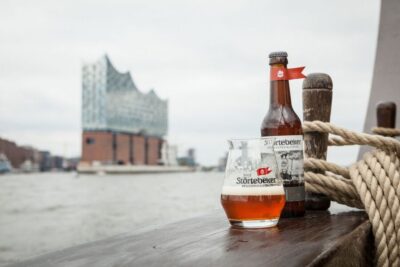 ★ 4.6Elphi Plaza Guided Tour with Störtebeker BeerFrom $34245 reviews
 ★ 4.4St Pauli – Reeperbahn PubCrawl – The Original Since 2008From $25214 reviews
 ★ 4.7St. Pauli Breweries Walking Tour with TastingsFrom $57205 reviews
 ★ 4.7Big Hamburg Pubcrawl – Shots, Games & VIP BundleFrom $23148 reviews
 ★ 4.9Pubcrawl & Nightlife Tour auf St.PauliFrom $20125 reviews
 ★ 4.7St. Pauli District and Beer TourFrom $4784 reviews
Browse the lists this tour appears in