
Reviewed · ST. PAULI KIEZTOURS
Short walk St. Pauli – the St. Pauli quickie
St. Pauli can feel like noise. This short tour turns that noise into a story you can follow. You get a tight 75-minute walk through Hamburg’s entertainment district, with hard facts about how the area developed and how it works today.
I especially like the guide-led mix of places that look like they belong to different worlds, yet sit side by side here. You’ll move from the Reeperbahn’s neon street life to culture at Schmidt Tivoli, then into the reality of Davidstraße and the famous Davidwache police station. One drawback to consider: the route is centered on nightlife and prostitution-related topics, so if you prefer a very squeaky-clean, family-only evening, this may not fit your vibe.
In This Review
- Key things to know before you go
- A 75-minute St. Pauli walk you can actually finish
- Price and value: what $20.82 buys you in Hamburg
- Time and route timing: starting at 8:00 pm
- Meeting point at Millerntorpl. 1, 20359 Hamburg
- Stop-by-stop: what you’ll learn in each part of St. Pauli
- Stop 1: Reeperbahn and the glittering mile beyond the headlines
- Stop 2: Schmidt Tivoli and St. Pauli’s theater culture
- Stop 3: Davidstraße and the one-side-of-the-road detail
- Stop 4: Polizeikommissariat 15 Davidwache in the middle of everything
- Stop 5: Grosse Freiheit 36, the Star Club, and Beatles lore
- Stop 6: Back to Reeperbahn for a final reality check
- Guides who are St. Pauli insiders (and why that matters)
- Who this tour is best for (and who should think twice)
- Practical tips to make the most of it
- Should you book the St. Pauli quickie?
- FAQ
- How long is the St. Pauli quickie tour?
- Where do I meet and where does the tour end?
- What stops and sights are included?
- Do I need a paper ticket?
- Are alcoholic beverages included?
- What is the maximum group size?
- Is free cancellation available?
Key things to know before you go
- Short and focused: about 1 hour 15 minutes, so you get a lot without a long commitment.
- Real neighborhood context: you’re not just seeing sights—you’re learning why they’re there.
- Culture + nightlife in one loop: Schmidt Tivoli sits right in the mix with the Reeperbahn.
- Davidstraße at night: the tour discusses street prostitution timing and the layout detail (on one side of the road).
- Davidwache police station: one of Germany’s most famous police stations, placed right in the action.
- Music history at Grosse Freiheit 36: you’ll hear the Beatles connection tied to the Star Club.
A 75-minute St. Pauli walk you can actually finish
This is the kind of tour that helps you get your bearings fast. St. Pauli is famous, but it’s also easy to misunderstand if you only look at the obvious signage. Here, the pace is deliberately quick: you stay out in the neighborhood, you move street to street, and you leave with a clearer picture of what’s “stage,” what’s local routine, and what’s historical.
Because the walk is short, it works on nights when you don’t want to spend half a day planning. You can slot it in before or after dinner, or even as your first real stop in Hamburg. And since it ends near Hans-Albers-Platz, you won’t feel trapped in the middle of the district.
More Kieztours through the heart of St. Pauli



Price and value: what $20.82 buys you in Hamburg
At about $20.82 per person for roughly 1 hour 15 minutes, the value comes from structure. You’re paying for a guide who understands how to explain the area clearly, not just point at it.
The tour is also positioned as “high content quality.” That matters in St. Pauli, because so many people talk about it in shortcuts—shock, jokes, or vague stereotypes. This format is meant to do better: you get an overview of the entertainment district, the pubs and theaters, and the way street life and institutions sit together in the same small geographic zone.
One practical point: alcoholic beverages aren’t included. So if you’re hoping this is a party with drinks, you’ll need to plan that separately. The upside is you’re not paying extra for alcohol you might not even want.
Time and route timing: starting at 8:00 pm
The tour starts at 8:00 pm. That timing is important, because the neighborhood’s “present-day” reality is part of what you’re learning. Street life isn’t the same at 5 pm as it is later in the evening, and the guide’s explanation is anchored to the nighttime rhythm of the district.
You’ll also notice the tour is built around brief stops—think quick walks between “chapters.” That makes it feel like reading scenes from a book, instead of standing in one spot for a long time.
Meeting point at Millerntorpl. 1, 20359 Hamburg
You meet at Millerntorpl. 1, 20359 Hamburg and the tour finishes at Hans-Albers-Platz (both within the St. Pauli area).
This is a good setup if you like public transit access. The tour is described as being near public transportation, which is exactly what you want for an evening activity in Hamburg. Less hassle getting there means more energy for the actual walk.
Stop-by-stop: what you’ll learn in each part of St. Pauli
Cover more of Hamburg on foot





Stop 1: Reeperbahn and the glittering mile beyond the headlines
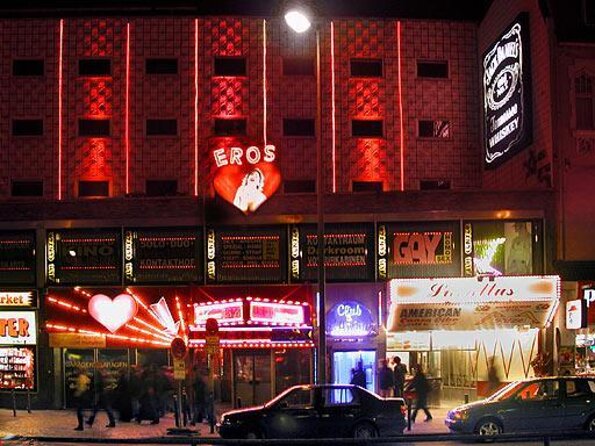
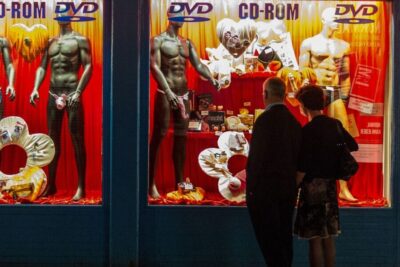
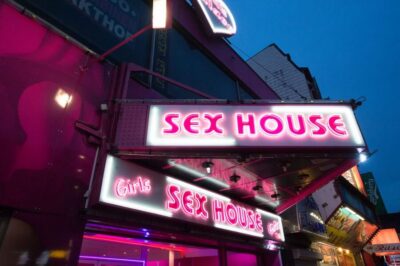
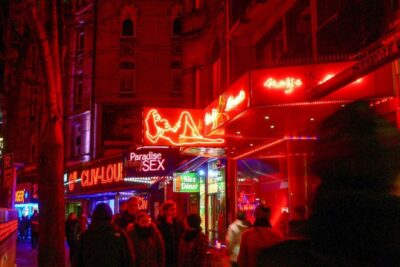
You start on Reeperbahn, often called the glittering mile. The street is visually intense—sex shops, pubs, table dance bars, and Laufhäusern. It’s the kind of place where your brain wants to label everything immediately.
The value here is that your guide gives you context. Instead of treating it like an “only one story” street, you learn how the area became known for nightlife and why the entertainment cluster grew where it did. You get a sense for how the district has long served as both livelihood and attraction.
A quick practical note: Reeperbahn at night is busy and full of sensory overload. The tour helps by giving you something to pay attention to besides the storefronts—history, current function, and the area’s mixed character.
Stop 2: Schmidt Tivoli and St. Pauli’s theater culture
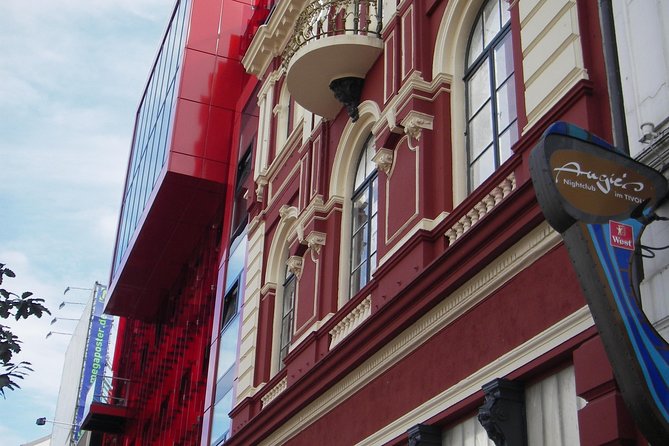
Next up is Schmidt Tivoli. This stop shifts the tone. Instead of only thinking about nightlife, you learn about the neighborhood’s culture side—comedy, theater, and the kind of entertainment that turns St. Pauli into more than a party street.
The Schmidt Theater and Schmidt-Tivoli are described as having brought new culture to St. Pauli. In plain terms: it shows how people come here not only to drink or watch but also to laugh and participate in performances that belong to the district.
This stop is also a nice contrast beat. After the busy Reeperbahn feel, you get a calmer topic—show business, local entertainment, and how the neighborhood supports different kinds of visitors.
Stop 3: Davidstraße and the one-side-of-the-road detail
Then the tour heads to Davidstraße, where street prostitution takes place from 20:00. The guide explains that it happens on one side of the road, and you’ll learn the reason behind that setup.
I appreciate tours like this because they don’t treat the subject as a punchline. A neighborhood can’t be properly understood if you avoid the realities that help shape its rules, routines, and public space. You’ll come away with a more grounded understanding of how the district operates at street level during the evening.
One consideration: keep your expectations realistic. The tour is focused on “the present,” and part of that present includes human topics that some visitors find uncomfortable. Going in with a respectful mindset helps.
Stop 4: Polizeikommissariat 15 Davidwache in the middle of everything
From Davidstraße, you reach Polizeikommissariat 15 Davidwache—often described as Germany’s most famous police station located right in the neighborhood.
This stop is a strong reminder that St. Pauli isn’t just entertainment; it’s also a place where authorities and public order matter. Seeing the police station in the center of the action gives you perspective on how local governance and nightlife geography intersect.
Even if you’re not a politics person, it’s useful. You start connecting the dots between nightlife, street activity, and the structures that manage safety and daily life.
Stop 5: Grosse Freiheit 36, the Star Club, and Beatles lore
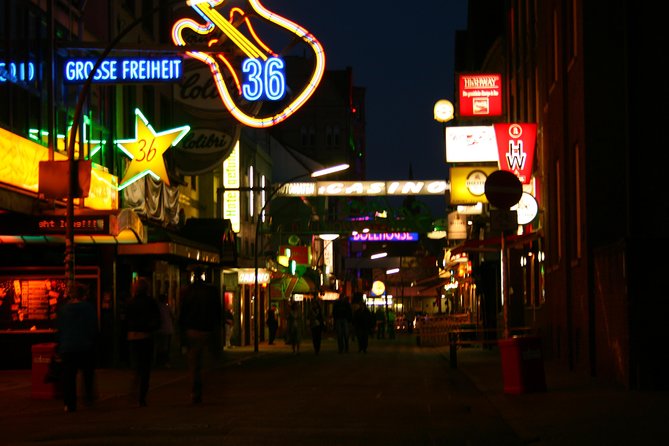
Now you move to Grosse Freiheit 36, a place packed with references that many visitors recognize but might not fully understand.
You’ll hear about the Dollhouse, the former Star Club, and the idea that the Beatles played there. You’ll also pass by a Catholic church along the route. That mix—music history, nightlife history, and religious architecture—shows how St. Pauli never sits in one category for long.
For me, the lesson is simple: this district has layers. People come for the street reputation, but the streets themselves carry longer cultural memory. The Star Club/Beatles connection helps translate St. Pauli into something a rock fan can place on a map—then your guide expands the surrounding context so it’s not just a trivia stop.
Stop 6: Back to Reeperbahn for a final reality check
The tour loops back to Reeperbahn, revisiting the glittering mile with a new filter. After hearing about entertainment culture, Davidstraße timing, and Davidwache’s role, the same street can feel different—less like a novelty show and more like a system of businesses, regulations, and long-term neighborhood development.
This final segment also works as a closing “wrap.” You get a chance to absorb what you’ve learned while you still have your guide right next to you, so questions can land while the topic is fresh.
Guides who are St. Pauli insiders (and why that matters)
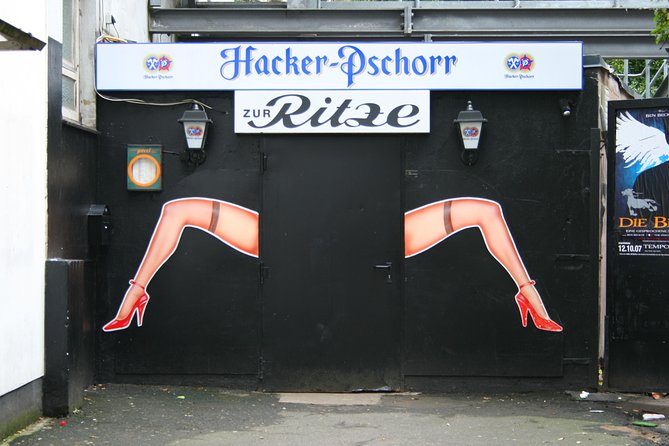
This tour is run by Stattreisen Hamburg e.V., with guides described as St. Paulians and connoisseurs of the scene. That’s not just marketing—on a subject like this, a guide’s local understanding affects everything: word choice, pacing, and what they consider important.
The reviews highlight that the tone is upbeat and story-driven, but also prepared. One guide name that shows up in feedback is Sonja, praised for rousing, cheerful, interesting stories and for being well prepared around topics like current life, historical context, prostitution, and the Beatles connection.
What I like about that approach is that it keeps things from turning into a list of shock facts. You get explanations tied to the places you’re standing in, not random tangents. And that’s exactly what you want from a short tour: clarity, not confusion.
Who this tour is best for (and who should think twice)
This fits best if you want a balanced, guided overview of St. Pauli in both past and present. It’s great for:
- First-time visitors who want a quick orientation walk
- People interested in how nightlife districts function beyond the headlines
- Music lovers who want the Beatles/Star Club thread explained in context
- Travelers who like walking tours that mix culture stops with real neighborhood settings
It might not fit as well if you want a quiet evening, or if you get uncomfortable with frank discussion of street prostitution and the live nighttime environment. You don’t have to be “into” St. Pauli to do the tour well, but you do need the right mindset.
Practical tips to make the most of it
- Wear comfortable shoes. The tour is short, but you’re moving through a lively district where lingering can happen fast.
- Go in with a respectful attitude. You’ll be discussing adult topics and street activity as part of the neighborhood’s reality.
- Keep a small pocket of flexibility. St. Pauli streets can be crowded around the main stretches, so give yourself a bit of slack.
- If you like to take photos, wait for the guide’s cues. The best moments are usually the ones with context attached, not just the loudest signs.
And if you’re pairing this with dinner, I’d plan nearby food so you don’t have to rush across town right after.
Should you book the St. Pauli quickie?
If you want a tight St. Pauli introduction with more facts and less cliché, I’d say yes. The short duration is a real advantage: about 1 hour 15 minutes means you can fit it into a typical Hamburg evening without committing to a long guided block.
Book it especially if you care about seeing St. Pauli as a place with history, culture venues like Schmidt Tivoli, and recognizable music connections at Grosse Freiheit 36. The route also does something many nightlife tours don’t: it includes the neighborhood’s institutions and explains the street layout details rather than only focusing on spectacle.
If adult-topic content would make you uncomfortable, then skip it and look for a different Hamburg evening option. But for the right traveler, this is one of the more direct ways to understand the district.
FAQ
How long is the St. Pauli quickie tour?
It lasts about 1 hour 15 minutes.
Where do I meet and where does the tour end?
You start at Millerntorpl. 1, 20359 Hamburg and finish at Hans-Albers-Platz, 20359 Hamburg.
What stops and sights are included?
The route includes Reeperbahn, Schmidt Tivoli, Davidstraße, Polizeikommissariat 15 Davidwache, and Grosse Freiheit 36, with another segment back to Reeperbahn.
Do I need a paper ticket?
No. You get a mobile ticket.
Are alcoholic beverages included?
No. Alcoholic beverages are not included.
What is the maximum group size?
The tour has a maximum of 25 travelers.
Is free cancellation available?
Yes. You can cancel for a full refund up to 24 hours in advance of the experience start time.
Hamburg on Foot
More Tour Reviews in Hamburg





More St. Pauli Kieztours



Just In: The Newest Hamburg Reviews









St. Pauli Kieztours, compared.
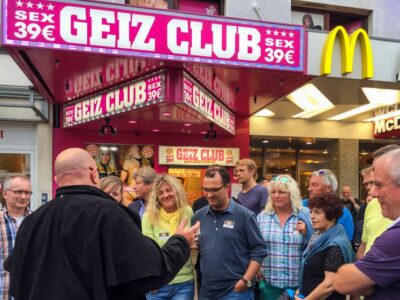 ★ 4.7Insider Tour of the Reeperbahn & St. PauliFrom $295,057 reviews
 ★ 4.7Night Watchman’s Tour of St. Pauli in GermanFrom $234,818 reviews
 ★ 4.7In the Footsteps of “Olivia” Reeperbahn TourFrom $5003,947 reviews
 ★ 4.7St. Pauli Highlights Guided Tour with Beer for 18+From $292,353 reviews
 ★ 4.8Olivia Jones Tour with Iconic Barker FabianFrom $421,395 reviews
 ★ 4.7Reeperbahn Quickie, The Short & Sexy St. Pauli TourFrom $23915 reviews
 ★ 4.8St. Pauli Nightlife Tour with Drag Queen in GermanFrom $41733 reviews
 ★ 4.7St. Pauli Tour of the ReeperbahnFrom $16644 reviews
Browse the lists this tour appears in