
Reviewed · HISTORICAL TOURS
private city tour of Hamburg’s UNESCO World Heritage Site
Hamburg’s UNESCO core speaks in brick and trade. On this private city tour of the UNESCO World Heritage Site, you get a calm, private setting to understand how the city grew from its earliest roots to a world trade powerhouse. I like that the story stays concrete: names, jobs, and port details, not just general sightseeing.
I especially like the way Speicherstadt is explained as more than pretty architecture. You’ll connect the red brick warehouses to the people who worked there and the big trade shift from old Hanseatic shipping to modern container freight. One thing to consider: this is a focused, guide-led route with limited time for lingering, so if you want long solo wandering, you may need extra time on your own after the tour.
In This Review
- Quick hits
- A Private Route Through Hamburg’s UNESCO World Heritage Sites
- Starting at Hammaburg-Platz: Why Hamburg Starts at Domplatz
- Domplatz to Kontorhausviertel: The Merchant City in Human Scale
- Kontorhausviertel Architecture With a Purpose
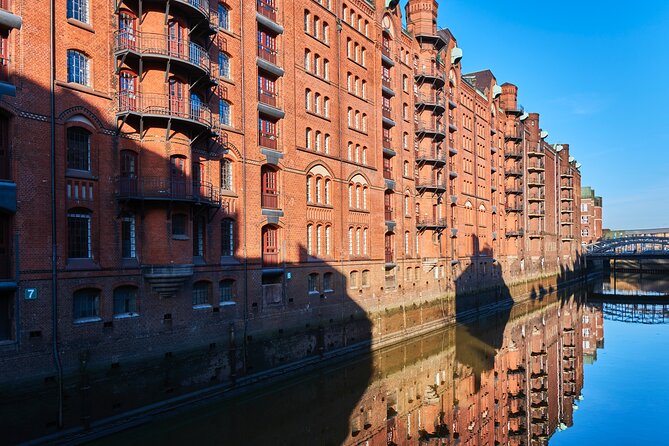
- Speicherstadt’s Red Brick Gorges: Port Life Then and Now
- The Route Ends at Sankt Annenplatz: A Smart Place to Continue
- Timing, Mobile Tickets, and What Two Hours Covers
- Price and Value: What $208.28 Per Group Really Means
- Who This Private Hamburg UNESCO Tour Is Best For
- Should You Book This Private UNESCO Tour of Hamburg?
- FAQ
- How long is the private city tour?
- What is the group size for this private tour?
- Where does the tour start and end?
- Is there a mobile ticket?
- What stops are included in the tour?
- Are admission tickets required?
- Is private transportation included?
- Is free cancellation available?
- Are service animals allowed?
Quick hits
- Hammaburg-Platz to Domplatz: Hamburg’s name and early city logic, in plain language
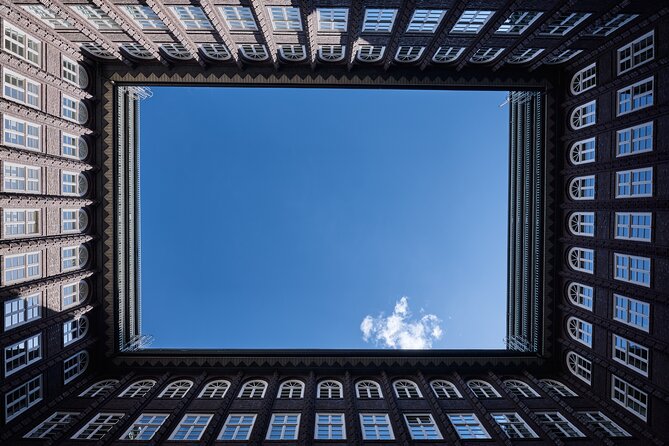
- Kontorhausviertel trade glow: how late 19th-century merchants shaped modern commerce
- Prima ballerina detail: a specific Kontorhäuser design feature used to tell a business story
- Port charter contradictions: you’ll get the odd gaps the guide points out
- Speicherstadt’s working-world: Westphalen, the castle connection, and the port jobs behind the scenes
- Real maritime timeline: from Hanseatic cog to container ship, explained step by step
A Private Route Through Hamburg’s UNESCO World Heritage Sites
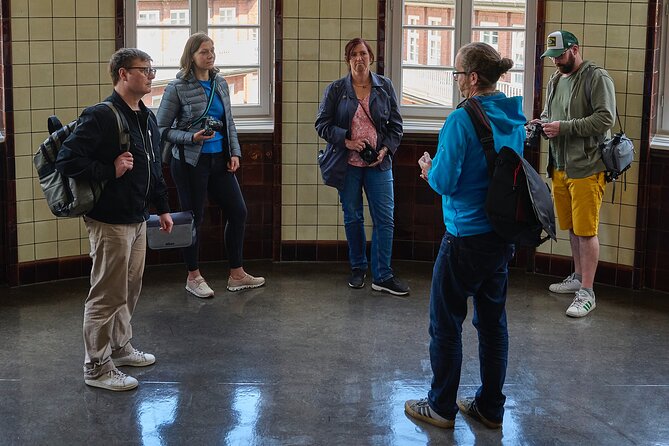
This tour is built for groups who want answers, not just photos. It’s private, so you’re not squeezed into a big crowd, and you can ask questions as you go. Best of all, it’s timed like a smart “overview tour,” but it still includes enough specifics to make the UNESCO sites feel personal.
You’ll spend about two hours moving through central Hamburg’s UNESCO-linked areas, including Domplatz, Kontorhausviertel, and Speicherstadt. That structure matters. You’re not hopping randomly around town—you’re walking a storyline.
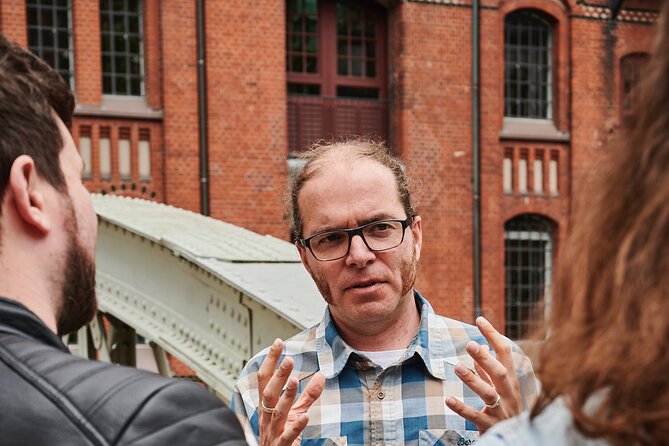
And the guide matters too. The provider, Marius Gebhardt (Fotografie & Stadtführungen), is known for explaining Hamburg’s history in a way that feels alive, including details that turn architecture into evidence.
See the whole city in one easy go



Starting at Hammaburg-Platz: Why Hamburg Starts at Domplatz
You begin at Hammaburg-Platz (Altstadt), right in the older part of town. The first stop is Domplatz, where the tour frames the “thematic areas” of what you’re about to see and why Hamburg’s growth makes sense.
What I like here is the opening move: you don’t start with a monument. You start with a question—where did Hamburg come from? The guide points to the idea of Hammaburg Platz as the birthplace and nursery of Hamburg, and you learn how the city got its name. That single thread helps everything else click later, especially once you reach the port-focused neighborhoods.
Practical note: this first stop is about 30 minutes, and it works like orientation. Expect it to be more talk than photo-only time. If you like understanding the “why,” you’ll be in good shape.
Potential drawback: if you’re the type who hates walking while listening, this first segment might feel dense. The trade-offs of a story-based tour are real.
Domplatz to Kontorhausviertel: The Merchant City in Human Scale
After Domplatz, you head to Kontorhausviertel, the former heart of Hamburg merchants. This is where the tour shifts from beginnings to modern trade.
At this stop, you get the explanation of how modern world trade took off at the end of the 19th century. That timeframe is useful because it changes how you look at buildings. Instead of seeing “old stuff,” you start seeing infrastructure for business: office life, shopping frontages, and how commerce needed architecture.
One of the most memorable details here is the focus on a brick-and-mortar shop and the guide’s attention to a prima ballerina motif on the Kontorhäuser. The reason it’s worth your attention is simple: decorative features were part of business identity. The guide uses the design to show how branding, status, and trade culture lived side-by-side in this district.
This is also where you start hearing the story with friction. The guide will have you look critically at the founding charter of the port and point out at least one contradiction. That kind of moment is great because it keeps history honest. Cities don’t build clean, fair stories. They build messy ones—and then people argue about them.
Kontorhausviertel Architecture With a Purpose
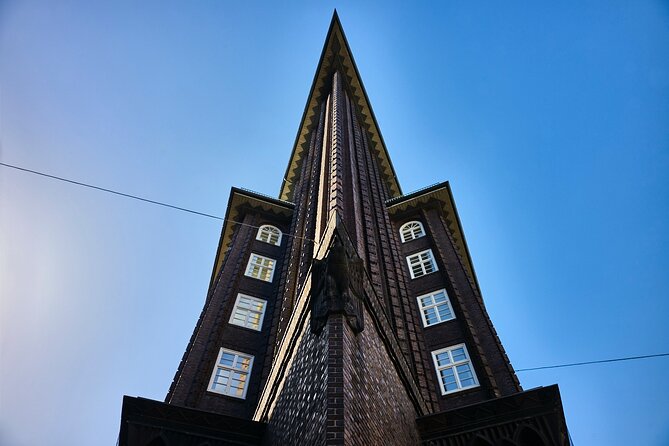
Kontorhausviertel can look like a “pretty neighborhood” if you don’t have context. The tour avoids that trap by giving you a lens: this was where merchants ran the systems of global exchange.
Here’s what you’ll likely notice during this segment:
- The idea of the trading district: not just commerce, but a whole business ecosystem
- How architecture functioned as a status signal
- The way symbolism and details get tied to economic life
I like tours that teach you what to look for. This one does, and you’ll probably end up taking photos with more intention, not just because the buildings are photogenic.
Speicherstadt’s Red Brick Gorges: Port Life Then and Now
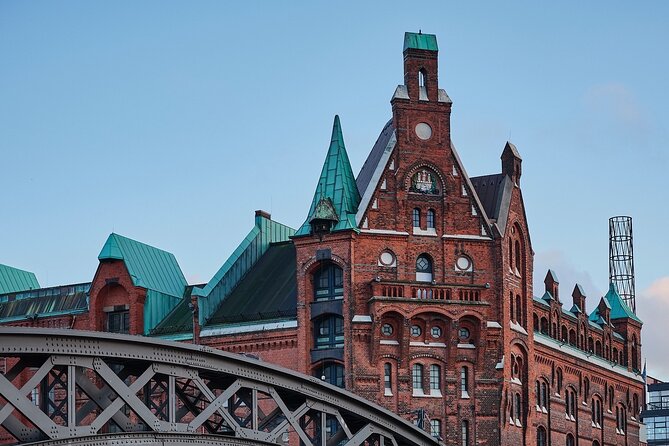
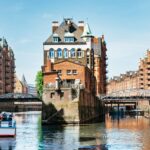
Then comes Speicherstadt, and yes, it’s the area people come back for. But the value here isn’t only the dramatic look of the red brick warehouses. The tour turns those “gorges of brick” into a working system.
You’ll spend about 30 minutes here, but it’s packed. The guide explains Hamburg’s port history and the shift in maritime trade from a Hanseatic cog to a modern container ship. That timeline matters because it helps you understand why these warehouses existed in the first place. Storage, logistics, and trade tech all move together.
The tour also connects objects and roles you might not guess on your own. For example, you’ll learn what Schutenschupser and Ewerführer did. Those names sound odd until the guide ties them to how goods moved and how port labor was organized.
Then you get the human-side geography, which I found especially useful. You’ll hear what Westphalen has to do with Hamburg, and why workers lived in a castle. That’s exactly the kind of detail that makes a UNESCO site feel like more than a museum.
Finally, the guide pulls in the odd and memorable characters of the era—there are stories involving coffee barons and Persians in Hamburg. The point isn’t just the names. It’s the lesson: global trade wasn’t only ships and warehouses. It was also people, networks, money, and culture showing up in the same city blocks.
Potential drawback: Speicherstadt is where you’ll probably want to linger visually. This tour is timed, so you won’t have unlimited wandering time. If you want extra time for photos or quiet canalside staring, plan a bit of independent exploring after the tour ends.
Keep it to your own group with a private tour





The Route Ends at Sankt Annenplatz: A Smart Place to Continue
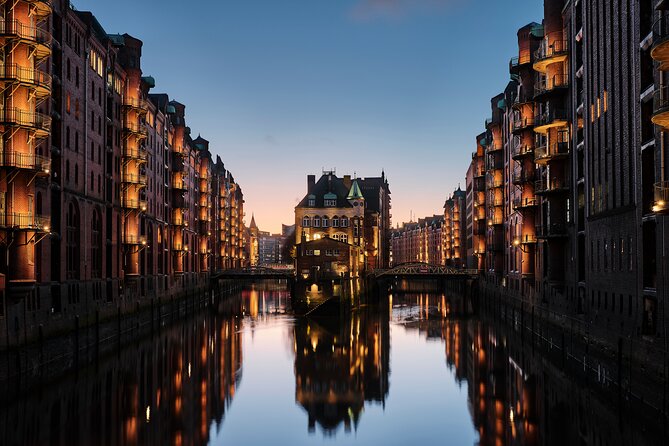
The tour finishes at Sankt Annenplatz, right on the border between Speicherstadt and Hafencity. That finish is clever. You’re not dumped randomly back into a busy street. You end where modern Hamburg meets its historic port core.
If you have extra time, this is a great spot to keep moving on foot or to shift your mood. Hafencity tends to feel more open and modern, and Speicherstadt feels tighter, older, and more enclosed. Ending here lets you see the contrast without changing transportation.
Also, the tour is designed around central meeting points: the start at Hammaburg-Platz and the finish at St. Annenplatz keep things simple.
Timing, Mobile Tickets, and What Two Hours Covers
The experience runs for about 2 hours, and the stops are structured around three key areas. With 30 minutes at each stop plus walking time between, it’s enough to get grounded in the UNESCO story without turning your day into a full-time project.
A few logistics points that affect your day:
- Mobile ticket: you won’t need to hunt for paper
- Near public transportation: you can plan arrival and departure without stress
- Private group up to 15: you’re not stuck waiting for other people to show up
Since the tour is private, your group size matters more than usual. A group of 2–6 gets a different feel than a full group close to 15. Either can be great, but smaller groups usually mean more question time and a bit more flexibility in how long you linger at a detail.
Price and Value: What $208.28 Per Group Really Means
The price is listed as $208.28 per group, up to 15 people. That’s important, because you’re not paying a per-person rate in a way that spikes for families or small groups.
Think of it like this: if you roll with a small group, the cost per person drops fast. If you’re traveling solo, it may feel pricier than a standard group tour. But if you care about a calmer pace and want a guide to tailor explanations to what you find interesting, it can still feel like value.
Another quiet value win: the stop structure includes admission ticket free for the thematic areas the tour covers. So you’re not adding surprise entrance fees to the base cost.
Finally, you’re buying something more abstract than a ticket: you’re buying a guided mental map. When you leave, you should be able to look at Speicherstadt and Kontorhausviertel and know what you’re seeing and why it mattered.
Who This Private Hamburg UNESCO Tour Is Best For
This tour fits people who want meaning, not just motion.
It’s a strong match if:
- You like architecture but want the story behind the brick
- You want a clear timeline that connects old trade to modern logistics
- You’re traveling with family and want a guide who can keep attention on details
One of the better signals for families is that the route works for a range of ages. You’ll get enough specifics to keep teens interested, and enough big-picture trade context to keep kids from tuning out.
It’s also good for couples who want a private-feeling history walk without committing to a long day.
If you hate walking while listening, consider saving this for days when you’re in the right mood for explanations.
Should You Book This Private UNESCO Tour of Hamburg?
I’d book it if your goal is to understand Hamburg’s UNESCO areas in a structured, guide-led way—especially Speicherstadt. The tour’s main strength is that it turns famous spaces into a working story: port roles, city origins, merchant culture, and the human logic behind the buildings.
Skip it if you want a loose, free-roaming wander or if you need lots of solo time to read everything at your own pace. This is a walk with a guide driving the timeline.
If you can align expectations—2 hours, guided storyline, specific details—you’ll get a memorable Hamburg that feels clearer, not just photographed.
FAQ
How long is the private city tour?
It’s approximately 2 hours.
What is the group size for this private tour?
The tour is private for your group, with up to 15 people.
Where does the tour start and end?
It starts at Hammaburg-Platz (Altstadt, 20095 Hamburg) and ends at Sankt Annenplatz (20457 Hamburg), right by the border between Speicherstadt and Hafencity.
Is there a mobile ticket?
Yes, the tour uses a mobile ticket.
What stops are included in the tour?
The tour includes Domplatz, Kontorhausviertel, and Speicherstadt.
Are admission tickets required?
The included stops are listed as admission ticket free.
Is private transportation included?
No, private transportation is not included.
Is free cancellation available?
Yes. You can cancel up to 24 hours in advance for a full refund. If you cancel less than 24 hours before the start time, the amount paid is not refunded.
Are service animals allowed?
Yes, service animals are allowed.
Hamburg City, Start to Finish



More Tours in Hamburg





More Tour Reviews in Hamburg

Just In: The Newest Hamburg Reviews










Historical Tours, compared.
 ★ 5.0The Local Tour of Hamburg Historic CentreFrom $31,058 reviews
 ★ 4.4Historical Tour of the St. Pauli Sex Work DistrictFrom $39215 reviews
 ★ 4.7UNESCO-World Heritage Sites TourFrom $18137 reviews
 ★ 5.0Sightseeing Tour – Free Tour – Historic Center-Hamburg On FootFrom $3112 reviews
 ★ 4.8German Hamburg Historic City Center Pay-What-You-Want TourFrom $380 reviews
 ★ 4.7Speicherstadt Historical Guided Walking TourFrom $2971 reviews
 ★ 3.5Lights tour through the port of Hamburg and to the historic warehouse districtFrom $3070 reviews
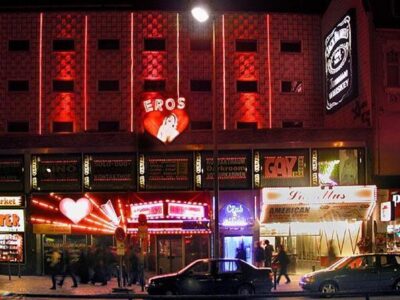 ★ 5.0Free Tour: History of the Port, Red Light District and the BeatlesFrom $348 reviews
Browse the lists this tour appears in