
Reviewed · HISTORICAL TOURS
Hamburg: UNESCO-World Heritage Sites Tour
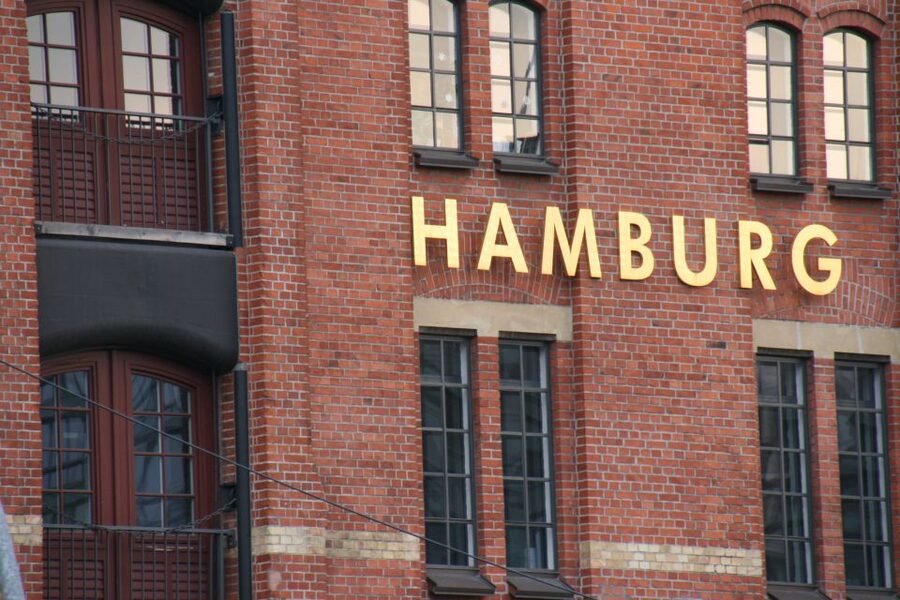
Hamburg rewards curious walkers fast. This short UNESCO tour strings together the city’s trading brain, its office boom, and the warehouse world of the Elbe. You’ll get a guided walk through Kontorhäuser and the red-brick Speicherstadt, plus hands-on port stories with pictures and spice samples. One possible drawback: at just 2 hours, it moves quickly, so you’ll want to ask questions early.
Two things I really like about this experience are the way it links architecture to real work, and the focus on what made Hamburg’s economy run. You’ll hear how office buildings shaped global influence through clerks and money-counting tables, then shift to the warehouse logic of storage, ropes, and canals. The other big win is the added sensory layer, including spices and vivid port imagery that make the harbor feel alive.
For a small consideration, plan for weather. This walk happens in all conditions, so if rain or wind messes with you, pack a real jacket and expect to be outside for the full time.
In This Review
- Key highlights you will feel right away
- Why UNESCO Hamburg works in just 2 hours
- Meeting at Jacobikirche: how to get started without stress
- Sprinkenhof and the Kontorhäuser era: offices as engines of trade
- Chilehaus (Chile House): brick drama with a trading mindset
- Meßberg: a quiet in-between stop that sets up Speicherstadt
- Speicherstadt: red-brick storehouses, canals, and the texture of work
- Dar es Salaam Square and the harbor’s working stories
- Magdeburg Harbour: finishing with maritime landmarks
- Saturday-only ferry ride: a quick change of perspective
- What you’ll actually remember after the tour
- Price and time: is $18 good value here?
- Who this tour suits best
- Should you book this UNESCO Hamburg tour?
- FAQ
- How long is the Hamburg UNESCO tour?
- Where do I meet the guide?
- Which language is the tour guide?
- Is the tour outdoors?
- How much does it cost?
- Is there a ferry ride?
- Can I get a refund if my plans change?
Key highlights you will feel right away
- Kontorhäuser context: office buildings explained through the day-to-day people who ran trade
- Chilehaus focus: one of Hamburg’s most recognizable brick landmarks on a guided route
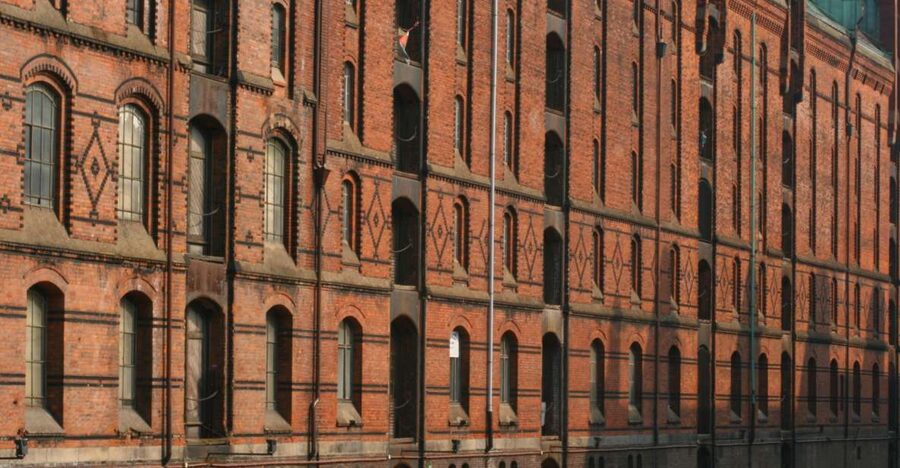
- Speicherstadt details: rope winches, storage functions, and the canal-side layout
- Old meets modern: brick facades paired with dock promenades and newer architecture
- Port stories with samples: pictures plus spice samples that make the harbor tangible
- Saturday-only ferry ride: a short water view that changes the angle of the Elbe
Why UNESCO Hamburg works in just 2 hours
Hamburg’s UNESCO-listed areas can feel big and spread out. What makes this tour smart is that it treats the city like a chain of cause and effect: offices grew because trade grew, and warehouses followed because ships kept coming. In two hours, you’re not trying to memorize everything. You’re learning how the pieces connect.
I like that the tour doesn’t just point at buildings. It explains why they mattered, from the Kontorhäuser era to the trading machinery of the Speicherstadt. And because you end at Magdeburg Harbour, you finish with the harbor still in mind, not with a dead-end street scene.
The price is also unusually approachable for a guided UNESCO experience. At $18 per person, you’re paying for a guided interpretation of multiple major sights, not just a stroll with a map.
More of the Hanseatic history, up close

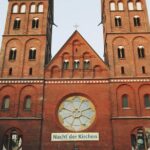
Meeting at Jacobikirche: how to get started without stress
The tour meets at Jacobikirche, at the corner of Bugenhagenstraße and Barkhof. If you arrive a few minutes early, you’ll have time to orient yourself before the group starts moving.
The route is a walking tour across two distinct districts. That means you’ll spend enough time outside to notice changing street textures and architecture styles. And since the tour runs in all weather conditions, your planning is simple: dress for rain, wind, and cool air, even if the day looks mild.
One practical note: the tour is German-speaking. If your German is basic, you’ll still likely follow a lot by watching what the guide points to and by listening for the architectural terms. But comfort with everyday words will help if you want to ask questions.
Sprinkenhof and the Kontorhäuser era: offices as engines of trade
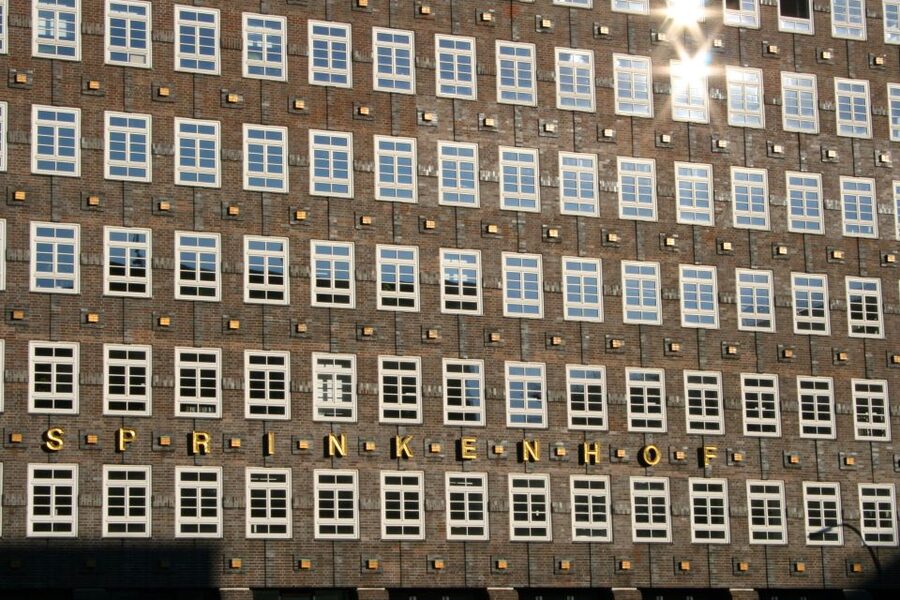
The route starts with Sprinkenhof, then quickly turns toward the world of the Kontorhäuser (office buildings). This is where the tour earns its keep: it explains architecture as a tool for business.
Instead of treating these buildings like pretty facades, the guide focuses on the people and tasks behind them. You’ll learn how clerks worked in this office boom and how money-counting tables were part of the daily rhythm of trade. That shift in framing makes the sight feel functional, not museum-like.
What I like most here is the sense of scale. Even though you’re on foot, you’re seeing how Hamburg’s economic growth and worldwide influence were supported by the spaces where paperwork, payments, and planning happened. It’s a reminder that cities don’t grow only through ships and warehouses. They grow through offices too.
Chilehaus (Chile House): brick drama with a trading mindset
Next comes Chilehaus (Chile House), one of Hamburg’s signature landmarks. Here, the tour leans into the kind of architecture you remember because it feels forceful and directional. You’re not just seeing brickwork; you’re seeing how a commercial city gives its money buildings personality.
A guided stop at Chilehaus works because the guide can connect form to purpose. The landmark isn’t discussed as an isolated sculpture. It’s treated as part of Hamburg’s development story during a period when business demanded both visibility and efficiency.
If you like photos, this stop gives you that classic Hamburg mix: historic brick shapes with a modern city around them. It’s one of those places where you can look one way at tradition and turn your head and see the present pressing in.
Meßberg: a quiet in-between stop that sets up Speicherstadt
After Chilehaus, the tour continues to Meßberg. This part matters because it helps you feel the transition between Hamburg’s office-world and the warehouse-and-port world.
Meßberg is often not the first name people learn when they think of Hamburg sights. On this tour, it works like a bridge stop. You get a guided explanation, then the route begins to funnel you toward Speicherstadt, where the story becomes more industrial and water-linked.
In practical terms, I like having a mid-route stop before the warehouse district. It gives your legs a small reset and keeps your attention from fading. It also helps you understand how the city’s different functions were organized, not just that they existed.




Speicherstadt: red-brick storehouses, canals, and the texture of work
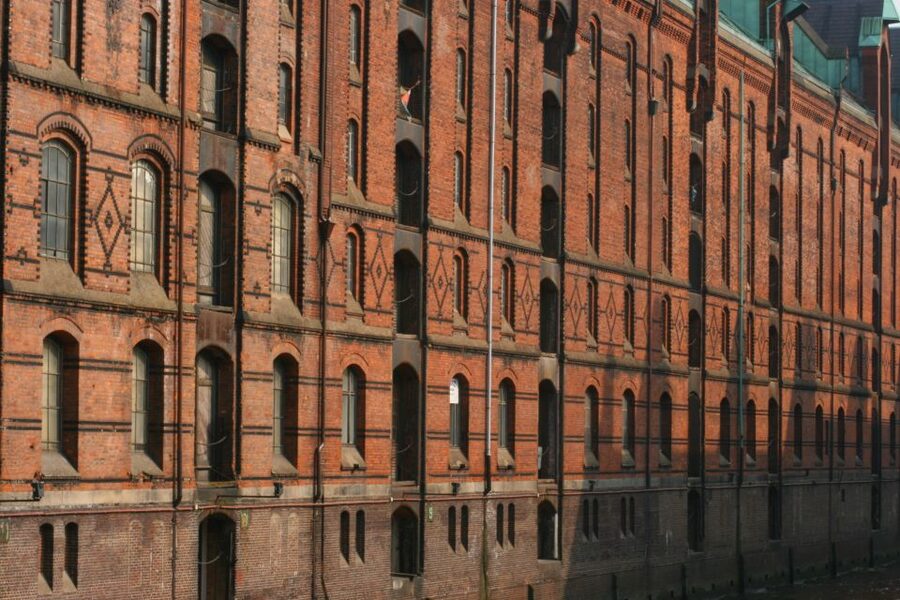
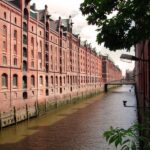
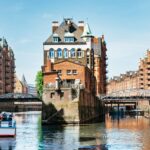
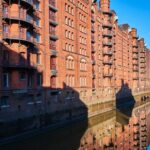
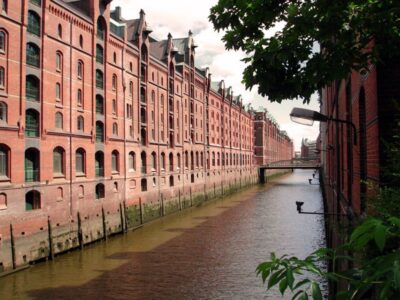
Then you hit Speicherstadt, the historic warehouse district that anchors Hamburg’s UNESCO identity. The tour’s focus here is specific and rewarding: old storehouses, canals, and that unmistakable red-brick look.
What makes Speicherstadt so interesting on foot is how physical the logistics feel. You’re not just walking past buildings; you’re walking past systems. And this tour adds tangible details that help you picture how goods moved and stored.
You’ll hear about old rope winches and carpet storage, plus you’ll notice the contrast between old brick facades and modern architecture and new dock promenades nearby. That contrast isn’t a distraction. It’s a lesson. Hamburg didn’t stop trading when the warehouses aged. It adapted the waterfront for new uses.
Expect great visual payoff too. The route includes views over the river Elbe, and the canal-side setting gives you perspectives that are hard to get from street-level alone.
Dar es Salaam Square and the harbor’s working stories
After the Speicherstadt core, the tour reaches Dar es Salaam Square, another guided checkpoint that keeps the flow logical. From here, you start shifting from warehouse architecture to the working port world.
This is where the tour adds a lively learning element: you’ll hear how the port works, supported by pictures and spice samples. That’s not random theater. Spices and port imagery connect the buildings you saw to the cargo that actually mattered to Hamburg’s traders.
I also like the way the guide makes the harbor feel like a living system. You’re not only looking at the past. You’re learning how a port moves, stores, and distributes goods—concepts that make the warehouse details feel more real.
Magdeburg Harbour: finishing with maritime landmarks
The tour ends at Magdeburg Harbour. That finish point is a smart choice because it keeps the story oriented toward ships and maritime institutions, not just street views.
In the Magdeburg Port area, you’ll see important buildings such as the International Maritime Museum and the Überseequartier. Even if you don’t go inside, the guided focus helps you understand why these places belong in the same conversation as the warehouses.
Finishing at a harbor area also gives you an easy next move. Once you’ve walked the UNESCO zone with context, you can continue on your own toward waterfront viewpoints and river views.
Saturday-only ferry ride: a quick change of perspective
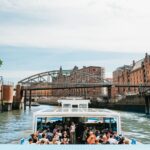
There’s one extra treat, but only on Saturdays: a short trip by ferry. This is valuable because it changes your angle on the Elbe and the waterfront architecture.
Even a brief water ride can make historic districts click. Buildings that looked like static backdrops start to look like part of a shipping route. You get a sense of how goods and people would have experienced the space.
If you can choose your travel days, Saturday is worth aiming for just for that added perspective.
What you’ll actually remember after the tour
This isn’t a tour that tries to throw dates at you. It’s built around practical connections: business spaces led to warehouse spaces, and both were designed to support global trade through people and processes.
Here are a few things you’ll likely carry with you:
- Architecture with a job description: Kontorhäuser are explained through work life, not just style
- Storage as a system: rope winches and storage types turn warehouse walls into functional objects
- Trade made sensory: pictures and spice samples help translate the port into something you can almost taste
- Old brick plus modern ports: Hamburg’s waterfront isn’t frozen in time; it’s layered
One more small plus: the guide’s delivery can make a big difference with a short tour. In the reviews, the German-speaking guide Albert stands out for strong engagement, lots of detailed information, and clear voice. That matters when you want to keep up without feeling lost or rushed.
Price and time: is $18 good value here?
For $18 per person and 2 hours, you’re paying for guided interpretation of several top Hamburg targets: Sprinkenhof, Chilehaus, Meßberg, the Speicherstadt district, and the move toward Magdeburg Harbour. You’re also getting extra learning elements like spice samples and visual port explanations.
What makes the value feel fair is that the tour isn’t only sightseeing. It’s also explanation: why Kontorhäuser existed, what warehouse logistics looked like, and how the port operates in broad terms. A short guided package like this can beat spending a whole day just trying to figure out what you’re looking at.
If you’re on a tight schedule, this tour is an efficient way to get the “why” behind UNESCO Hamburg without needing a multi-day plan.
Who this tour suits best
This is a great fit if you like:
- walking tours that explain what you see, not just where to stand for a photo
- architecture that has a working story attached (offices, warehouses, port logistics)
- travelers who enjoy historical districts but want modern context too
It may be less ideal if you prefer very slow pacing or if you want plenty of time to linger at just one building. Because the time is short, you’ll need to enjoy the flow and focus on the big connections.
And if you’re traveling with limited time in Hamburg, this route is an efficient way to cover two UNESCO-linked districts and finish with maritime sights.
Should you book this UNESCO Hamburg tour?
Yes, you should book it if you want a high-impact Hamburg overview with real guided context. This tour gives you UNESCO architecture, the working logic behind the city’s trading power, and a memorable sensory touch with spice samples and port imagery. The route also stays varied: offices, brick landmarks, warehouse canals, and a harbor finish.
Book it especially if:
- you’re short on time and want maximum clarity in 2 hours
- you care about how trade shaped city design, not only what buildings look like
- you can do Saturday, so you get the ferry ride
If you want total slow wandering or deep museum time inside multiple buildings, you might pair it with extra self-guided time afterward. But as a guided core experience, it’s a strong value way to understand Hamburg’s UNESCO story fast.
FAQ
How long is the Hamburg UNESCO tour?
The tour lasts 2 hours.
Where do I meet the guide?
Meet at Jacobikirche, at the corner of Bugenhagenstraße and Barkhof.
Which language is the tour guide?
The tour is guided in German.
Is the tour outdoors?
Yes. The tour takes place in all weather conditions, so you should dress appropriately.
How much does it cost?
The price is listed as $18 per person.
Is there a ferry ride?
Yes, but it’s only included on Saturdays.
Can I get a refund if my plans change?
You can cancel up to 24 hours in advance for a full refund.
History Around Hamburg


More Tours in Hamburg
More Tour Reviews in Hamburg

Just In: The Newest Hamburg Reviews








Historical Tours, compared.
 ★ 5.0The Local Tour of Hamburg Historic CentreFrom $31,058 reviews
 ★ 4.4Historical Tour of the St. Pauli Sex Work DistrictFrom $39215 reviews
 ★ 5.0Sightseeing Tour – Free Tour – Historic Center-Hamburg On FootFrom $3112 reviews
 ★ 4.8German Hamburg Historic City Center Pay-What-You-Want TourFrom $380 reviews
 ★ 4.7Speicherstadt Historical Guided Walking TourFrom $2971 reviews
 ★ 3.5Lights tour through the port of Hamburg and to the historic warehouse districtFrom $3070 reviews
 ★ 5.0Free Tour: History of the Port, Red Light District and the BeatlesFrom $348 reviews
 ★ 5.0Historic Free Tour of Hamburg Old Warehouse DistrictFrom $218 reviews
Browse the lists this tour appears in