
Reviewed · HAMBURG OLD TOWN WALKS
Sightseeing Tour – Free Tour – Historic Center-Hamburg On Foot
One thing quickly: Hamburg never tells one simple story. This Historic Center on foot tour strings Viking-era rumors, near-war heartbreak, and 18th-century streets into a walk you can actually follow, and it does it with a Spanish-speaking guide and good humor. I especially like the mix of big-photo stops (Elbphilharmonie, Speicherstadt) plus smaller moments you’d otherwise miss, and I like how the guide keeps the explanations clear and fun.
The main drawback to plan around is that some of the most famous spots you’ll see are exterior-only or short stops, so you won’t get long inside time at every stop. Also, the tour needs good weather, so have a backup plan if rain shows up.
In This Review
- Key things to know before you go
- Rathausemarkt start: the first 15 minutes matter
- Price and what you get for it
- Stop-by-stop: how the route tells Hamburg’s story
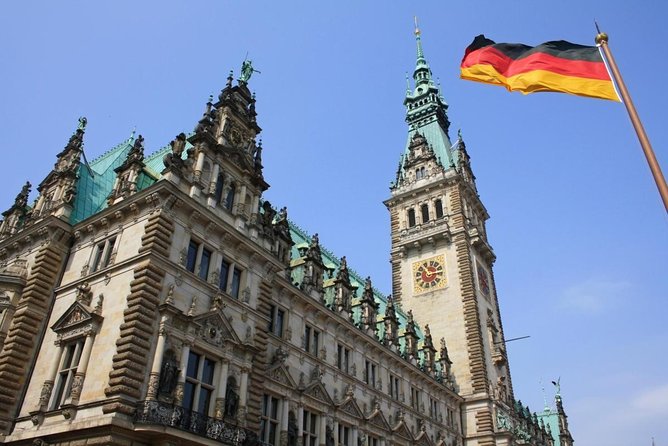
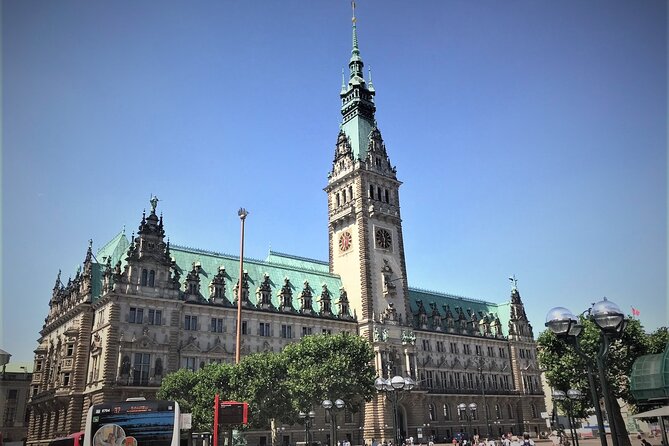
- Stop 1: Hamburg Town Hall (outside only)
- Stop 2: St. Petri Kirche, the city’s oldest church feel
- Stop 3: Domplatz and the cathedral mystery (the fun kind)
- Stop 4: Trostbrücke and a name that makes you wonder
- Stop 5: St. Nikolai Memorial and what WWII did to Hamburg
- Stop 6: Deichstrasse, walking into the 18th century
- Stop 7: Speicherstadt, war damage and warehouse pride
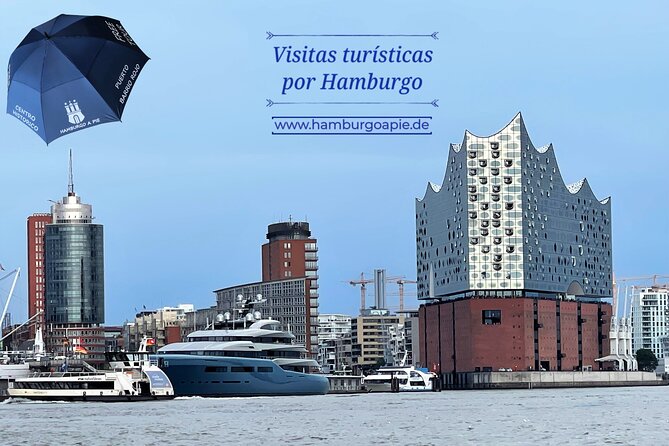
- Stop 8: Elbphilharmonie and the city’s mixed feelings
- Stop 9: Hopfenmarkt and the beer-and-burger wordplay
- Guides make or break this one: names you might hear
- What to wear and how to pace your day
- Does this tour feel worth it for your style of travel?
- Should you book Hamburg On Foot Historic Center?
- FAQ
- How long is the Historic Center walking tour?
- Where do I meet the guide?
- Is the tour ticket digital?
- Are entrance tickets included for the stops?
- What language is the guide?
- How big is the group?
- Do I need good weather?
- Can I cancel for a full refund?
Key things to know before you go
- Spanish-speaking local guide: Easy to follow, with stories that connect the city’s eras.
- Two hours, city-center focus: You’ll cover a lot without it turning into a marathon.
- Famous stops with real context: Town Hall outside, St. Nikolai Memorial for WWII, and Speicherstadt history.
- War-era rebuilding shows up twice: The route repeatedly returns to what survived and what changed.
- Small groups and simple ticketing: Mobile ticket, near public transportation, and a limited group size.
- Umbrella is smart: The tour recommends being ready for rain just in case.
Rathausemarkt start: the first 15 minutes matter
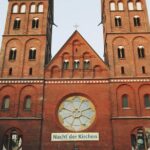
The tour starts at Rathausmarkt, 20095 Hamburg, and the meeting spot is in the area of the San Miguel church (their friendly nickname is Miguelito). This is the kind of meetup that helps you get oriented fast: you’re in the city center right away, not hunting for a random street corner.
From there, the pace stays steady—about 2 hours total—with short, focused stops. That works well if you want a guided overview before you start exploring on your own. It also means you should wear comfortable shoes and expect walking more than you’d do on a bus tour.
The other practical win: you get a mobile ticket, and you receive confirmation at booking time. With a free-style tour format and a very low stated group price, the “just show up and go” energy is strong—still, I’d double-check the meeting point on your phone before you arrive.
See more of the old town between the Rathaus and the water



Price and what you get for it
This tour lists a price of $3.48 per group (up to 6), and it’s commonly booked about 16 days in advance. On paper, that might look almost too good. In practice, the value comes from the time and interpretation: you’re paying for a guide who connects places—churches, bridges, warehouses, and concert hall history—into one storyline.
The key point is that you’re not just buying access to buildings. You’re buying someone’s local way of explaining why the city looks the way it does and how major events shaped what you see today. That’s why reviews consistently land on the guide experience and the amount of information delivered in a fun way.
One thing to keep in mind: admission tickets are not included for the stops where tickets might be relevant. Your time on the tour is designed for seeing and listening, not paying to enter multiple sites.
Stop-by-stop: how the route tells Hamburg’s story
Here’s what you can expect at each part of the walk, and what makes it worth your attention.
Stop 1: Hamburg Town Hall (outside only)
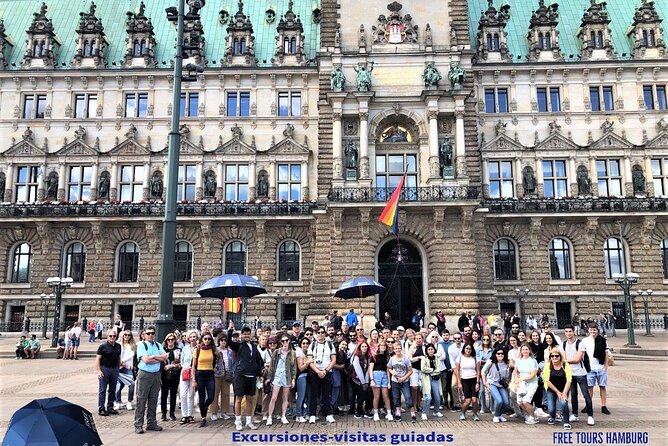
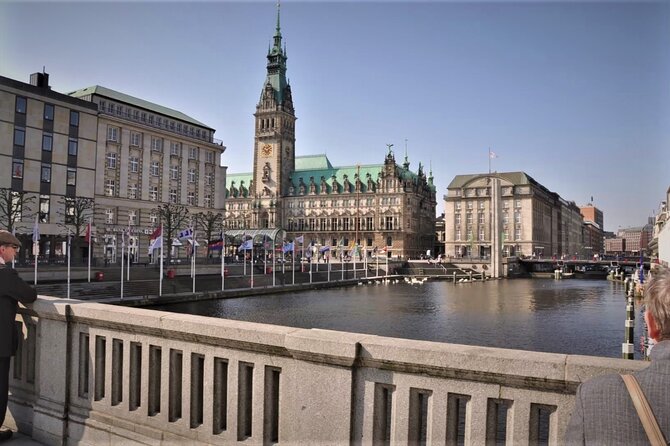
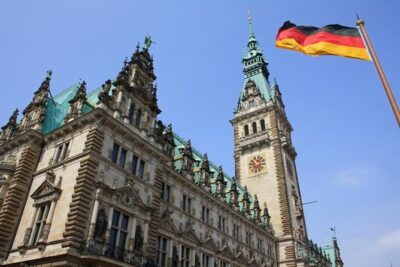
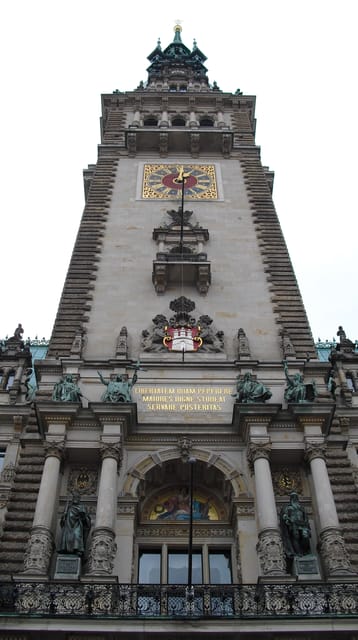
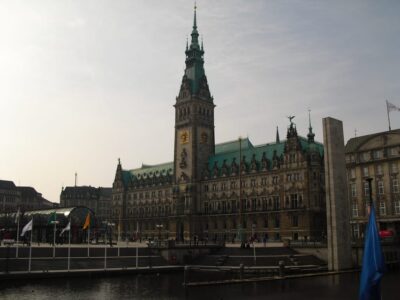
You begin with Hamburg Town Hall. The tour notes that you can only visit this impressive building from the outside because guided building tours are separate. That’s not a problem—it’s actually efficient.
Outside-only visits still give you a strong “this is where civic power lives” moment. Use this stop to look closely at the façade and get a sense of the city’s official center. Then listen as the guide frames why this place matters in the larger Hamburg narrative.
If you want to go inside later, you can plan that separately. For the tour itself, staying exterior keeps the schedule moving and keeps the focus on stories rather than lines.
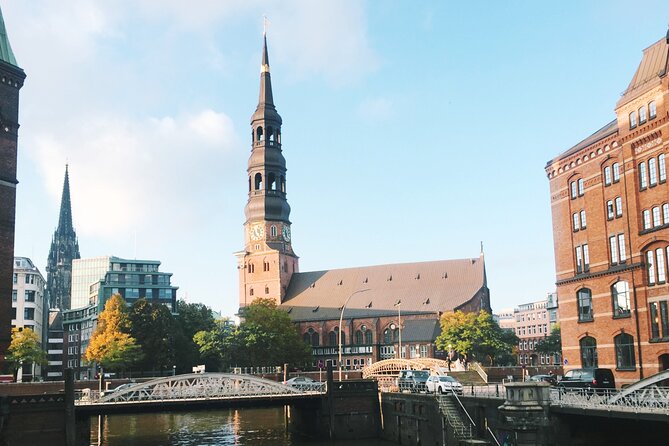
Stop 2: St. Petri Kirche, the city’s oldest church feel
Next is St. Petri Kirche, described as the oldest church in the city. The guide’s angle here is resilience: the church has “passed all the adversities of time,” so you’ll hear how much change can happen around a place that still remains recognizable.
This is a good stop for understanding how Hamburg layers time on top of itself. You’ll get the sense that the city’s spiritual and architectural roots didn’t vanish—they survived through damage, rebuilding, and different eras of taste.
The stop is short—about 5 minutes—so don’t expect long silence. Come ready to look and listen.
More of the Hanseatic history, up close




Stop 3: Domplatz and the cathedral mystery (the fun kind)
At Domplatz, the tour turns into story mode. The stop is built around questions: where was the cathedral, what happened, and did anything like Viking myths play into the legend.
This is the part of the tour that helps you read Hamburg like a puzzle. Even if you don’t care about every historical detail, you’ll learn how locals talk about the city’s missing pieces and damaged chapters—how memory gets attached to geography.
Short stop length here (about 10 minutes) is enough to give you a new way of noticing the space, not enough to replace independent research later.
Stop 4: Trostbrücke and a name that makes you wonder
Trostbrücke comes next, and the name is the hook. The tour raises a question about whether it was linked to something like a death row acquittal—and whether that’s the reason the bridge is named as it is.
Even if you’re not a history-trivia person, I like how this stop teaches you to trust the everyday city details. Bridges and street names often preserve old events, legal decisions, and social changes long after the original story fades from official plaques.
Expect another quick hit—around 10 minutes—so keep your attention on the guide’s framing of what the name might mean.
Stop 5: St. Nikolai Memorial and what WWII did to Hamburg
At the St. Nikolai Memorial, the tone shifts. This is where you’ll learn what World War II meant for Hamburg. The stop is designed to make sure the city’s war damage isn’t just a background fact.
If you’ve visited Europe before, you already know memorials can feel heavy. This one is brief—about 10 minutes—but it gives context so you understand why the site exists and why it’s part of Hamburg’s identity.
I appreciate this placement in the route: it lands in the middle of the tour, after you’ve seen religious and civic buildings, so you get a clearer before-and-after mental picture.
Stop 6: Deichstrasse, walking into the 18th century
Then you move to Deichstrasse, where the city’s 18th-century character is still visible. The tour specifically calls out that you feel it with every step and that beautiful buildings from other times are still preserved.
This stop is about atmosphere. You get a slower sense of what preserved urban fabric looks like up close—fronts, street rhythm, and the way buildings line up. It’s the kind of street you’ll want to photograph, but also the kind you should walk without staring at your phone too much.
Time on this section is about 15 minutes, so it gives you enough breathing room to absorb the feel.
Stop 7: Speicherstadt, war damage and warehouse pride
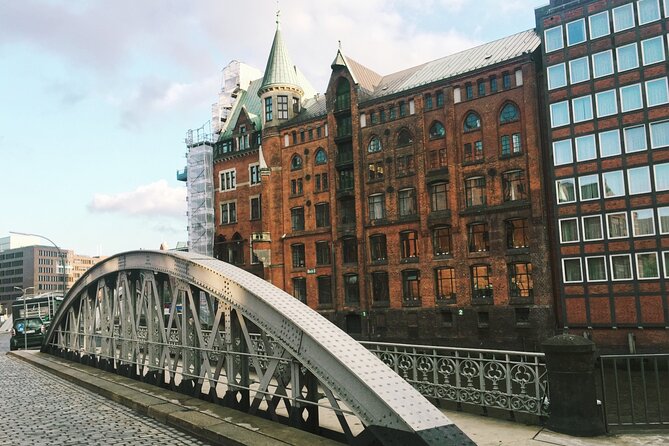
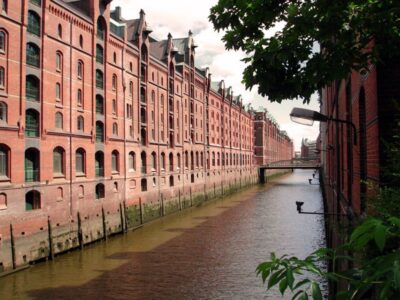
Next is Speicherstadt—the UNESCO-protected warehouse district. The tour explains that a huge construction project was almost destroyed during World War II, but today it shines again with splendor. You’ll also hear that some things can be seen while others can only be counted.
That line matters because it teaches you how to look at old industrial districts. You can’t always get everything from a quick glance; you read the pattern: the scale, the brickwork, the layout, and the way restoration changes the mood.
This stop lasts about 15 minutes. It’s enough time to understand why this area is famous without turning it into a museum visit.
Stop 8: Elbphilharmonie and the city’s mixed feelings
Now the route goes to the Elbphilharmonie, and the guide addresses a real thing: even today, some Hamburg locals have ambiguous feelings about it, mostly tied to its history. Still, the tour notes it’s awesome anyway.
This is a good moment for your own takeaway. You’ll probably find yourself thinking: how does a city decide what to build, what it costs, and what it represents? Then you’ll look at the building through that lens instead of only through the “wow factor.”
It’s about 15 minutes here. Treat it like a viewpoint-and-story stop: look, listen, then keep moving.
Stop 9: Hopfenmarkt and the beer-and-burger wordplay
The walk closes at Hopfenmarkt, where you discover Hamburg’s beer secrets, breweries, and something the tour describes as how hamburgers keep a secret. It’s playful, and that matters because after heavy WWII context and war-era rebuilding, it’s nice to end with a lighter local culture thread.
This final stop is about 10 minutes—short enough that it feels like a fun landing, not a lecture that overstays.
Guides make or break this one: names you might hear

This tour format puts a lot of weight on the guide, and the guidance is where the experience tends to score highest.
I’ve seen it praised for clear, fun explanations, and for guides who bring personality to the facts. If you get ISABEL or JAN (both names show up with strong ratings), you can expect a warm, story-driven walkthrough that keeps moving without feeling rushed.
Even if you don’t know your guide’s name in advance, here’s how to tell you’re in good hands: pay attention to how quickly they connect one stop to the next. When it clicks, the route becomes more than a checklist.
What to wear and how to pace your day
Since it’s on foot for about 2 hours, your main job is comfort. Choose shoes you’re okay wearing for repeated city blocks. The tour also suggests having an umbrella just in case, and it’s explicitly weather-dependent.
If you’re visiting in cooler months, layer up so you can handle sudden changes around the harbor and open city-center spots. And if you’re doing other sights the same day, I’d keep your schedule flexible after the tour—because once you learn the route logic, it’s easier to return to the exact places that catch your eye.
Does this tour feel worth it for your style of travel?
This walking tour is a strong match if you want:
- a guided overview of Hamburg’s historic center in about 2 hours
- a Spanish-speaking explanation style that stays clear and entertaining
- a route that covers major landmarks plus context you won’t find just by reading a sign
It might be less ideal if you’re looking for:
- long interior visits (Town Hall is outside-only on this route)
- a museum-style pace with lots of quiet time
- a tour that avoids heavy topics entirely (there is WWII context at St. Nikolai Memorial)
Should you book Hamburg On Foot Historic Center?
Yes—if you want a practical, story-led intro to central Hamburg, this is an easy choice. The price-to-time ratio is excellent, and the tour format focuses on what you actually need first: orientation, context, and “why that place exists” explanations.
Book it especially if:
- you want a local guide in Spanish and appreciate humor in the delivery
- you plan to explore more on your own after and don’t want to feel lost
- you’re drawn to both landmarks like Speicherstadt and the quieter “name and meaning” stops like Trostbrücke
If you hate walking, or if bad weather would ruin your day, keep your schedule flexible and be ready with a backup plan.
FAQ
How long is the Historic Center walking tour?
It lasts about 2 hours.
Where do I meet the guide?
Meet at Rathausmarkt (20095 Hamburg) near the San Miguel church area, their Miguelito meeting point. The tour ends at Martin-Luther-Straße 20 (20459 Hamburg), in the square of the San Miguel church.
Is the tour ticket digital?
Yes, you’ll use a mobile ticket.
Are entrance tickets included for the stops?
No. Admission tickets are not included where they may be needed (the itinerary notes this for multiple stops).
What language is the guide?
The guide is Spanish-speaking.
How big is the group?
The tour lists a maximum of 30 travelers.
Do I need good weather?
Yes. The experience requires good weather, and if it’s canceled due to poor weather you’ll be offered a different date or a full refund.
Can I cancel for a full refund?
You can cancel up to 24 hours in advance for a full refund.
More Tours in Hamburg





More Tour Reviews in Hamburg


Hamburg Old Town, On Foot



Just In: The Newest Hamburg Reviews










Hamburg Old Town Walks, compared.
 ★ 5.0The Local Tour of Hamburg Historic CentreFrom $31,058 reviews
 ★ 4.5Downtown, Alster & Creative Neighborhoods by BikeFrom $43217 reviews
 ★ 4.8German Hamburg Historic City Center Pay-What-You-Want TourFrom $380 reviews
 ★ 4.8Die Kiez-Kapitän Hamburger Stadtführung & Speicherstadt TourFrom $1837 reviews
 ★ 4.7Private Tour Down Town around City HallFrom $29433 reviews
 ★ 4.8Free tour: Centro Histórico. Tú decides el precio al finalFrom $232 reviews
 ★ 4.8Private – Town Hall, Speicherstadt, ElbphilharmonieFrom $29427 reviews
 ★ 4.9Hamburg Old Town on foot – the guided tour with heartFrom $3327 reviews
Browse the lists this tour appears in