
Reviewed · SPEICHERSTADT & HAFENCITY
Hamburg: Private – Town Hall, Speicherstadt, Elbphilharmonie
Hamburg feels layered and human on this walk. This private tour strings together Rathaus Hamburg, the WWII ruin of St. Nikolai, UNESCO Speicherstadt, and the Elbphilharmonie into one smooth 2-hour story.
I love the way the guide links buildings to real events and everyday life. Jutta in particular is a standout, with clear explanations, humor, and photo comparisons that make Hamburg’s changes feel real instead of abstract. I also really like the balance of stops: you get government grandeur, port history, and modern architecture without needing to plan separate outings.
One possible drawback: with only two hours, you’ll mostly get photo stops and short guided segments at each landmark, not long time inside buildings. Also, transport to the meeting point isn’t included, so you’ll want to factor that into your day.
Key Things You’ll Like About This Tour
- A private guide who tells Hamburg with humor and helpful photos (Jutta is known for it)
- Top highlights in one tight route, from Town Hall to Elbphilharmonie
- WWII remembrance at St. Nikolai, shown through a preserved ruin
- UNESCO Speicherstadt, with a chance to peek into working warehouse life via a coffee roastery
- Old port views from Nicolaifleet plus the Trostbrücke photo moment (depending on tide)
- A modern finish in HafenCity, then the architectural headline: Elbphilharmonie (opened 2017)
In This Review
- Getting Oriented at Rathaus Hamburg and the Chamber of Commerce
- Nicolaifleet and St. Nikolai Memorial: Port Roots and WWII Impact in One Route
- Deichstrasse Merchant Houses and the 17th-Century Trade Story
- Speicherstadt: UNESCO Warehouses and a Coffee-Roastery Break
- HafenCity: Europe’s Big City-Planning Project in Modern Form
- Elbphilharmonie Finish: Architecture Made for the Camera
- Price and Group Size: Is $294 Worth It?
- Who This Private Tour Fits Best
- Should You Book This Hamburg Private Tour?
- FAQ
- How long is the Hamburg private tour?
- Is this tour private?
- What’s the price and group size?
- Where do we meet, and where do we end?
- What languages are available?
- What is included in the tour price?
- Is transportation included, and what about cancellation or pay later?
Getting Oriented at Rathaus Hamburg and the Chamber of Commerce
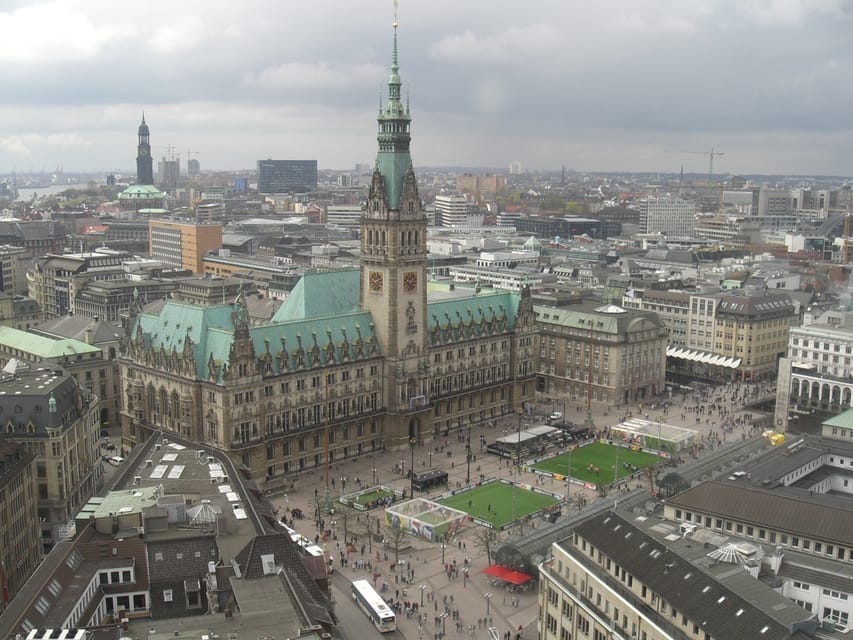
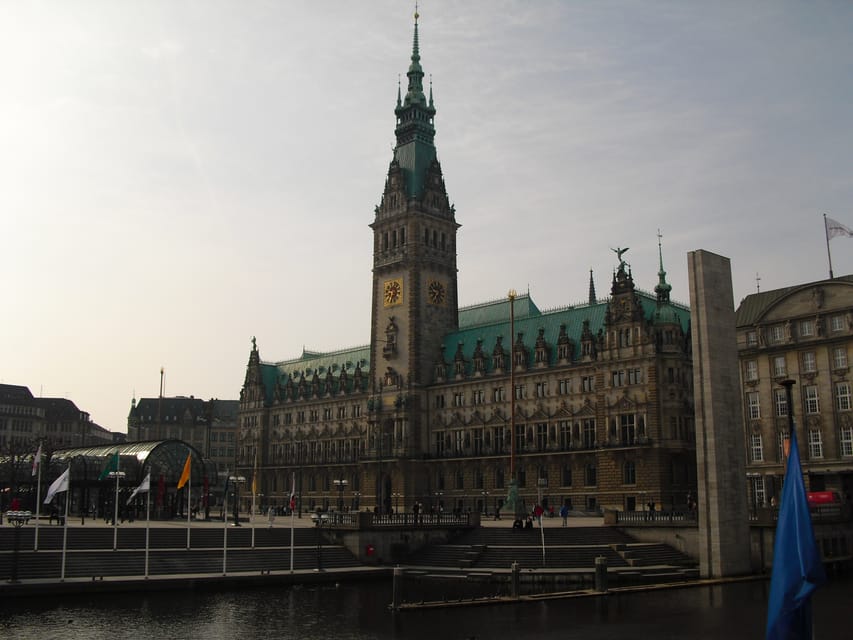
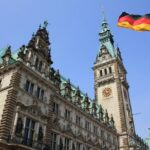
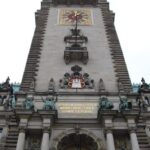
Most Hamburg first-timers need a quick “what am I looking at?” moment. This tour starts right at Hamburg Town Hall (Rathaus Hamburg), where the neo-renaissance façade immediately signals wealth and civic pride. Even if you’re not the type to study architecture, you’ll have enough landmarks to orient yourself fast: where power sat, how the city presented itself, and why this building matters.
From there, you move to the area tied to Hamburg’s government functions and civic commerce. The city hall and former stock market connection is the kind of detail that helps you understand the rest of the walk. Hamburg isn’t just “a pretty city by the water.” It’s a trading city that built institutions to manage money, goods, and influence.
What I’d watch for: in the Rathaus area, slow down for small architectural details at the entrance and along the façade. The guide will point out what to look at, and it makes your photos look less random and more meaningful.
Possible drawback to keep in mind: if you’re hoping for a long, inside-the-building style visit, the time here is designed as part of the overall circuit. You’ll get guided highlights, not an all-day museum experience.
Nicolaifleet and St. Nikolai Memorial: Port Roots and WWII Impact in One Route
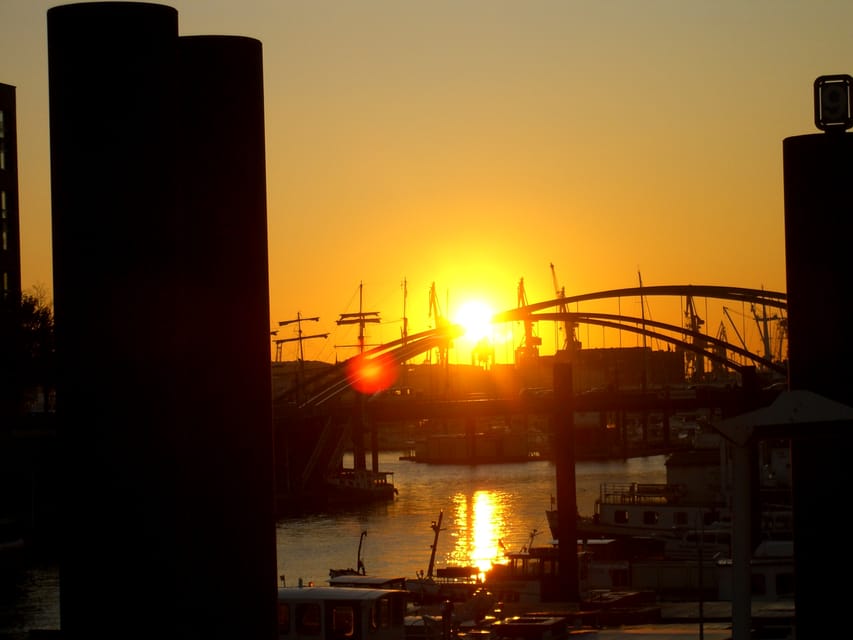
A short walk pulls you toward traces of Hamburg’s older port life. You’ll encounter Nicolaifleet, with a medieval feel tied to the city’s first port development (the tour frames it as starting around the 12th century). The guide helps you “see the city as it used to be,” not just as it looks now.
Then comes St. Nikolai Memorial, the WWII ruin. The church was destroyed during WWII, and what remains is preserved as a memorial. This stop is emotionally heavier than the shopping-and-sightseeing areas, and the value here is how the guide links the ruin to the wider story of what the war did to Hamburg and to Western Europe. It’s not only a photo moment. It’s a chance to understand why certain parts of the city were left as warnings rather than rebuilt into something else.
A practical detail matters at this stop: you also go past Trostbrücke, a photo stop connected to views over Nicolaifleet. The tour notes that views depend on tide, so if your schedule hits low tide, you might have less “water view” than you expected. Still, it’s a great spot to understand the waterways-and-bridges layout that defines Hamburg.
Tip for your camera: take a couple of shots from different angles. Ruins and waterfront edges can shift dramatically based on your exact position.
More time in the red-brick Speicherstadt and HafenCity
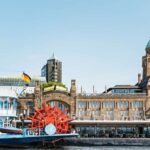

Deichstrasse Merchant Houses and the 17th-Century Trade Story
After the memorial, the tour pivots to something lighter—but not superficial. Deichstrasse is where you see merchant houses tied to the 17th century. The key point is that these homes were protected and preserved in a way that kept a “then-and-now” feeling alive, even through WWII destruction around the area.
Standing here helps you connect the dots between what Hamburg traded and how the city housed the people who benefited from trade. The guide’s job is to show you the logic: waterways led to warehouses, warehouses led to commercial wealth, and that wealth funded a built environment with real social meaning.
This is also where you might want to grab something small. The route passes street-level options where you can consider a quick bite, ice cream, or even a whiskey tasting stop if that fits your vibe. You won’t have time for a full sit-down meal inside the tour window, but you can plan to continue on your own afterward.
What I like about this section: it’s not only “look at old buildings.” It helps you understand who lived there, why those streets mattered, and how preservation choices shape what you feel in the city.
Speicherstadt: UNESCO Warehouses and a Coffee-Roastery Break
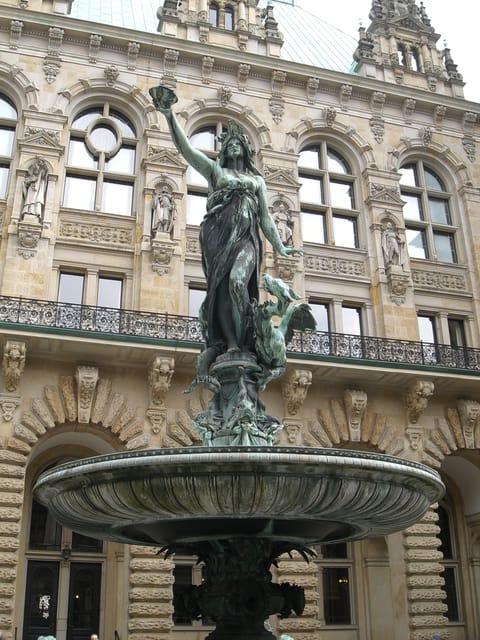
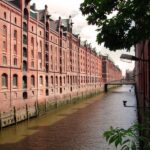
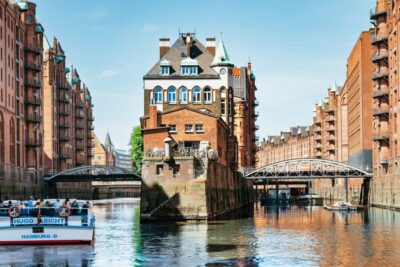
Next you step into Speicherstadt, the warehouse district that’s part of the UNESCO World Heritage listings. This is one of those places where the architecture helps you understand the economy. Red brick warehouses, canals, and the feeling of orderly industrial design tell you that trade here wasn’t a casual thing—it was systematized.
The tour’s approach is smart: you get a short guided segment to help you read the area. And there’s a chance to visit a coffee roastery located within the warehouse vibe. Even if you skip that add-on moment, you’ll still benefit from knowing what you’re looking at: warehouses built for goods delivered by flat ships, and a district that now serves different uses while keeping the original character.
Why this stop matters for value: a lot of cities have “old town” areas that feel decorative. Speicherstadt is different. It’s built around function, and the guide explains how the function shaped the layout you see today.
A practical watch-out: you’ll spend some time walking through this district, so comfortable shoes matter. Also, if you’re sensitive to crowds, keep an eye on timing—this area can be active, especially during the day.
HafenCity: Europe’s Big City-Planning Project in Modern Form
After centuries of Hamburg’s older core, the tour pushes forward to the 21st century with HafenCity. This is framed as Europe’s key city-planning project, and you can feel that difference instantly. Instead of repeating the old warehouse palette, you see modern planning concepts and contemporary architecture trying to solve for how cities live now.
The guided time here is short, but it does a useful thing: it prevents you from leaving Hamburg thinking only about the past. HafenCity helps you understand that Hamburg’s identity is not frozen. The city keeps building on its water-and-trade base, just with new materials, new urban planning ideas, and different priorities.
What I’d do if you want extra value: after the tour ends at Elbphilharmonie, consider continuing around HafenCity on your own. You’ll have the story in your head, so the walk feels like “reading the pages” rather than wandering for views.
Elbphilharmonie Finish: Architecture Made for the Camera
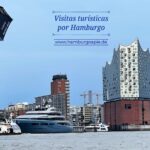
The tour concludes at the Elbphilharmonie, inaugurated in 2017. Even if you never attend a concert, the building itself is the point. The architecture grabs you because it looks like it was designed to be seen from multiple angles, with a silhouette that’s hard to ignore.
The tour wraps up here because it’s the modern headline act in Hamburg—one that still feels connected to the city’s public life and cultural ambition. You’ll get a guided segment and photo time, and then you’re free to decide what to do next based on your energy and schedule.
If you love architecture: this ending is a strong payoff. You’ll compare what you saw at Rathaus Hamburg (civic grandeur) with this building (cultural identity), and the contrast tells a clean story about Hamburg’s evolution.
If you’re there mainly for WWII history: you’ll still get a meaningful arc. The route doesn’t skip the heavier chapter, and the modern finish gives you perspective on what came after destruction.
More of the Elbphilharmonie and its Plaza





Price and Group Size: Is $294 Worth It?
The tour price is $294 per group for up to 15 people, for a 2-hour private experience. For a group, that can work out very well because the guide time stays shared across your party, not per person.
Here’s the practical way to think about value:
- If you’re traveling with 2–6 people, you’re paying for a convenient, efficient route that bundles multiple top landmarks into one guided walk.
- If you’re traveling as a bigger group, you’re getting a guide at a fixed group rate, which often makes this kind of private highlight tour a smarter move than booking separate attractions.
Also, because transportation isn’t included, the “real cost” depends on how you’ll reach the meeting point and what you’d otherwise spend on taxis or transit for multiple segments. Still, the route is tight enough that it’s designed to reduce decision fatigue.
One more value factor: the guide speaks German, English, Spanish, and French, which means you can pick a language that keeps the story flowing without you constantly translating in your head.
Who This Private Tour Fits Best
This is a great match if you want:
- A high-impact route that hits major Hamburg landmarks in a short time
- A guide who can connect buildings to the story behind them
- A mix of civic architecture, port history, WWII memory, and modern design
It also works well for mixed-age groups because the tour is private, so the pacing can be adjusted to your group’s comfort level. And since Jutta is known for keeping things lively with humor and visuals, you’re less likely to end up with a “facts only” experience.
If your travel style is very slow and you want long, indoor, museum-style time, you might feel the 2-hour limit. But for a first visit, this tour does a strong job of getting you oriented without skipping the big names.
Should You Book This Hamburg Private Tour?
Yes, you should book it if you’re short on time and want the “major hits” of Hamburg arranged into a single coherent walk: Rathaus Hamburg, the St. Nikolai memorial ruin, Deichstrasse, Speicherstadt (UNESCO), HafenCity, and an architectural finish at the Elbphilharmonie.
I’d skip it only if you want lengthy visits inside buildings or you prefer to roam without a structured storyline. With two hours, you’re trading depth-per-stop for breadth-and-context-per-day, and the tour is built for that bargain.
If you can, pick the language that feels most natural for you and your group. That’s where the guide’s strengths really show—especially when the story includes photo comparisons and a more human, less lecture-style approach.
FAQ
How long is the Hamburg private tour?
It’s a 2-hour tour.
Is this tour private?
Yes, it’s listed as a private group tour.
What’s the price and group size?
The price is $294 per group for up to 15 people.
Where do we meet, and where do we end?
The meeting point may vary depending on the option booked. The tour ends at Elbphilharmonie Hamburg with drop-off options listed at Elbphilharmonie Hamburg and at Platz der Deutschen Einheit 1, 20457 Hamburg.
What languages are available?
The live tour guide is available in German, English, Spanish, and French.
What is included in the tour price?
The price includes a professional tour guide and the 2-hour tour.
Is transportation included, and what about cancellation or pay later?
Transportation to the meeting point is not included. You can cancel up to 24 hours in advance for a full refund, and there’s a reserve now & pay later option.
Hamburg Old Town, On Foot


More Elbphilharmonie Plaza Visits
More of Speicherstadt & HafenCity



Just In: The Newest Hamburg Reviews









Speicherstadt & HafenCity, compared.
 ★ 4.61.5-Hour Harbor and Speicherstadt Day CruiseFrom $4014,200 reviews
 ★ 4.41-Hour Harbor Sightseeing Cruise with HafenCityFrom $303,067 reviews
 ★ 4.7Elbphilharmonie Plaza and HafenCity Food TourFrom $691,711 reviews
 ★ 4.5Eerie Speicherstadt TourFrom $291,394 reviews
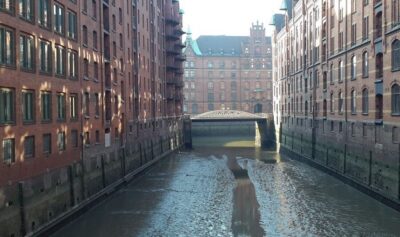 ★ 4.7Speicherstadt and Hafencity Guided TourFrom $161,344 reviews
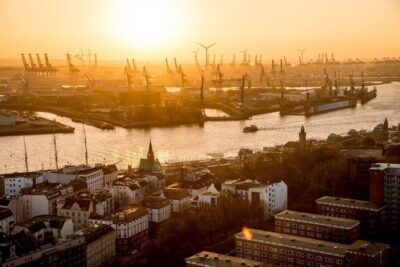 ★ 4.8Speicherstadt and HafenCity 2-Hour TourFrom $2821,063 reviews
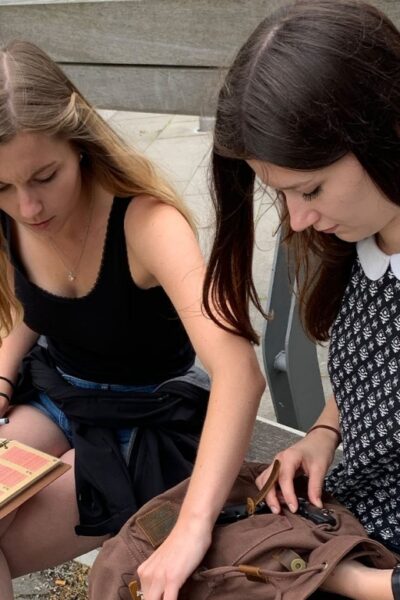 ★ 4.7Treasure Hunt Game through HafenCityFrom $29364 reviews
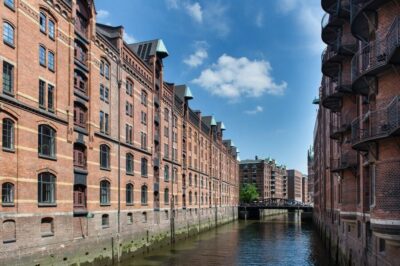 ★ 4.6Speicherstadt Walking Tour with Coffee TastingFrom $50360 reviews
Browse the lists this tour appears in