
Reviewed · HAMBURG OLD TOWN WALKS
Hamburg Old Town on foot – the guided tour with heart
A great old town walk starts with context. This one strings together Hamburg’s founders, trading power, and the Elbphilharmonie in a smart 2-hour route. I love how the stories make landmarks feel personal, and I also like that the tour moves at a pace that’s easy to follow even when the weather turns.
Two highlights I really value are the Historic Hamburg Town Hall area and the stop at St. Nikolai, where you’ll learn why this church mattered long before today’s skyline was built. The possible drawback is simple: you’re walking about 2.5 km and you’ll be out in all kinds of weather, so bring proper gear and expect to stay on your feet.
In This Review
- Key points you should know before you go
- Getting your bearings at Rathausmarkt and City Hall
- Rathausdiele and the Chamber of Commerce: where trading became tradition
- St. Nikolai memorial: the church that used to tower over everything
- Deichstraße and Willy-Brandt-Straße: walking 500 years in a straight line
- Speicherstadt: warehouses explained with tea, coffee and carpets
- HafenCity and the Elbphilharmonie: merchant tradition meets music city
- The guide factor: why this tour gets such strong feedback
- What’s included, what’s on you, and what to bring
- Price and value: is it worth $33 for a 2-hour walk?
- Who should book this Hamburg Old Town walk?
- Should you book?
- FAQ
- How long is the Hamburg Old Town on foot guided tour?
- How much does it cost?
- Where do I meet the guide?
- Where does the tour end?
- What languages is the tour offered in?
- Is the tour wheelchair accessible?
- How far will I walk?
- What is included in the price?
- Are food and drinks included?
- Should I dress for bad weather?
Key points you should know before you go
- Town Hall first: Imperial statues and a 112m tower set the tone right away at Rathausmarkt.
- Old trading stories: You’ll pass the Chamber of Commerce area tied to Germany’s oldest still-active stock exchange (1558).
- St. Nikolai’s big clue: Learn how the memorial connects to a period when this building was the tallest in the world.
- Hanseatic architecture by foot: Deichstraße is treated like a living timeline of 500 years of style.
- Speicherstadt details that stick: Tea, coffee, and oriental carpets are part of the warehouse-world explanation.
- Modern Hamburg payoff: HafenCity and the Elbphilharmonie close the loop between merchant tradition and music city.
Getting your bearings at Rathausmarkt and City Hall
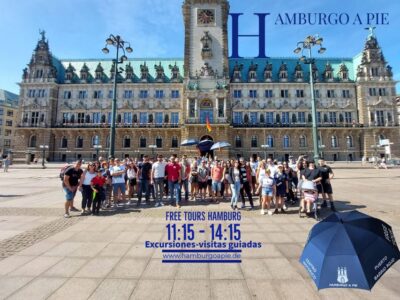
The tour starts where Hamburg likes to put its confidence on display: in front of the main entrance of Hamburg City Hall at Rathausmarkt 1. The guide is easy to spot with the BestHamburgTours/Hamburg Guides badge, and that matters because you’re starting right in the middle of the action, not in a remote meeting point.
From the first minutes, you get an overview of Hamburg’s historical structure using a city model at the Rathausmarkt. It’s a quick way to understand the “why” behind what you’re about to see. Hamburg isn’t only about pretty streets. It’s about trade routes, water, and how the city grew its power.
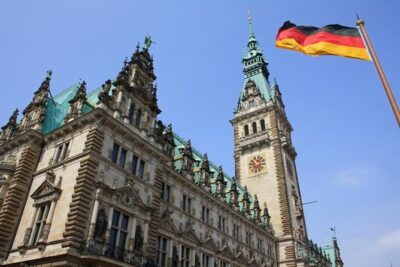
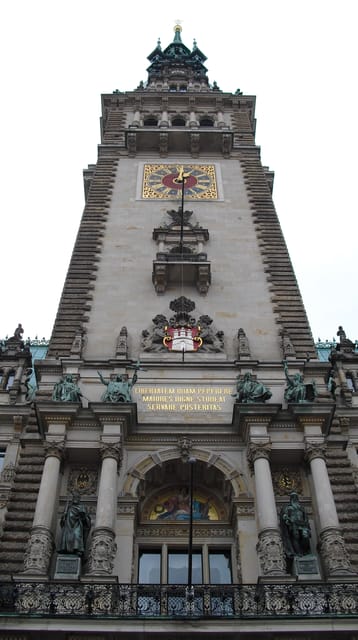
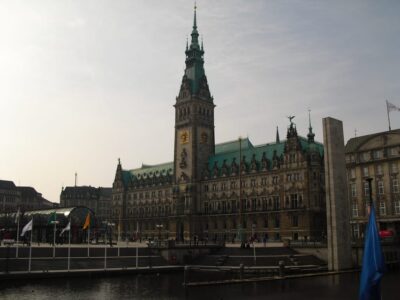
I also like how the tour doesn’t treat City Hall like a photo backdrop. You’re guided past key features in a way that helps you read the building like a symbol. The historic town hall includes those imperial statues you’ll notice right away, and the tower rises to 112 meters—a detail that turns into a useful reference point once you’re later looking across the Old Town and out toward HafenCity.
Practical note: you should be comfortable walking for about two hours and roughly 2.5 km. This is not a sit-down museum tour.
See more of the old town between the Rathaus and the water



Rathausdiele and the Chamber of Commerce: where trading became tradition
After the initial orientation, the walk shifts deeper into the official heart of old Hamburg: the Rathausdiele area. This is where the tour starts tying architecture to money and civic identity.
Next comes the Chamber of Commerce, described as home to Germany’s oldest still-active stock exchange, dating back to 1558. That’s not a trivia nugget for trivia’s sake. When your guide frames it as a long-running tradition of merchants making decisions in public spaces, the building stops being just old stone. You start to see how Hamburg’s commercial culture formed physical places that still function.
As you stroll past merchants’ trading houses, you’ll learn how to recognize the clues these buildings give you. Even if you’re not an architecture buff, the tour helps you understand what to look for—significance of location, the relationship between the city’s trade identity and its streets, and why certain buildings were built to impress.
If you enjoy city walks that include real context—not just dates—you’ll likely get a lot out of this middle stretch.
St. Nikolai memorial: the church that used to tower over everything
One of the most compelling stops is St. Nikolai memorial. You’ll pause for photos and a guided explanation, and the key point is how the tour connects the church’s story to global scale: it was once the tallest building in the world.
Even if you already know the church has a memorial role today, the guided part helps you understand why St. Nikolai carried so much symbolic weight in its time. Your guide connects the former inhabitants and the church’s former role in the city’s life, so it’s not only about the building’s height. It becomes about what Hamburg aspired to—and what people inside those walls lived through.
This stop also works well emotionally. You’re walking through layers of commercial confidence, and then you hit a memorial that reminds you power has consequences and history has scars. It’s a strong contrast point in a 2-hour route.
Deichstraße and Willy-Brandt-Straße: walking 500 years in a straight line
After St. Nikolai, the route continues along Willy-Brandt-Straße and then into Deichstraße, which the tour frames as a 500-year journey through Hanseatic architecture.
This is where I appreciate the guide’s pacing and storytelling style. They’re not asking you to stare at buildings until you go cross-eyed. Instead, they give you a “read this” way of looking. You start noticing how street shapes, building presence, and the overall design language fit together as a long-running urban style.
Deichstraße, in particular, can be easy to treat as just another old street—until you hear what makes it matter. The tour’s emphasis on Hanseatic architecture gives you a lens: Hamburg’s merchant era isn’t only a chapter in the past. It’s a design system still visible in how the city is laid out and how buildings hold their place.
If you’re the type who likes understanding the “rules” behind what you see, this is one of the most satisfying portions of the walk.
Speicherstadt: warehouses explained with tea, coffee and carpets
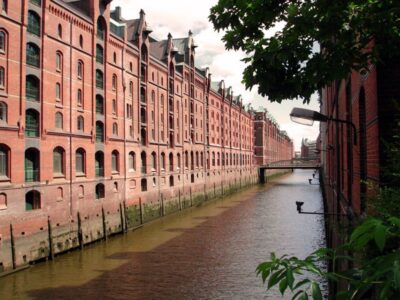
Then comes a detour through Speicherstadt, Hamburg’s storied warehouse district. This is one of those areas where the buildings can look like stage sets from a distance. The guided explanation helps them become functional again—centers built for storage, logistics, and trade.
The tour highlights specifics that make the area memorable: you’ll learn about tea, coffee, and oriental carpets as part of how Speicherstadt relates to global commerce. That’s a practical approach to history. It’s not just saying trade happened. It connects the district to real commodities that moved through Hamburg’s commercial world.
Also, Speicherstadt is visually interesting even before you get details. The guided timing helps: you get your context and then the streets and buildings start clicking into place in your mind. You’ll likely find yourself remembering images more than dates after this stop.
One small consideration: if it’s windy or rainy, warehouse districts can feel colder because of open space and walking. Dress for the weather, not for the forecast you’re hopeful about.
Let a Hamburg local lead the way






HafenCity and the Elbphilharmonie: merchant tradition meets music city
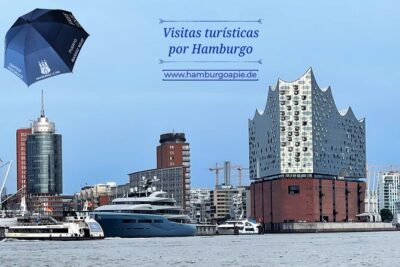
From Speicherstadt, you move into HafenCity, where the tour transitions from old-world trading spaces to a newer Hamburg identity. The highlight here is the Elbphilharmonie, which the tour positions as Hamburg’s new landmark.
This part of the walk is valuable because it answers a question you might have while sightseeing: How does a port city keep reinventing itself without losing its roots? The tour’s structure makes that connection feel natural. You just came from centuries of commercial storage and exchange, and now you’re in the zone where the city’s current culture is on display.
You’ll get photo time around the Elbphilharmonie area, plus a guided look at why it matters in the city’s story. If you want an extra step—especially for views—there’s an option mentioned for the Elbphilharmonie Plaza guided tour, which is geared toward a fantastic panoramic view. That’s a smart add-on if you’re a skyline person.
The tour ends at Elbphilharmonie Hamburg, so you finish in a modern, easy-to-reference area. That makes it simpler to plan dinner or a next stop afterward.
The guide factor: why this tour gets such strong feedback
A big reason people rate this tour highly is the human element. One guide name that shows up in reviews is Sebastian, described as engaging and passionate about Hamburg’s history and culture, with historical references that add real value. The theme across those comments is the same: the guide answers questions with enthusiasm, and the pace stays comfortable.
Even if your guide isn’t Sebastian, you can still use that as a clue about the tour style. This is not a script that you hear and forget. It’s a guided walk where you’re encouraged to connect what you see with why it exists.
That matters for value. At $33 per person for about two hours, you’re paying primarily for interpretation—turning a walk through pretty landmarks into a coherent story you can actually recall.
What’s included, what’s on you, and what to bring
You get an experienced guide. That’s it for inclusion. Food and drinks aren’t included, and HVV public transport tickets aren’t included either, so plan accordingly.
Since the tour runs in all weathers, you should bring weather-appropriate clothing. Hamburg weather can be moody, and the tour takes place even when conditions are rough. If you’ve ever regretted not wearing a rain layer in a big walking day, this is the kind of tour where you’ll feel it.
Also, wear shoes you trust. The route is only about 2.5 km, but it’s steady walking through city streets.
Price and value: is it worth $33 for a 2-hour walk?
$33 for a guided 2-hour Old Town walk isn’t cheap in the way a self-guided audio tour is cheap. But it’s also not inflated for what you get. You’re paying for:
- a structured route that links City Hall → trading houses → St. Nikolai → Hanseatic streets → Speicherstadt → HafenCity/Elbphilharmonie
- interpretive stops that explain what you’re looking at, not just where it is
- language support in English and German
- an easy starting point at Rathausmarkt with a clearly identified guide
If you like walking tours but get impatient with ones that only cover surface-level facts, this format is a strong match.
If you’re mostly into deep museum time and you want to go slowly and linger inside buildings, you might find two hours a bit brisk. But for getting your bearings and understanding the city’s spine quickly, it’s a fair deal.
Who should book this Hamburg Old Town walk?
This is a great fit if you:
- want a guided “connect-the-dots” walk rather than a list of monuments
- enjoy maritime-merchant stories and how they show up in streets and architecture
- want Old Town context without giving up the chance to see modern Hamburg at the end
It’s also a good option for first-timers. The tour covers key anchors in one sweep, so you can orient yourself for later independent exploring.
It may be less ideal if you:
- hate wet weather outings (because the tour runs in all weathers)
- need long indoor breaks or lots of rest stops (this is a walking route)
Should you book?
Yes, if you want a compact Hamburg highlight walk that actually explains what you’re seeing. The strongest reason to book is how the route creates continuity: imperial City Hall confidence, the memorial weight of St. Nikolai, the timeline feel of Deichstraße, the trade-flavored sensory history of Speicherstadt, and then the cultural statement of the Elbphilharmonie.
I’d book it especially if you’re visiting for a short time and want to turn a few kilometers into a real understanding of how Hamburg works—historically and today.
FAQ
How long is the Hamburg Old Town on foot guided tour?
The tour lasts 2 hours.
How much does it cost?
It costs $33 per person.
Where do I meet the guide?
Meet in front of the main entrance at Hamburg City Hall (Rathausmarkt 1). The guide has a BestHamburgTours/Hamburg Guides badge.
Where does the tour end?
The tour ends at Elbphilharmonie Hamburg.
What languages is the tour offered in?
The live guide offers English and German.
Is the tour wheelchair accessible?
Yes, the tour is wheelchair accessible.
How far will I walk?
Plan about 2 hours of walking and roughly 2.5 km.
What is included in the price?
An experienced and dedicated guide is included.
Are food and drinks included?
No, food and drinks are not included.
Should I dress for bad weather?
Yes. The tour takes place in all weathers, so wear weatherproof clothing.
More Tours in Hamburg




More Tour Reviews in Hamburg

Hamburg Old Town, On Foot


Just In: The Newest Hamburg Reviews








Hamburg Old Town Walks, compared.
 ★ 5.0The Local Tour of Hamburg Historic CentreFrom $31,058 reviews
 ★ 4.5Downtown, Alster & Creative Neighborhoods by BikeFrom $43217 reviews
 ★ 5.0Sightseeing Tour – Free Tour – Historic Center-Hamburg On FootFrom $3112 reviews
 ★ 4.8German Hamburg Historic City Center Pay-What-You-Want TourFrom $380 reviews
 ★ 4.8Die Kiez-Kapitän Hamburger Stadtführung & Speicherstadt TourFrom $1837 reviews
 ★ 4.7Private Tour Down Town around City HallFrom $29433 reviews
 ★ 4.8Free tour: Centro Histórico. Tú decides el precio al finalFrom $232 reviews
 ★ 4.8Private – Town Hall, Speicherstadt, ElbphilharmonieFrom $29427 reviews
Browse the lists this tour appears in