
Reviewed · ST. PAULI KIEZTOURS
Hamburg: Reeperbahn & St Pauli Guided Tour with Kiez Insider
St. Pauli hits fast, then lingers. This Reeperbahn and St. Pauli guided tour turns a famous nightlife area into something you can actually picture: street names, everyday life, and why the neighborhood became what it is today. I love the way the tour mixes history with real neighborhood details, and I also like the hands-on feel of stopping at the places where the stories happened. One thing to consider: it moves at a city-pace, so if you want long hangs at just a couple sights, this 100-minute format may feel more like a guided “highlights sprint.”
You’ll follow a local, German-speaking guide and pick up street-level context, from the area’s earlier identity to the modern Kiez vibe. You also get one included surprise that’s very Hamburg: a shot of authentic German liquor. The only real drawback is that the tour isn’t for everyone; it isn’t suitable for wheelchair users and it’s not for kids under 18, since this is nightlife-focused territory.
In This Review
- Key Points You’ll Actually Remember
- Why St. Pauli Feels Like a Real Neighborhood (Not a Theme Park)
- Meeting Up at Schmuckstraße 9: Start Point and Street Sense
- From Former Chinatown to an Infamous Nightlife Stop
- Spielbudenplatz and Herbertstraße: Street Names With Attitude
- The Davidwache Police Station: Why Order Shows Up Here
- Große Freiheit: How the Street Got Its Name
- The Included Liquor Shot: Small, Local, and Surprisingly Useful
- The Guide Style: Humor, Local Points of View, and Clear Answers
- Price and Time: Is $29 Good Value for 100 Minutes?
- What Might Feel Different: The Stop Pattern Isn’t Equal Time
- Who This Tour Fits Best (and Who Should Skip It)
- Should You Book This Kiez Insider Tour?
- FAQ
- How long is the tour?
- What does the tour cost?
- Where is the meeting point?
- Is hotel pickup included?
- What’s included in the tour price?
- What language is the tour conducted in?
- Is free cancellation available?
- Can I reserve without paying today?
- Is the tour suitable for children?
- Is the tour wheelchair accessible?
Key Points You’ll Actually Remember
- Old identities, new legends: you’ll hear how the area changed over time, not just what it looks like now
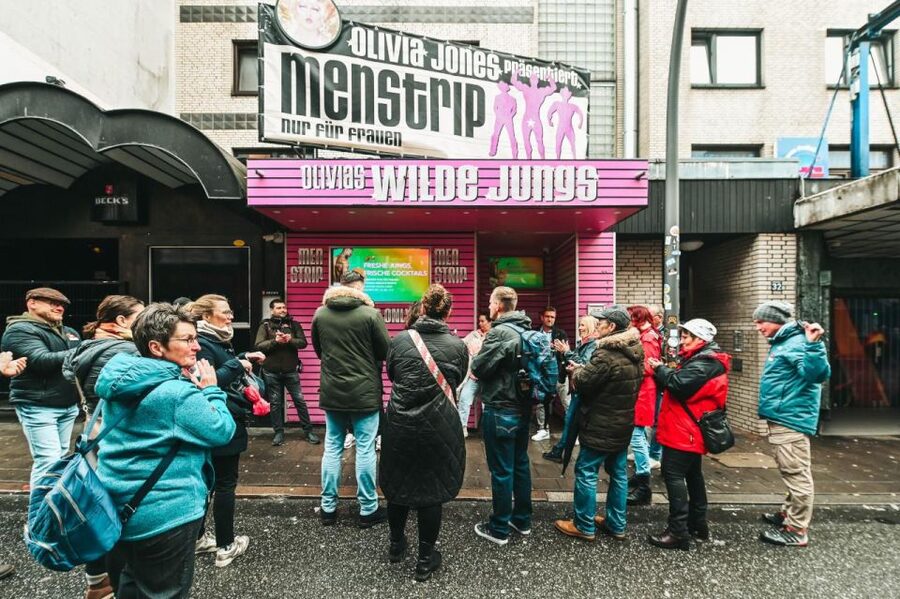
- Iconic street-name storytelling: the tour connects Spielbudenplatz, Herbertstraße, and Große Freiheit to the meaning behind the names
- High-profile landmarks on foot: you pass the Davidwache police station and other well-known points in the Kiez
- Stars and starlets, with context: the guide ties the entertainment world to daily neighborhood life
- One included liquor shot: a small extra that makes it feel like you joined the neighborhood for a moment
- A handful of meaningful stops: the best parts come in short, punchy segments rather than long museum-style pacing
Why St. Pauli Feels Like a Real Neighborhood (Not a Theme Park)
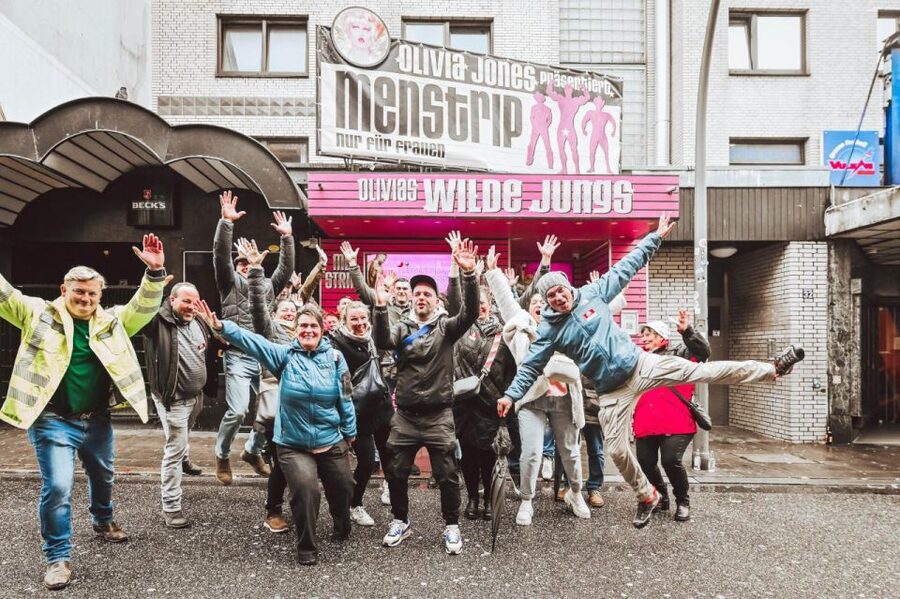
Hamburg’s St. Pauli can look like one big postcard of nightlife. This tour helps you see past the stereotypes and into the neighborhood logic: streets with roles, regular people going about their day, and an entertainment scene that has always been tangled with local culture. The big win here is how the stories are framed as part of community life, not just shock value.
You’ll learn how places on the Reeperbahn side of town developed their reputation. And you’ll get a feel for the everyday rhythm—who lives here, what the neighborhood culture values, and why certain corners became famous enough to attract stars and starlets. That’s the difference between just walking through an area and understanding why it became an icon.
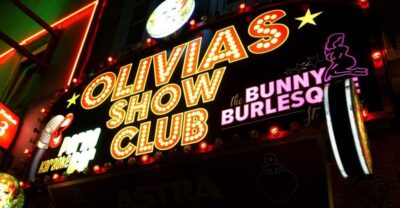
More of the Reeperbahn and St. Pauli after dark



Meeting Up at Schmuckstraße 9: Start Point and Street Sense
The tour meets your guide in front of Schmuckstraße 9 in Hamburg. That’s a practical starting point because it’s right where you can quickly shift from travel-mode into neighborhood-mode.
Once you’re with the group, expect a classic guided walking flow: short talks, then moving on. You’ll get the best results if you show up ready to look up at street details (signs, entrances, the overall street layout) and not just ahead at the next corner. The guide’s job is to connect the dots fast, so you’ll want to stay present while you’re walking.
From Former Chinatown to an Infamous Nightlife Stop
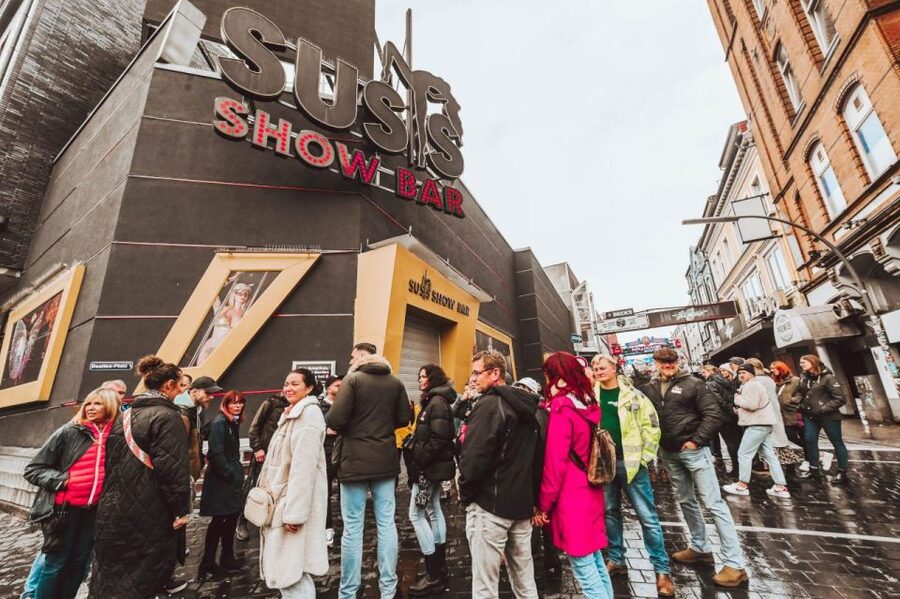
One of the most interesting early themes is transformation. The walk starts by moving you from the area’s former Chinatown identity toward Hamburg’s most notorious bar scene—an abrupt but meaningful jump that sets the stage for everything else. It’s not just “this is a party street.” It’s “this place reinvented itself again and again.”
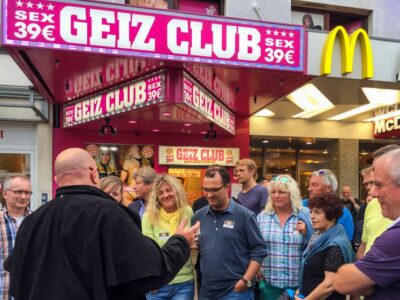
Along the way, the guide shares the kinds of stories that make St. Pauli famous: encounters with people who mattered in entertainment and the darker legends that cling to certain venues. You’ll even hear about an infamous case connected to a mass murderer who was reportedly among the guests at one stop. The point isn’t sensationalism for its own sake. It’s how legends attach to addresses, and how those addresses still shape people’s expectations today.
If you’re the kind of person who likes context, this opening works well. It makes later stops feel less random and more like chapters.
Spielbudenplatz and Herbertstraße: Street Names With Attitude
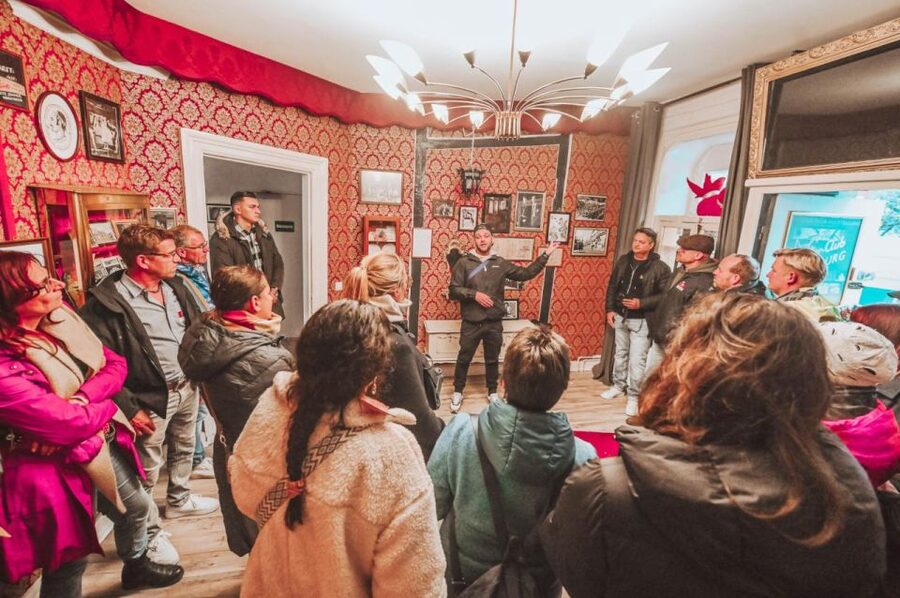
Next comes Spielbudenplatz and the walk past Herbertstraße, including the stretch many people associate with classic Kiez nightlife. This is where the tour earns its reputation for turning “famous streets” into understandable places.
You’ll hear what the guide thinks matters about these spots—how the neighborhood developed its entertainment pull, and how the streets function socially. The tour also tackles some direct, practical questions people often wonder about, including whether women are allowed to walk through Herbertstraße as a public street. That kind of detail helps you avoid the trap of treating the area like a closed set with rules you’re only half-aware of.
Also, Herbertstraße isn’t just about flashy entrances. It’s about the fact that the Kiez is still a place with layers. The guide connects the “star” side of nightlife with the “real people” side: workers, locals, repeat visitors, and the daily reality behind all the stories.
The Davidwache Police Station: Why Order Shows Up Here
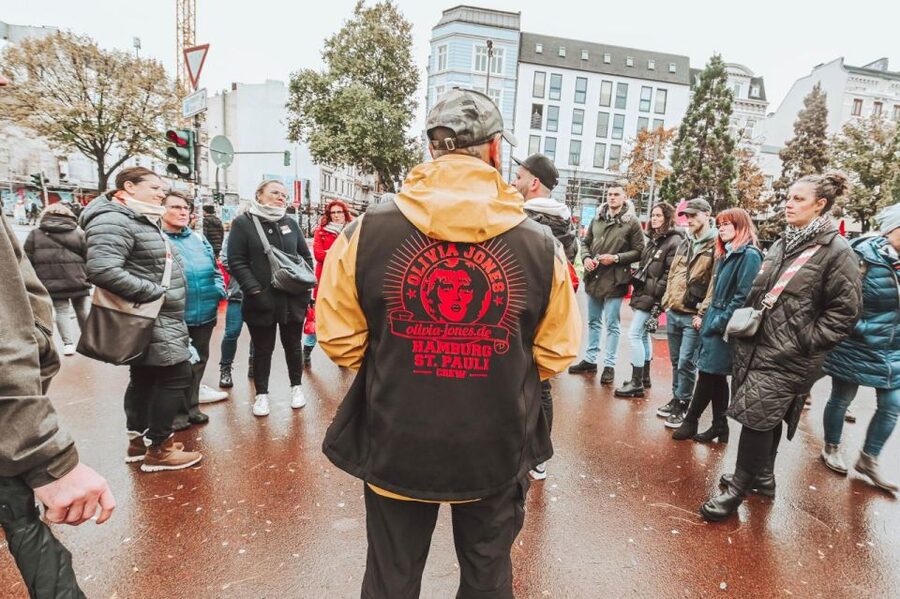
One of the most recognizable stops is Davidwache, the well-known police station. It’s the sort of landmark that can look symbolic from the outside, but on this tour you’ll get why it’s there and what it represents for the neighborhood.
This stop matters because it anchors the myth. St. Pauli has legends, but it also has enforcement, boundaries, and a long-running relationship between nightlife and public order. When you pass Davidwache as part of a guided walk, you start to understand that the Kiez isn’t a lawless zone—it’s a place with its own governance, even if the vibe is loud.
It’s a good moment to slow down and actually look around: the station is a visual reminder that the neighborhood’s story includes the state’s presence, not just entertainment.
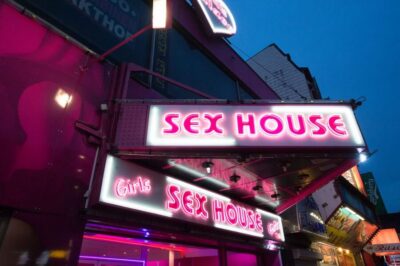
More Kieztours through the heart of St. Pauli





Große Freiheit: How the Street Got Its Name
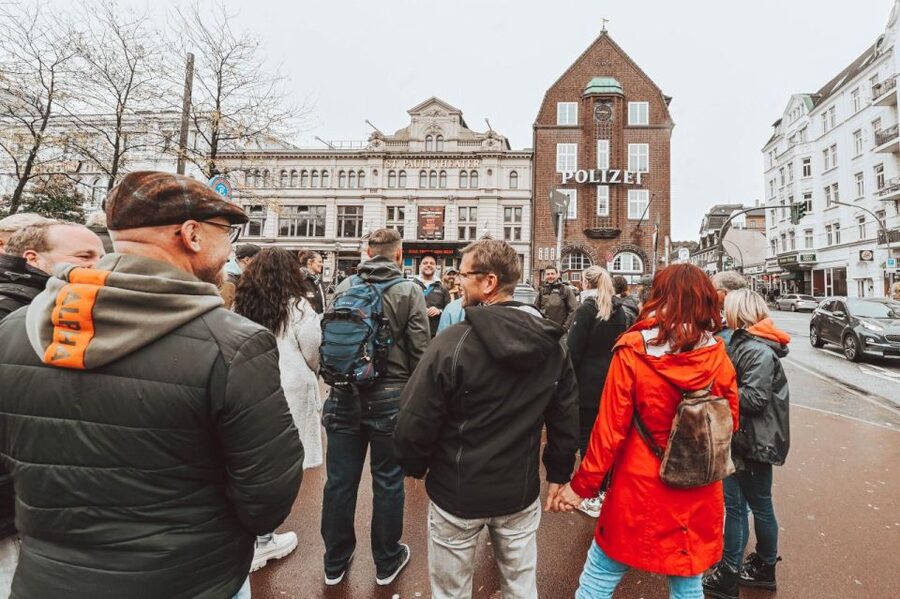
The tour continues into the heart of St. Pauli along Große Freiheit, and the guide explains how the street got its name. That’s a classic travel pleasure: you stop seeing a sign on a map and start understanding why the sign exists.
This is one of the best segments if you like cultural meaning behind everyday things. Street names are basically mini-history lessons, and the guide uses them to explain the neighborhood’s development. You’re not just hearing that the area is famous—you’re hearing how the neighborhood itself describes its identity.
As you walk, it helps to pay attention to the contrast between the showy parts and the quieter edges. Große Freiheit is where the entertainment reputation peaks, but the surrounding story remains about people living with all that attention—day after day.
The Included Liquor Shot: Small, Local, and Surprisingly Useful
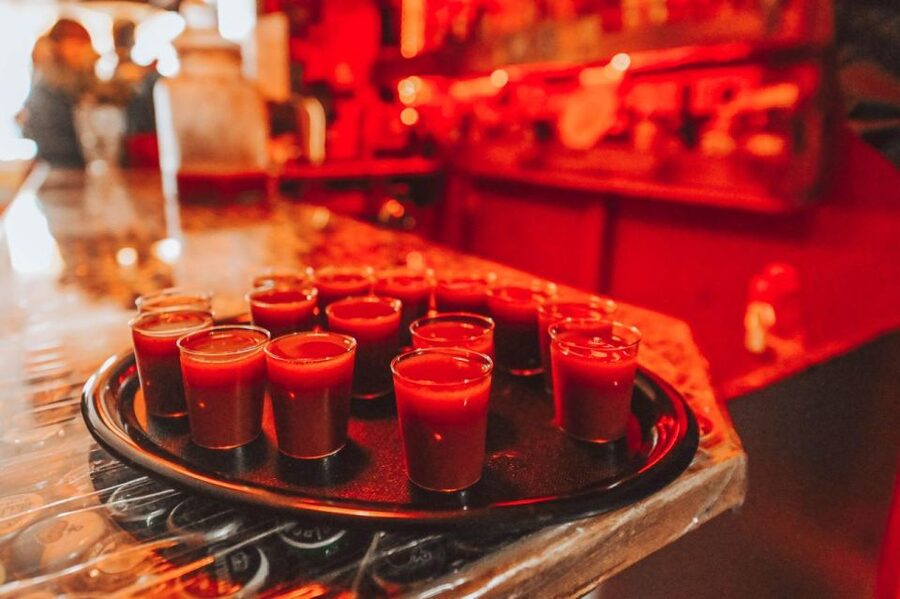
The tour includes a shot of authentic German liquor. It’s not a big party flourish. Think of it as a small handshake with the local nightlife culture.
Why I like this for you as a traveler: it gives you a moment that feels more than sightseeing. You’re not only hearing about the Kiez; you’re doing a tiny, safe-to-understand tradition that fits the area’s adult setting. It can also be a social reset for the group—people often share reactions right after, and that makes the rest of the walk feel more connected.
Practical note: treat it like a single shot, not a challenge. Pace yourself and keep your bearings. You’re walking afterward, and the streets here are active.
The Guide Style: Humor, Local Points of View, and Clear Answers
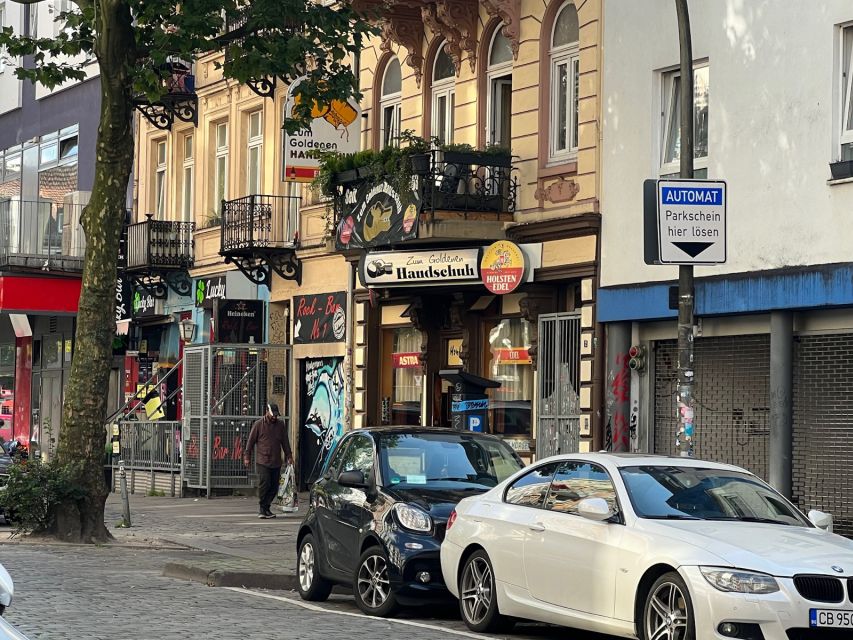
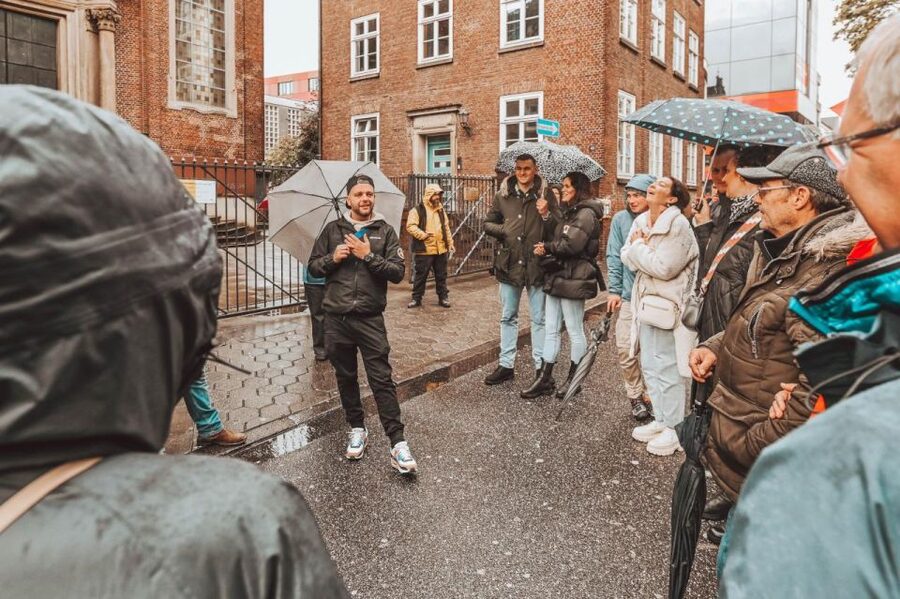
The guide is live and speaks German, and that really affects the tour’s energy. A good local guide doesn’t just list facts; they give you a sense of how the neighborhood thinks.
In the strongest examples of the guide’s approach, you can feel how much Bela-style storytelling brings the Kiez to life: vivid neighborhood details, a bit of humor, and answers to the kind of questions that make you feel informed instead of confused. If you like walking tours where the guide actually helps you understand what you’re seeing, that’s the vibe to expect.
You’ll also notice the tour’s rhythm is built around short blocks of story tied to specific stops. That’s why it works even in a busy nightlife area—you get a reason for each turn.
Price and Time: Is $29 Good Value for 100 Minutes?
At $29 per person for 100 minutes, this tour isn’t trying to compete with long, multi-part day excursions. It’s built for value-through-focus: enough time to cover multiple iconic spots and enough guide time to connect the dots.
You’re also not paying extra for the basics. The guide is included, plus the liquor shot. And because there’s no hotel pickup, you’re steering your own start time and saving travel time that would usually get spent on logistics instead of story.
So the value math is pretty straightforward: you pay for guided context in a compact window. If you’re short on time in Hamburg, that makes it a solid deal. If you want lots of downtime, this may feel too “on the move.”
What Might Feel Different: The Stop Pattern Isn’t Equal Time
A fair consideration is how the tour tells its story. The day is built around a handful of key stops, where the guide covers more than one theme quickly. That’s efficient, but it means the walking segments between stops matter—if you tune out while moving, you might miss some of the glue connecting locations.
In other words, this is less like a slow museum route and more like an informed walk where the guide keeps the pace. If you prefer that each stop gets a long, slow moment, you might wish for more time at fewer places. Still, the trade-off is that you cover major landmarks without burning your whole afternoon.
Who This Tour Fits Best (and Who Should Skip It)
This tour is a good match if you want the “Hamburg people actually talk about this” feeling. You’ll likely enjoy it if you like:
- walking tours with clear street context
- nightlife history tied to real places
- learning why famous streets got their reputation
It’s also a smart choice for first-time visitors who want orientation in St. Pauli without needing to guess what’s important.
On the other hand, skip it if you:
- need wheelchair accessibility (it isn’t suitable for wheelchair users)
- are traveling with children under 18 (it’s not for them)
- prefer daytime-only, low-intensity city walks
Should You Book This Kiez Insider Tour?
Book it if you want a compact, story-driven introduction to Reeperbahn and St. Pauli that goes beyond the obvious sights. The included liquor shot adds a small local ritual that makes the whole experience feel more real, and the guide’s job here is to answer the questions that help you understand the neighborhood.
Don’t book it if you hate nightlife areas, need lots of step-by-step clarity without any pace, or need accessibility support that the tour can’t provide. And if you’re hoping for a slow, stop-by-stop history lecture, know that the style is more “highlights with meaning” than “linger and read every plaque.”
If you’re adult, curious, and short on time in Hamburg, this is a strong use of your hours.
FAQ
How long is the tour?
The tour lasts 100 minutes.
What does the tour cost?
The price is $29 per person.
Where is the meeting point?
Meet your guide in front of Schmuckstraße 9 in Hamburg.
Is hotel pickup included?
No, hotel pickup and drop-off are not included.
What’s included in the tour price?
A tour guide is included, along with a shot of liquor.
What language is the tour conducted in?
The tour is in German.
Is free cancellation available?
Yes. You can cancel up to 24 hours in advance for a full refund.
Can I reserve without paying today?
Yes. There is a reserve now & pay later option where you pay nothing today.
Is the tour suitable for children?
No. It is not suitable for children under 18 years.
Is the tour wheelchair accessible?
No. It is not suitable for wheelchair users.
More Tour Reviews in Hamburg




More St. Pauli Kieztours

More Reeperbahn & Red-Light Walks


Just In: The Newest Hamburg Reviews









St. Pauli Kieztours, compared.
 ★ 4.7Insider Tour of the Reeperbahn & St. PauliFrom $295,057 reviews
 ★ 4.7Night Watchman’s Tour of St. Pauli in GermanFrom $234,818 reviews
 ★ 4.7In the Footsteps of “Olivia” Reeperbahn TourFrom $5003,947 reviews
 ★ 4.7St. Pauli Highlights Guided Tour with Beer for 18+From $292,353 reviews
 ★ 4.8Olivia Jones Tour with Iconic Barker FabianFrom $421,395 reviews
 ★ 4.7Reeperbahn Quickie, The Short & Sexy St. Pauli TourFrom $23915 reviews
 ★ 4.8St. Pauli Nightlife Tour with Drag Queen in GermanFrom $41733 reviews
 ★ 4.7St. Pauli Tour of the ReeperbahnFrom $16644 reviews
Browse the lists this tour appears in