
Reviewed · ST. PAULI KIEZTOURS
Hamburg St. Pauli and Red Light District Private Walking Tour
Two hours can feel like a whole other Hamburg. This private St. Pauli walk ties together Reeperbahn nightlife, war-era landmarks, and famous Beatles spots in a way that makes the neighborhood easier to understand and way more fun to navigate.
What I like most is how the tour keeps moving with a clear route, starting at Millerntorplatz and finishing at Große Freiheit 36, so you get oriented fast. I also appreciate the story power from guides like Joe and Lock, who turn street corners into context and even add practical tips for a good night out; the main thing to consider is that the tour is not recommended for children, since the area is adult by nature.
In This Review
- Key moments you’ll want to catch
- What a private St. Pauli walk is really good for
- Millerntorplatz to Heiligengeistfeld: stadium views and the Flakbunker story
- Dancing Towers and the view from Cloud’s Restaurant
- Reeperbahn at street level: where to focus and what it means
- Panoptikum’s black-curtain twist and Spielbudenplatz’s theater roots
- Davidwache police station: why this address became legendary
- Beatles stops on Davidstraße, then Beatles-Platz for the photo
- Herbertstraße and the local boundary lines you’ll learn about
- The tour’s best practical value: how you move and what to do next
- Price and timing: whether $43.65 makes sense for you
- Should you book this St. Pauli and red-light district private tour?
- FAQ
- How long is the Hamburg St. Pauli and red-light district private walking tour?
- Is the tour private?
- What language is the tour offered in?
- What’s included in the price?
- Does the tour run in bad weather?
- Is it suitable for children?
Key moments you’ll want to catch
- Millerntorplatz start with a football-stadium view and the tour’s red-thread route through St. Pauli
- A Flakbunker on the Heiligengeistfeld that’s been uniquely repurposed
- Dancing Towers and Cloud’s Restaurant views over Hamburg’s waterfront
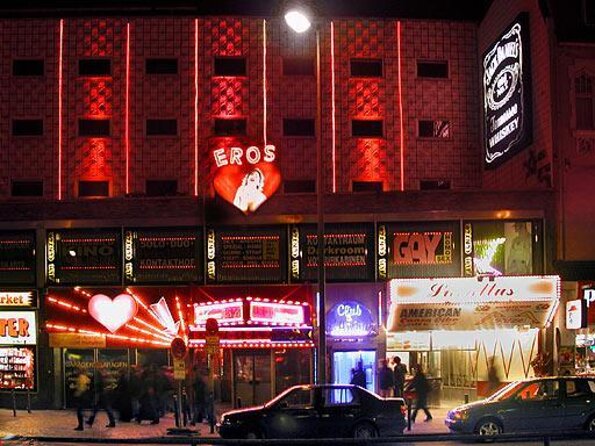
- Reeperbahn street walk with guidance on where the best clubs and restaurants tend to be
- Davidwache (Polizeikommissariat 15) and why it became Germany’s most famous station
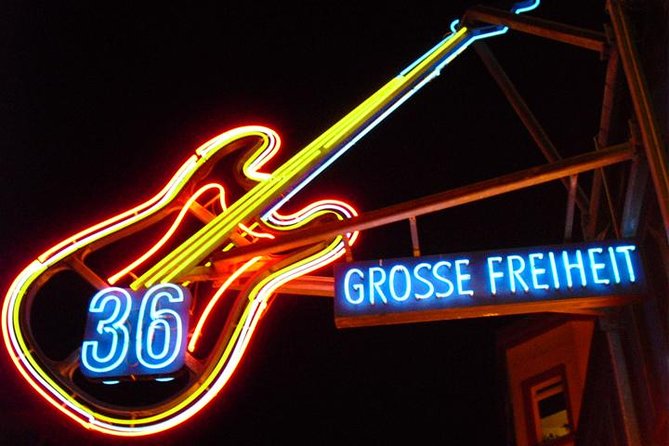
- Beatles-Platz and Grosse Freiheit 36 for the music-history photo and a smart end point
What a private St. Pauli walk is really good for
This is a 2-hour private walking tour through Hamburg’s St. Pauli area and the red-light district, led by a local guide in English. It’s priced at $43.65 per person, and the “private” part matters here, because you’re not sharing the guide with strangers you can’t control. That makes it easier to ask questions and keep the pace comfortable, especially since you’ll cover a decent stretch of streets.
You also get something many “night life” tours skip: actual place context. St. Pauli is famous, but it can also feel like sensory overload if you just wander. With a guide, you learn why certain sites matter, how the neighborhood developed, and how Hamburgers themselves talk about local landmarks like Michel.
If your goal is to see the area, understand it, and then confidently choose where to eat or drink afterward, this format is built for that.
More of the Reeperbahn and St. Pauli after dark


Millerntorplatz to Heiligengeistfeld: stadium views and the Flakbunker story
Most tours start with a meeting point. This one starts with orientation. At Millerntorplatz, you begin following a “red-thread” route that’s designed to keep the story entertaining while you move through the neighborhood. Early on, you also get a good view of the football station, which helps anchor the area in something real and modern, not just nightlife myths.
From there, the tour reaches the edge of the Heiligengeistfeld, where you can see a Flakbunker that’s been rebuilt for something special. The point isn’t just that it’s historic. You’ll learn what it is, how it’s used now, and how to access it from inside or even from above. That contrast helps you understand why St. Pauli isn’t only about neon-era legends.
You also hear about Michel, the old nickname for Hamburg’s key figure, and why Michel had special meaning here during the time of Torsperre (the city’s gate-closing tradition). And yes, it’s a practical tour, so you won’t be sent off to visit churches. Instead, the focus stays on how rules and traditions shaped nightlife culture.
Dancing Towers and the view from Cloud’s Restaurant
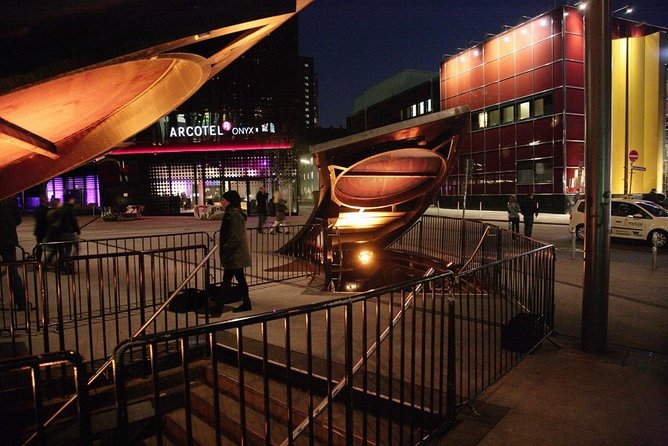
One of the nicest “pause-and-look” moments comes around Dancing Towers. The entrance area is dramatic, and the tour explains why the towers are shaped with that distinctive bend. It’s the kind of detail you’d miss if you’re just walking past.
Then you get a view from the Clouds Restaurant, and this is where the tour does something smart: it uses a clear viewpoint so you understand the geography of Hamburg’s waterfront while you’re still in the neighborhood. That matters because St. Pauli can feel like a maze at night. A high vantage point gives you a mental map.
This stop is short—about 5 minutes—but it’s one of the most “wow” sections of the walk, and it helps break up the denser street parts later on.
Reeperbahn at street level: where to focus and what it means
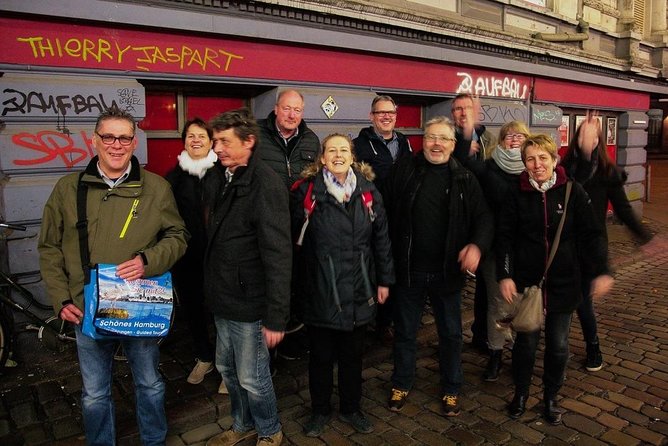
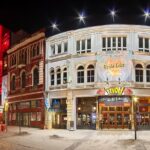
Next comes the heart of it: the Reeperbahn. You’ll walk a full stretch over the street, not just stop at a single landmark and move on. The guide uses this time to explain where the better-known clubs and restaurants tend to be, and even how the street’s name connects to the local story.
Walking it with guidance is key. Without context, Reeperbahn can feel like you’re either too early to understand it or too late to make good choices. With a guide’s direction, you get a sharper sense of which blocks suit your vibe and where you might want to return later.
This is also a good section for asking questions about how the nightlife scene works in practice—simple things like what kind of venues are nearby and what areas to approach with caution. The tour’s structure sets you up to make better decisions afterward.
Panoptikum’s black-curtain twist and Spielbudenplatz’s theater roots
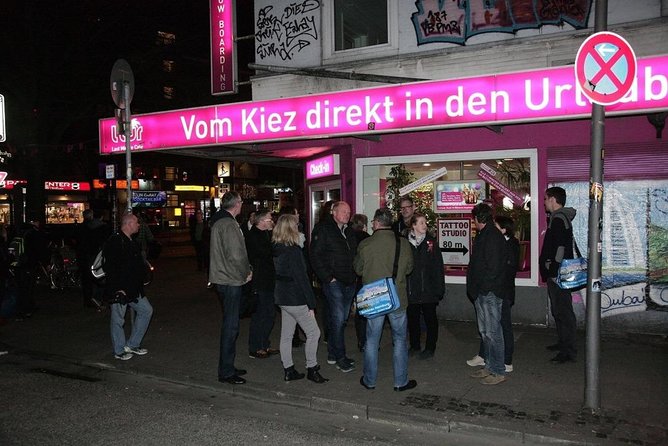
After the main street, the tour shifts into odd-but-interesting territory with Panoptikum, Hamburg’s wax figure attraction. You’ll spend a couple minutes here, enough to understand the premise and to learn what’s behind the black curtain in the basement area. Even if you don’t go inside, knowing what the attraction is built around changes how you see the site.
Then you head to Spielbudenplatz, where the tour explains how the square got its name. It also connects the area to the Kasperle-Theater, which adds a more playful, older layer to the story. And if your trip lines up, you’ll hear about the Santa Pauli Christmas Market, which happens here every year—another reminder that St. Pauli isn’t only nightlife after dark.
This pairing (Panoptikum plus Spielbudenplatz) makes the tour feel less one-note. It’s not only about adult entertainment. It’s about how Hamburg has long used performance, spectacle, and rules of public space to shape local culture.
More Kieztours through the heart of St. Pauli



Davidwache police station: why this address became legendary
Hamburg’s red-light district doesn’t just run on nightlife energy. It also runs on order—and the tour makes that point with a visit to Polizeikommissariat 15 Davidwache, the station tied to Davidwache. The guide shares why this is considered the most famous police station in Germany and adds anecdotes and factual context that make the reputation make sense.
A short stop here can do a lot. It signals that you’re not ignoring the real world while exploring the nightlife world. Instead, you’re learning how institutions, laws, and local attitudes shaped what people do on these streets.
You then continue to Davidstraße, where it gets more specific and music-linked.
Beatles stops on Davidstraße, then Beatles-Platz for the photo
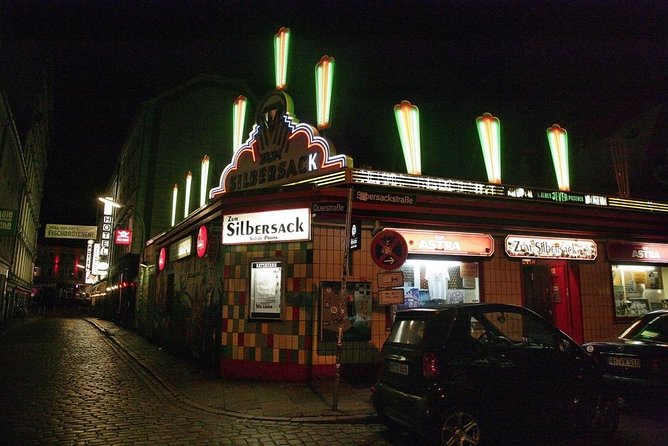
The tour ties St. Pauli to music history in a way that feels fun rather than forced. On Davidstraße, you’ll see a Beatles-related hair salon and the St. Pauli Museum passing by (a great nearby option if you want more background on what you’re seeing). You’ll also hear about the famous bar where the Beatles got their first break, which is exactly the kind of detail you’d never connect on your own.
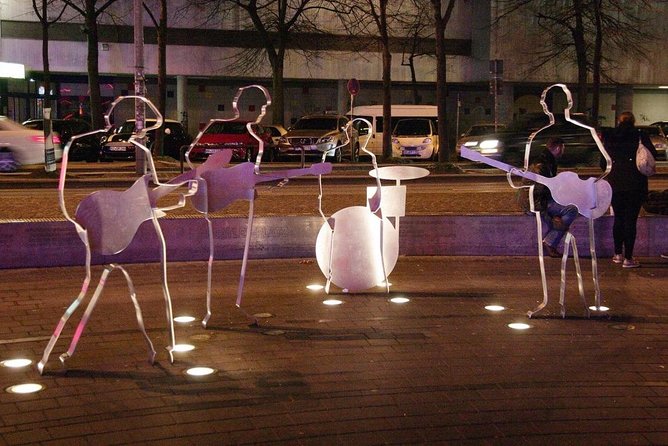
One of the most convenient parts for a quick photo is the Beatles-Platz stop. Since 2008, the life-size Beatles sculptures have been here, giving you an easy group-photo moment at the end of the music-history section. It’s brief, but it’s a clear payoff.
And then the walking route continues into the part of the neighborhood that’s most associated with live entertainment: Grosse Freiheit 36. This is where the tour ends, but it’s also a solid start point for your next move, because you’re leaving at a moment when you already understand the story and can choose venues with more confidence.
Herbertstraße and the local boundary lines you’ll learn about
Some streets in St. Pauli come with social rules that still show up in how people talk about them. The tour’s stop at Herbertstraße makes that clear: access for women and children is forbidden here. The practical element is important. The guide will split groups as needed, and on request men can go through while the women move around the outside route, with the guide sharing secrets from the Erichstraße area.
This is the kind of local detail that changes a neighborhood from entertainment-only into something historical and culturally specific. It’s not just rules for shock value; it’s how the neighborhood’s public space has been shaped over time.
Next comes Hans-Albers-Platz, where the tour covers why the name matters and links his monument not only to Hamburg but also to Düsseldorf. It’s quick—just a couple minutes—but it gives you a meaningful local reference point beyond nightlife.
The tour’s best practical value: how you move and what to do next
A good walking tour doesn’t end when you stop walking. This one ends at Große Freiheit 36, but the structure is designed so you can immediately use what you learned. You start with big context, hit the key sights, and then finish right where nightlife energy is highest.
There’s also a useful “return option” built into the route: you pass by one of the oldest pubs on the Kiez area, and the guide suggests you can go back after the tour. That’s a small detail, but it’s a very real way to turn the tour into an actual evening plan instead of a photo-only experience.
One last thing I appreciate: the tour can feel personal. When groups are small, it’s more like a tailored guide walk than a scripted performance. That’s especially true if you get a guide like Joe, who can also help with where to eat and hang out after, based on what you’re in the mood for. Another guide name you might hear is Lock, who’s praised for keeping the experience engaging and easy to follow.
Price and timing: whether $43.65 makes sense for you
At $43.65 per person for about 2 hours, this tour falls into the mid-range category for a private guided experience. The “private” part is what makes the price easier to justify. If you’re traveling in a small group, you’re paying for a guide’s time and local expertise directly, instead of splitting the guide across many people and losing the ability to ask questions.
It’s also booked far in advance on average, which tells me it’s a steady pick for people who want St. Pauli context without wasting time. If you’re coming during a busy stretch, it’s smart to lock it in early rather than assume you can fit it last minute.
The tour operates in all weather conditions, so you’ll want to dress for the night and for rain if it shows up. It’s also not recommended for children, and it’s best for anyone with moderate physical fitness since it’s a walking route.
Should you book this St. Pauli and red-light district private tour?
Book it if you want to understand St. Pauli instead of only seeing it. This is a great fit for Beatles fans who want meaningful site context, and for adults who want a guided route through the red-light district with history, practical street knowledge, and a clean starting-to-ending plan.
Skip it if you’re traveling with children, or if the adult nature of the area is a deal-breaker for your comfort level. Also consider whether you prefer a fast, nightlife-focused walk without cultural context; this one spends time on landmarks, rules, and stories, not just club-hopping.
If you decide to go, I’d treat the tour as the first chapter of your evening. You’ll finish with better bearings, better choices, and a much clearer sense of what you’re looking at on Hamburg’s most famous streets.
FAQ
How long is the Hamburg St. Pauli and red-light district private walking tour?
The tour is about 2 hours.
Is the tour private?
Yes. It’s a private tour, meaning only your group participates.
What language is the tour offered in?
The tour is offered in English.
What’s included in the price?
The local guide is included. Food and drinks are not included.
Does the tour run in bad weather?
Yes. It operates in all weather conditions, so you should dress appropriately.
Is it suitable for children?
It is not recommended for children.
More Tour Reviews in Hamburg



More St. Pauli Kieztours

More Reeperbahn & Red-Light Walks

Just In: The Newest Hamburg Reviews








St. Pauli Kieztours, compared.
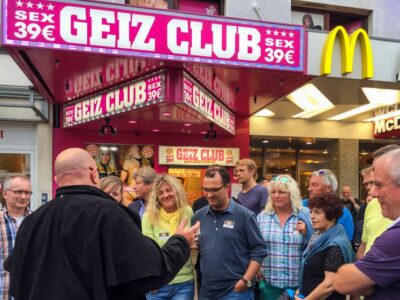 ★ 4.7Insider Tour of the Reeperbahn & St. PauliFrom $295,057 reviews
 ★ 4.7Night Watchman’s Tour of St. Pauli in GermanFrom $234,818 reviews
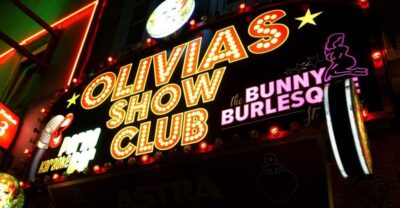 ★ 4.7In the Footsteps of “Olivia” Reeperbahn TourFrom $5003,947 reviews
 ★ 4.7St. Pauli Highlights Guided Tour with Beer for 18+From $292,353 reviews
 ★ 4.8Olivia Jones Tour with Iconic Barker FabianFrom $421,395 reviews
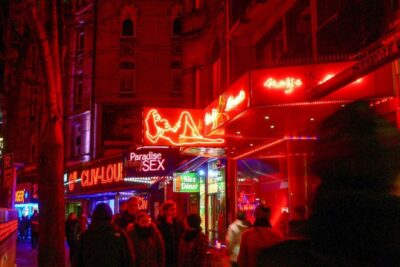 ★ 4.7Reeperbahn Quickie, The Short & Sexy St. Pauli TourFrom $23915 reviews
 ★ 4.8St. Pauli Nightlife Tour with Drag Queen in GermanFrom $41733 reviews
 ★ 4.7St. Pauli Tour of the ReeperbahnFrom $16644 reviews
Browse the lists this tour appears in