
Reviewed · ST. PAULI KIEZTOURS
St. Pauli Kieztour – Reeperbahn mittendrin
Reeperbahn history walks right beside you. This St. Pauli Kieztour puts you with a local resident guide so you see how the neighborhood really works, not just what postcards say. I love how the tour connects the famous spots with the everyday side of Hamburg, from the energy near Große Freiheit to the human scale around Hans-Albers-Platz.
Next up: the 400-year history part. You’ll get more than names on a street—there’s also a look at present-day sociopolitical developments, which helps explain why St. Pauli feels like it always has different worlds rubbing shoulders. I like that the guide keeps it grounded in what’s happening now, not just a slideshow of the past.
One thing to consider: the tour runs in German, and it’s not suitable for children under 16. If you’re looking for a quiet, family-friendly stroll, the notoriety of the Reeperbahn may be more than you want for a 2-hour walk.
In This Review
- Quick hits you’ll actually feel
- Entering St. Pauli as a real neighborhood, not a rumor
- The 2-hour route: what you’ll see and why each stop matters
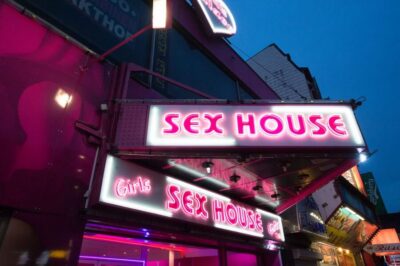
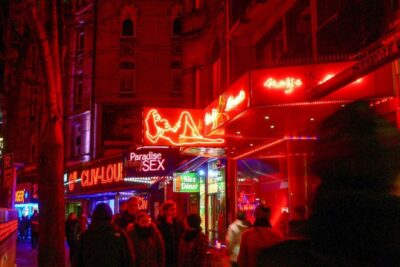
- Reeperbahn: the notorious spine of it all
- Große Freiheit: where performance and nightlife culture collide
- Davidwache: the street-level reality check
- Hans-Albers-Platz: a central viewpoint for the neighborhood’s story
- Herbertstraße: the alternative edge in the mix
- Spielbudenplatz: where the tour’s stories end near the action
- The 400-year story: how the past explains the present
- Insider nightlife recommendations and the drink stop that keeps it real
- Price and value: is $29 for 2 hours a fair deal?
- Who should book St. Pauli Kieztour – Reeperbahn mittendrin
- Before you go: what to know so the tour feels easy
- Should you book this tour?
- FAQ
- What is the meeting point for the St. Pauli Kieztour – Reeperbahn mittendrin?
- How long is the tour?
- How much does the tour cost?
- Is food or drinks included in the tour price?
- What language is the tour in?
- Is the tour suitable for children?
- Is the tour wheelchair accessible?
- Can I cancel for a full refund?
- Can I reserve now and pay later?
- How do I find the starting time?
Quick hits you’ll actually feel

- Local resident perspective: You’re guided by someone who knows the neighborhood rhythms and stories.
- 400-year history + today: You’ll connect older St. Pauli changes to present-day sociopolitical developments.
- Big-name stops with context: Große Freiheit, Davidwache, Hans-Albers-Platz, Herbertstraße, Spielbudenplatz, plus the Reeperbahn.
- Red Light District history: You’ll learn how the area’s reputation formed and what it means beyond clichés.
- A practical drink stop: You’ll be able to grab a drink at a local pub close to where residents feel at home.
Entering St. Pauli as a real neighborhood, not a rumor
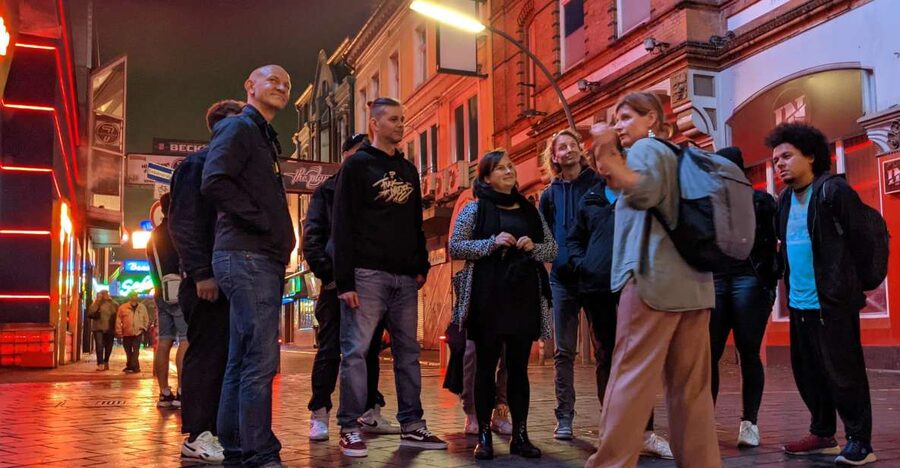
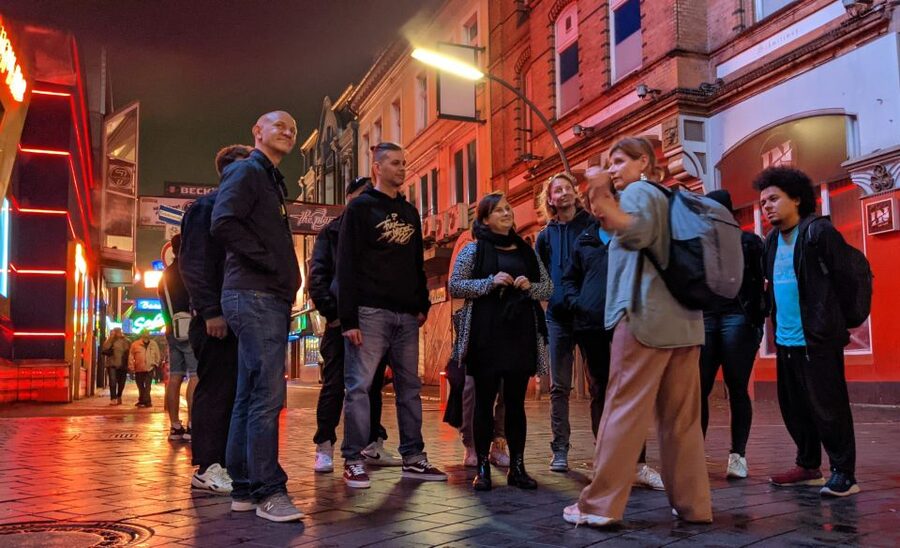
St. Pauli has a reputation. You’ve probably heard the headlines: neon, nightlife, and the Red Light District. What I like about this tour is that it doesn’t treat that reputation like a magic trick. It treats St. Pauli like a living neighborhood with layers—some glamorous, some gritty, and most of them complicated in the way real places are.
The tour’s theme is right there in the way the guide describes the area: red lights meet posh hotels, alternative lifestyles meet party culture, and tourists meet old St. Paulians. That clash can sound abstract until you’re walking the streets with someone who lives there. Suddenly you understand why the neighborhood keeps pulling in visitors while still being a place where people go about their nights.
And because the guide is local, you’re not stuck with only general commentary. You can ask questions, follow the logic of the streets, and get practical context for what you’re seeing—so the Reeperbahn doesn’t feel like a theme park. It feels like a place with history and ongoing change.
More of the Reeperbahn and St. Pauli after dark



The 2-hour route: what you’ll see and why each stop matters
This is a straight-to-the-point, 2-hour walking tour. The best part is that it’s built around St. Pauli’s recognizable landmarks, but it uses those landmarks as anchors for stories about how the neighborhood evolved.
Here’s what you’ll cover, and what makes each part useful:
Reeperbahn: the notorious spine of it all
Your tour works through the Reeperbahn area, the street that helped turn St. Pauli into a shorthand for nightlife. You’ll also learn about its history—why it became famous, and how its reputation formed over time. That matters because the word notorious can make people expect only spectacle.
Instead, you’ll come away seeing how reputation grows from social and economic pressures, not just from one era’s nightlife trend. You’ll also get a clearer sense of how the street became known as a kind of sinful mile—without pretending the area is only one thing.
Practical tip: wear shoes you can walk in comfortably. This is a neighborhood tour, not a museum tour. You’ll want your feet to stay happy so your brain can focus.
Große Freiheit: where performance and nightlife culture collide
You’ll stop at Große Freiheit, one of the area’s headline names. This is where you feel the pull between classic entertainment energy and modern nightlife. Even if you don’t care about the industry itself, it helps to understand that St. Pauli’s identity has long been tied to public showmanship.
What makes this stop valuable is the context. You’re not just looking at a famous street—you’re learning why it’s part of St. Pauli’s ongoing cultural identity.
Davidwache: the street-level reality check
Next is Davidwache. This name brings you into a more grounded, street-level side of the neighborhood. It’s a reminder that famous nightlife districts exist next to normal infrastructure and real-world enforcement.
Why I think this stop is important: it keeps the tour balanced. St. Pauli isn’t presented as a fantasy. It’s shown as a place with systems around it—ones that reflect the neighborhood’s intensity and the city’s need to manage it.
More Kieztours through the heart of St. Pauli





Hans-Albers-Platz: a central viewpoint for the neighborhood’s story
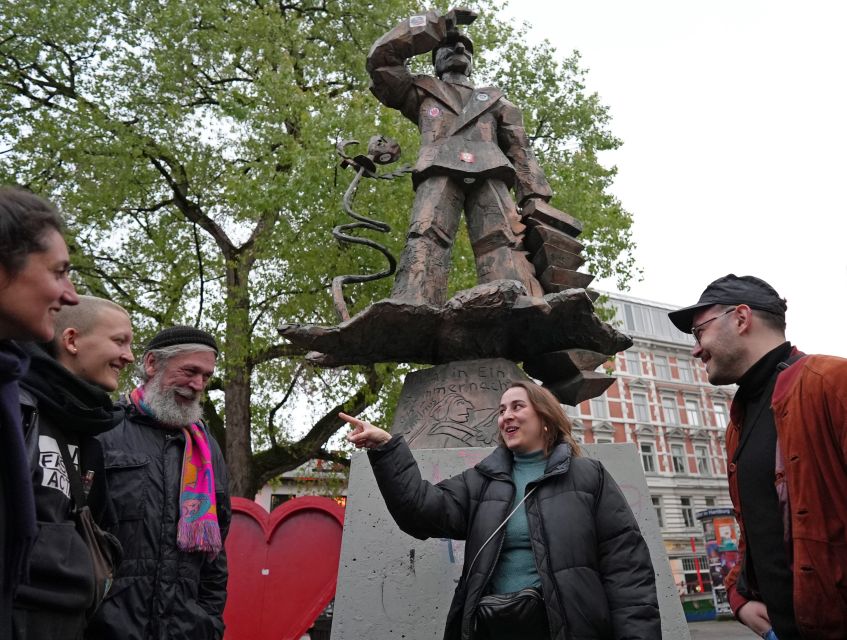
Hans-Albers-Platz acts like a hub stop. It’s the kind of place where the neighborhood feels concentrated—useful for resetting your bearings while the guide connects different parts of the story.
Even if you’re not a history person, this is where the tour starts clicking. You can look around and understand how St. Pauli’s different atmospheres fit together.
Herbertstraße: the alternative edge in the mix
Herbertstraße is another key stop on your walk. This is where the tour leans into St. Pauli’s clash of identities—alternative lifestyles on one end, mainstream nightlife energy on the other.
This part is especially helpful if you’re trying to understand the neighborhood’s appeal beyond the obvious nightlife draws. St. Pauli has always attracted people who like being near creative, nontraditional scenes. The guide’s framing helps you notice that without turning it into stereotypes.
Spielbudenplatz: where the tour’s stories end near the action
Spielbudenplatz is one of the area’s major points, and it’s a fitting place to wind down your tour. By this stage, you’ve seen the famous addresses and learned how the reputation formed. Now you can connect the dots between St. Pauli as a historical place and St. Pauli as a current nightlife destination.
If you want to keep your own time organized after the tour, this stop can help. It’s a place where you can decide what kind of night you want next—based on what you understood during the walk.
The 400-year story: how the past explains the present

A lot of “walking history” tours can feel like lists. This one aims to do something better: tie St. Pauli’s long timeline to today’s realities.
You’ll learn about St. Pauli’s 400-year history, plus present-day sociopolitical developments. That combination matters. It’s how you get past the surface-level shock value that the Red Light District can bring. When you understand that neighborhood identities shift across centuries, the current mix of subcultures makes more sense.
The guide also helps you interpret the neighborhood’s reputation. Instead of treating it like a punchline, you’ll hear how the area became associated with nightlife and sex work over time, and how that affects what people expect when they arrive. Expect some frank talk—this is an adult-focused neighborhood tour.
For me, the biggest value is how the history changes your perception while you’re still there. You stop thinking, This is just a party street, and start thinking about how social rules, economics, migration, and public policy shape what you see on the sidewalk.
Insider nightlife recommendations and the drink stop that keeps it real
One of the highlights is that you’ll get insider nightlife recommendations. I like this because it’s not just “go here because it’s famous.” It’s framed as what works for people who actually live nearby and want a good night without turning it into chaos.
Near the end of the tour, you’ll also grab a drink at a local bar. The catch: food and drinks aren’t included. So budget for what you order. Still, this is a nice payoff because you can end with conversation in a normal setting, not just on the street.
A practical way to make that drink stop worth your time: ask your guide what to do next based on your vibe. Are you looking for something lively, something more laid back, or something strictly within walking distance? Having the local context makes the evening plan faster and less stressful.
Also, if you’re a first-time visitor, the drink stop helps you transition from tour mode to personal exploration. The neighborhood won’t feel like a blur of neon once you’ve had a moment to decompress.
Price and value: is $29 for 2 hours a fair deal?
At $29 per person for a 2-hour local-guided walk, this tour is priced in a way that feels reasonable for a specialty neighborhood experience. You’re not paying for a long trip or a vehicle. You’re paying for a live guide plus the time and expertise needed to connect landmark stops to 400 years of change.
Here’s how I’d evaluate the value:
- You’re buying context: St. Pauli is easy to misunderstand if you only see it at night. The guide helps you read the place.
- You get specific stops: Große Freiheit, Davidwache, Hans-Albers-Platz, Herbertstraße, Spielbudenplatz, and the Reeperbahn area are concrete anchors.
- The included value is the guide, not the nightlife bill: Food and drinks aren’t included, but you still get a chance to end in a local pub.
If you want a guided overview without committing to a full-day plan, $29 for two hours is the kind of spending that feels efficient. You’ll likely walk away with a clearer sense of where to go next—and where not to waste time.
Who should book St. Pauli Kieztour – Reeperbahn mittendrin
This is a great fit if you:
- want a local resident perspective instead of a purely tourist script
- care about understanding the neighborhood’s history and present-day changes
- plan to spend time in St. Pauli anyway and want your feet guided to the best-known areas
It’s less ideal if you:
- need everything in English (the tour guide language is German)
- are traveling with kids (not suitable for children under 16)
- prefer quiet sightseeing over adult-focused nightlife zones
One more honest note: the area’s reputation is part of the point. Even with context, you’ll still be in the world of the Reeperbahn and the broader Red Light District area.
Before you go: what to know so the tour feels easy
Meet your guide at the activity provider’s office, St. Pauli Office, at Wohlwillstraße 1, 20359 Hamburg. Register 15 minutes before tourstart at the counter. Do that and you’ll start smoothly instead of rushing.
The tour lasts 2 hours, and it’s listed as wheelchair accessible. The guide speaks German, so if your German is limited, plan to rely on the guide’s explanations and the fact that street context does a lot of the talking.
Cancellation is offered with full refund up to 24 hours in advance, and you can reserve and pay later if you like keeping flexibility.
Should you book this tour?
If you’re heading to Hamburg and want St. Pauli with context, this is a strong booking. I’d recommend it especially if you want to understand why the neighborhood looks the way it does, not just how it looks in photos. The combination of a local resident guide, the 400-year history, and specific landmark stops makes the 2 hours feel purposeful.
Skip it only if you already know you can’t handle nightlife districts, or if the German-language format is a deal-breaker for you. For most adults who want a smart, guided orientation to St. Pauli, this tour is a good value way to start your night.
FAQ
What is the meeting point for the St. Pauli Kieztour – Reeperbahn mittendrin?
You meet your guide at the activity provider’s office, St. Pauli Office, at Wohlwillstraße 1, 20359 Hamburg. You should register 15 minutes before tourstart at the counter.
How long is the tour?
The tour lasts 2 hours.
How much does the tour cost?
The price is $29 per person.
Is food or drinks included in the tour price?
No. Food and drinks are not included. The tour includes a drink stop where you can grab a drink, but you would pay for what you order.
What language is the tour in?
The live tour guide speaks German.
Is the tour suitable for children?
No. It is not suitable for children under 16.
Is the tour wheelchair accessible?
Yes. The tour is wheelchair accessible.
Can I cancel for a full refund?
Yes. You can cancel up to 24 hours in advance for a full refund.
Can I reserve now and pay later?
Yes. The option is reserve now & pay later.
How do I find the starting time?
The activity lists 2 hours, and you should check availability to see starting times.
More Tour Reviews in Hamburg





More St. Pauli Kieztours

More Reeperbahn & Red-Light Walks


Just In: The Newest Hamburg Reviews










St. Pauli Kieztours, compared.
 ★ 4.7Insider Tour of the Reeperbahn & St. PauliFrom $295,057 reviews
 ★ 4.7Night Watchman’s Tour of St. Pauli in GermanFrom $234,818 reviews
 ★ 4.7In the Footsteps of “Olivia” Reeperbahn TourFrom $5003,947 reviews
 ★ 4.7St. Pauli Highlights Guided Tour with Beer for 18+From $292,353 reviews
 ★ 4.8Olivia Jones Tour with Iconic Barker FabianFrom $421,395 reviews
 ★ 4.7Reeperbahn Quickie, The Short & Sexy St. Pauli TourFrom $23915 reviews
 ★ 4.8St. Pauli Nightlife Tour with Drag Queen in GermanFrom $41733 reviews
 ★ 4.7St. Pauli Tour of the ReeperbahnFrom $16644 reviews
Browse the lists this tour appears in