
Reviewed · WALKING TOURS
Hamburg: Guided Walking Tour
Hamburg’s harbor story is surprisingly close to town. This 2-hour walking tour gives you a guided path from the Town Hall to the waterfront, with major sights lined up in a smart order. I especially like the way you get both the inner-city setting of the Alster lake and the big transformation of the port into newer districts, from warehouses to HafenCity. One drawback to plan for: the tour is in German, and in crowded spots you may need to keep an eye out for the guide to avoid feeling lost in the mix.
You’ll be on your feet the whole time, so it works best when you treat it like an orientation walk: you’re there to understand what you’re seeing, not to linger all day. I also like that the guide uses visual support while talking, which helps a lot when you’re moving from square to bridge to warehouse street. If you’re the type who wants lots of jokes and extra side stories, note that the pacing can feel pretty focused on explaining the city.
In This Review
- Key highlights worth marking on your mental map
- Starting Under Hamburg Town Hall: The Best Way to Get Oriented
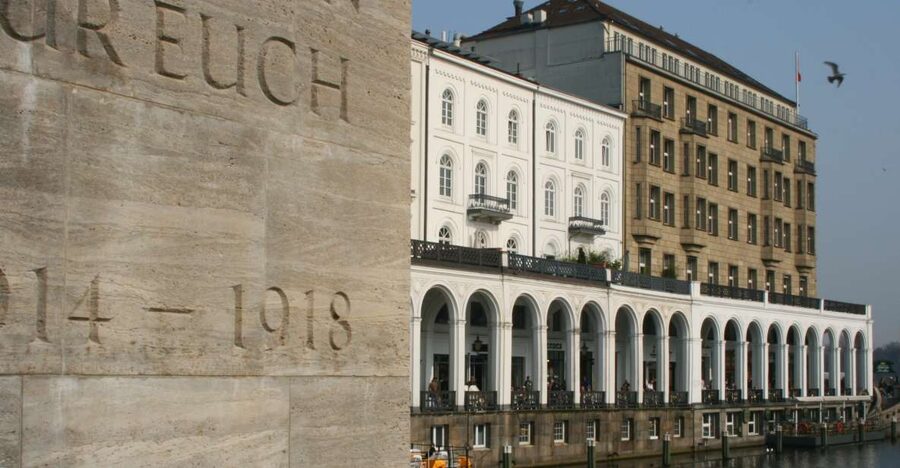
- Alsterarkaden and Jungfernstieg: Water at the Center of the City
- Trostbrücke and St Nikolai Memorial: Bridges, Memory, and Meaning
- Deichstraße and the Port Edge: Where the City Learns to Hold Water
- Speicherstadt: Historic Warehouses and the Sense of a Trade Machine
- Elbphilharmonie and HafenCity: Old Port Logic Meets New City Life
- Price and Time: Getting Real Value for $21 in 2 Hours
- What the Guide Style Means for Your Experience
- Who This Tour Fits Best
- Should You Book the Hamburg Guided Walking Tour?
- FAQ
- FAQ
- Where does the tour start?
- How long is the guided walking tour?
- How much does it cost?
- What language is the tour guide speaking?
- What is included in the price?
- Are snacks or beverages included?
- Are entrance fees included?
- What are the main stops on the route?
- Where does the tour finish?
- What are the cancellation and payment options?
Key highlights worth marking on your mental map
- Town Hall start: a clear beginning point right in the historic core
- Alster lake views: understand Hamburg’s geography fast, by walking it
- Old warehouse district stop: see why Speicherstadt became its own world
- Modern harbor architecture finish: Elbphilharmonie and HafenCity in one sweep
- Port history to redevelopment: Kaiser-era facilities turned into city neighborhoods
Starting Under Hamburg Town Hall: The Best Way to Get Oriented
The tour begins in front of the main entrance of Hamburg’s Town Hall, which is exactly the kind of start I like. You’re dropped into the old civic heart immediately, before you’re asked to decode street after street. From there, the guide sets the theme: Hamburg as a merchants’ city and a sovereign city-state, not just another Northern Germany stop.
This matters more than you might think. Hamburg’s identity is tied to trade routes, water access, and how the city grew around it. Starting at the Town Hall helps you connect the political and commercial power behind the skyline, rather than treating the sights like a random photo list.
After that kickoff, you’ll move toward the inner harbor waterways, and the walk naturally becomes a lesson in how a waterfront city thinks.
Cover more of Hamburg on foot



Alsterarkaden and Jungfernstieg: Water at the Center of the City
One of the most enjoyable parts is the stretch around the inner Alster lake. Instead of only seeing Hamburg as a port machine in the distance, you get the human-scale side: elegant edges, promenades, and that classic Northern German feeling of water threading through the city.
At Alsterarkaden and Jungfernstieg, the guide’s job is to help you read the layout. You’ll learn how Hamburg uses these water-adjacent spaces for everyday presence, not just scenery. And you’ll likely find yourself noticing details you’d miss on your own, like why these particular frontages became important.
Practical tip: this is where the tour can start to feel like a proper “walking city” experience. You’ll want to bring a bit of patience for foot traffic, because this area is central and active.
Trostbrücke and St Nikolai Memorial: Bridges, Memory, and Meaning
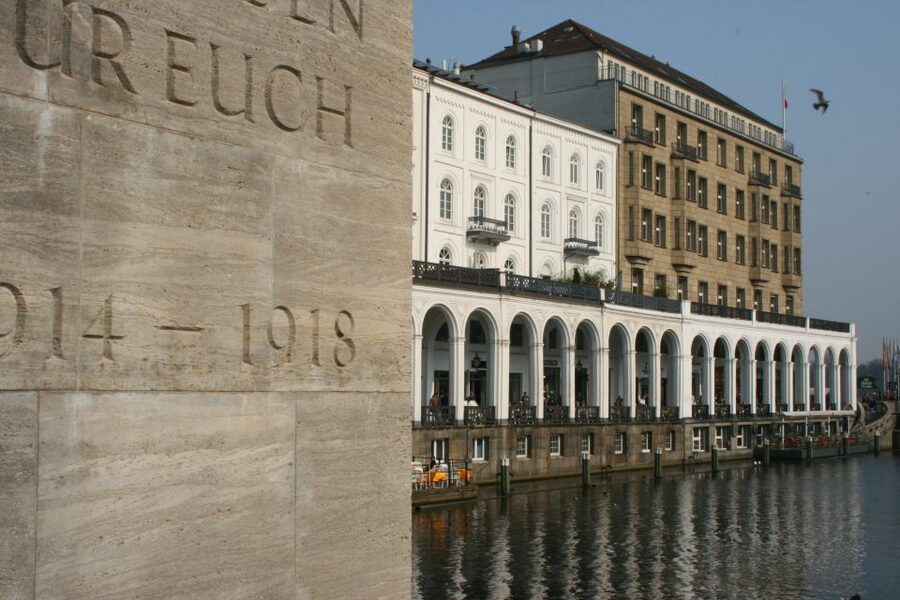
The walk continues through the connections—bridges and in-between streets—where Hamburg becomes more than postcard views. Trostbrücke is the kind of stop that makes sense only when you walk it. A bridge is never just a crossing here; it’s a statement about how the city organizes movement and trade around water.
Then comes St Nikolai Memorial. This is where the tone shifts from architecture to remembrance. You’re not just learning what Hamburg built; you’re also seeing the places that hold on to the city’s darker chapters. Even if you’re not into detailed memorial sites, you’ll probably appreciate the context because it explains why certain areas and forms matter so much.
If you like tours that connect emotion to geography, this is one of the stronger segments. It keeps you from thinking Hamburg is only about modern waterfront development.
Deichstraße and the Port Edge: Where the City Learns to Hold Water
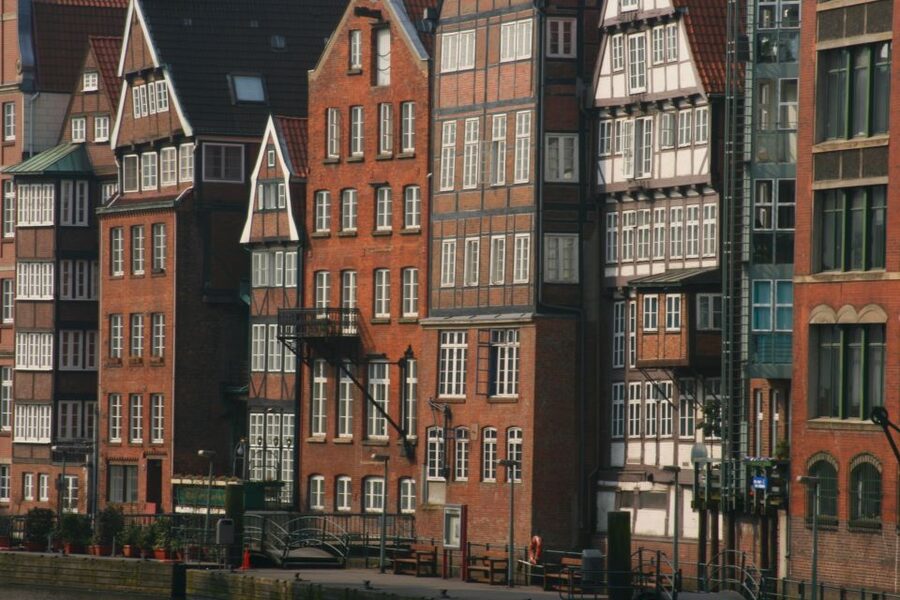
You’ll then spend time around Deichstraße, a street name that hints at the logic behind the region. In Hamburg, water management isn’t a background topic—it’s part of how the city survived and expanded.
This stop helps you understand why the harbor and its infrastructure are so central to the story. Even if you’ve never studied Northern Germany’s relationship with tides, dikes, and waterways, the guide’s explanations help you grasp the basic idea quickly: Hamburg’s growth depended on controlling and working with the water, not fighting it.
For me, the value here is interpretation. You’re walking, so you can actually see how a city shapes itself around a physical reality. That’s a lot more useful than reading about it later and forgetting half of it.
Speicherstadt: Historic Warehouses and the Sense of a Trade Machine
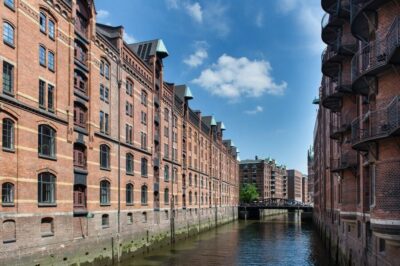
Next up is Speicherstadt, Hamburg’s famous warehouse district. This area is the highlight for anyone who wants the “why” behind the look. The warehouse streets don’t just feel old; they feel purposeful. They’re built for the work of merchants, storage, and logistics, and you can read that function even when you’re just walking through.
The district is also strongly associated with attractions like the Spice Museum, a major model railway experience, and the Hamburg Dungeon—so you’ll likely see cues that point to those kinds of visitor-friendly interpretations. Even if you don’t plan on entering everything, the tour gives you a framework for what you’re seeing: a place designed to manage goods moving through a major port system.
What I like about this stop is the contrast. Before Speicherstadt, the city feels like it’s explaining itself through Civic Hall and waterfront promenades. Here, it explains itself through commerce and infrastructure. That balance makes the whole tour feel like a real storyline instead of a checklist.
If you’re sensitive to crowding, keep your pace steady here. Historic districts with popular attractions can get busy, and the experience is best when you move without rushing and let the guide time each viewpoint.
Let a Hamburg local lead the way





Elbphilharmonie and HafenCity: Old Port Logic Meets New City Life
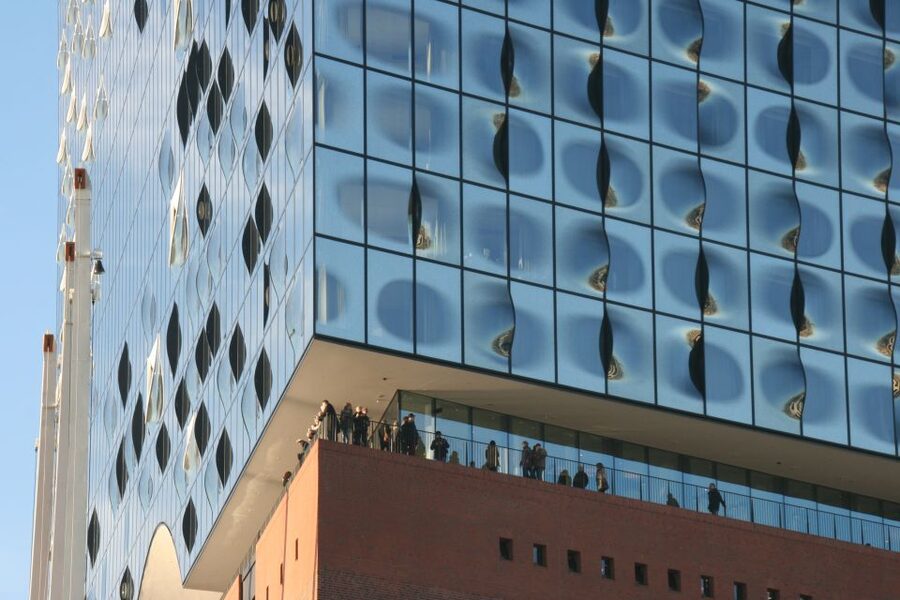
The final stretch brings you to the Elbphilharmonie area and HafenCity, Hamburg’s evolving inner-city neighborhood by the Elbe. This is where you see the city’s redevelopment story with your own eyes: port facilities from an earlier era, turned into modern urban quarters with architecture that looks confident and new.
The Elbphilharmonie is the kind of landmark people recognize from photos, but the walking context matters. You’re not just staring at a building; you’re understanding why it sits where it does. It becomes a symbol of the shift from industrial harbor dominance to a mixed-use waterfront city.
Then there’s HafenCity. This district is designed around public spaces and modern inner-city architecture, and the tour frames it as a continuation of Hamburg’s maritime identity—just with a different set of priorities. You get to connect the “big port in the world” idea to what that port life eventually made room for: neighborhoods, walkable streets, and everyday gathering spots.
The tour ends at Am Sandtorkai 66, right in the harbor-area vibe where Hamburg’s maritime energy is still visible. Even if you only have a couple hours today, you finish with the sense that you witnessed the city in motion—past trade power, present redevelopment, and the water holding it all together.
Price and Time: Getting Real Value for $21 in 2 Hours
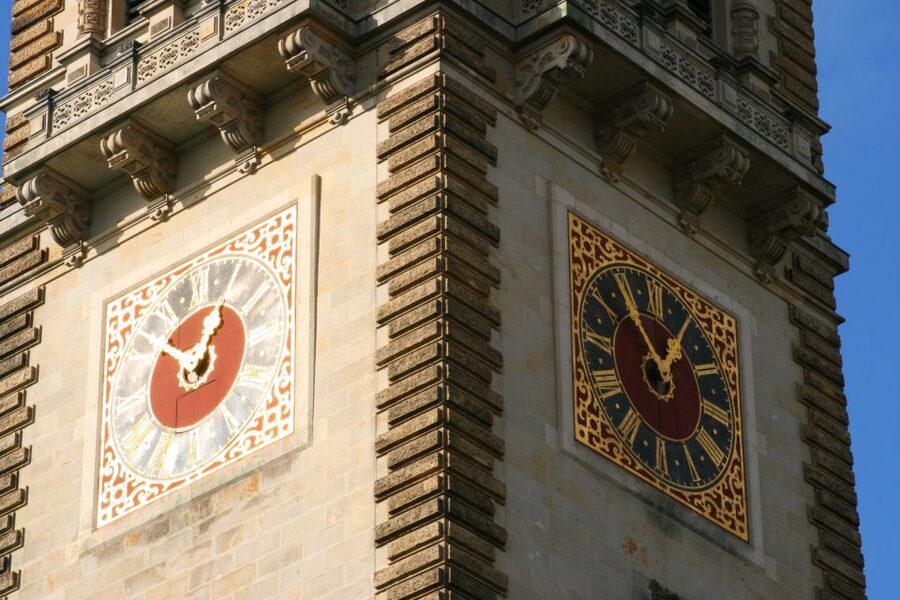
At about $21 per person for a 2-hour guided walk, you’re paying mainly for orientation and interpretation. You’re not paying for museum entrances here, and that’s part of the value calculation.
This tour includes:
- walking tour
- qualified guide
It does not include snacks, beverages, or entrance fees. So, the best way to think about the price is simple: you’re buying time-efficient understanding. In a short window, the guide helps you link Town Hall, the Alster, memorial meaning, warehouse purpose, and HafenCity’s new architecture into one coherent narrative.
Is it worth it? For most people, yes—especially if Hamburg is your first stop on a trip and you want to reduce the amount of mental work you do on your own. If you already know the city well or you’re only chasing photos, you might skip the guide and explore on your own. But if you want a fast education while walking, the cost-to-time ratio is strong.
What the Guide Style Means for Your Experience
The overall format is narration-focused, and the guide uses images during the walk, which makes complex history easier to follow while you’re moving. You may also notice the tour feels structured—great for keeping momentum, but not always ideal if you want a lot of casual anecdotes.
Also, language matters. The tour is in German, so if that’s not your comfort zone, you’ll need to rely on the visual cues and the pacing rather than full comprehension. You’ll still get the sightline benefits, but you might miss some of the meaning.
One small practical consideration: in busy areas, guides can blend into the crowd. If you’re easy to get flustered, arrive a few minutes early at the Town Hall meeting point and watch for the guide before you start walking. That alone can make the first few minutes feel calm instead of chaotic.
Who This Tour Fits Best
This guided walk is ideal for:
- first-time visitors who want a guided “map in words”
- people who like contrasts: civic power, memorial meaning, trading logistics, and modern redevelopment
- anyone who wants to understand Hamburg’s relationship to water without spending a full day
It’s less ideal if:
- you need an English-language guide
- you dislike structured tours and prefer lots of free time at each stop
- you’re looking for museum entry included in the price (you’ll need to plan those separately)
Should You Book the Hamburg Guided Walking Tour?
If you want a time-smart way to grasp Hamburg—from Town Hall to Speicherstadt to HafenCity—this is a solid pick. The $21 price feels reasonable because you’re paying for a guided storyline, not for admissions. And finishing at the harbor area gives you a natural jumping-off point for your next walk or meal.
Book it if you’re comfortable walking for two hours and you can handle a German-language presentation. Pass if you need everything explained in English or you’d rather wander freely without a fixed route.
FAQ
FAQ
Where does the tour start?
The meeting point is in front of the main entrance of Hamburg’s Town Hall.
How long is the guided walking tour?
It lasts 2 hours.
How much does it cost?
The price is $21 per person.
What language is the tour guide speaking?
The live tour guide speaks German.
What is included in the price?
The price includes the walking tour and a qualified guide.
Are snacks or beverages included?
No, snacks and beverages are not included.
Are entrance fees included?
No, entrance fees are not included.
What are the main stops on the route?
The tour covers highlights including the Town Hall, Alsterarkaden, Jungfernstieg, Trostbrücke, St Nikolai Memorial, Deichstraße, Speicherstadt, and the Elbphilharmonie area, finishing near Am Sandtorkai 66.
Where does the tour finish?
It finishes at Am Sandtorkai 66, 20457 Hamburg.
What are the cancellation and payment options?
You can cancel up to 24 hours in advance for a full refund, and you can reserve now and pay later.
Hamburg on Foot



More Tours in Hamburg




More Tour Reviews in Hamburg

Just In: The Newest Hamburg Reviews









Walking Tours, compared.
 ★ 4.8Guided Walking Tour for Magic FansFrom $231,992 reviews
 ★ 4.8Reeperbahn Walking Tour with St. Pauli LocalFrom $21577 reviews
 ★ 4.6Speicherstadt Walking Tour with Coffee TastingFrom $50360 reviews
 ★ 4.0Hamburg Reeperbahn Small-Group Walking TourFrom $30269 reviews
 ★ 4.6Crimes of St. Pauli Guided Walking TourFrom $29265 reviews
 ★ 4.9English Hamburg City Center Pay-What-You-Want Walking TourFrom $3262 reviews
 ★ 4.7Private Tour Red Light District Walking TourFrom $460227 reviews
 ★ 4.9Private Couples’ Photoshoot and Walking TourFrom $64212 reviews
Browse the lists this tour appears in