
Reviewed · SPEICHERSTADT & HAFENCITY
Hamburg: Speicherstadt and HafenCity Tour
This is Hamburg in two speeds: old storage warehouses and new waterfront design. You get both on one route, with the Speicherstadt built for work first and the HafenCity showing off modern ambition, plus a look toward the Elbe Philharmonic Hall.
I especially like how the guide ties the buildings to the Hanseatic League era—so you’re not just admiring brickwork, you understand why those imposing storehouses existed. I also like the tour’s built-in choice moments, like deciding whether you want to wander toward a coffee roaster or a Spice Museum as you go. One drawback to consider: it’s a focused 2 hours and only in German, so if you want lots of free time to roam independently, this may feel a bit structured.
In This Review
- Key things to know before you go
- Finding the tour start at Sandtorkai 74
- Speicherstadt: warehouses from the Hanseatic League era
- The Kesselhaus stop (included, but only not on Mondays)
- Follow your nose: coffee roaster or Spice Museum choice
- HafenCity: modern, sophisticated design with maritime flair
- Elbe Philharmonic Hall: the controversial project you can see
- What makes the guide work (and why German matters)
- Price and value: what $18 buys you for 2 hours
- Pace, timing, and who this tour fits best
- Practical tips to make your walk smoother
- Should you book the Hamburg Speicherstadt and HafenCity Tour?
- FAQ
- Is the Speicherstadt and HafenCity tour suitable for a wheelchair?
- How long is the tour?
- Is the Kesselhaus visit included?
- What language is the live guide?
- Is food or drinks included?
- Is there free cancellation?
Key things to know before you go
- A fast contrast walk: Speicherstadt’s warehouse world, then HafenCity’s modern waterfront.
- Hanseatic League context: you’ll learn why these storage buildings mattered.
- Kesselhaus visit included (except Mondays): plan around the day you travel.
- Optional-feeling stops: choose between a coffee roaster and a Spice Museum based on your nose.
- Ends near Elbe Philharmonic Hall: you’ll see the controversial, construction-started-in-2007 project.
Finding the tour start at Sandtorkai 74
The meeting point is right where you want it—at street level, by the water. Go to Sandtorkai 74, the corner of Sandtorkai/Kaiserkai. The check-in spot is on the square in front of the stairs, and it’s on the white wall with the hole in the middle.
This detail matters because Speicherstadt and HafenCity areas can feel like they share the same skyline. If you arrive ten minutes early, you’ll have time to orient yourself and not start the walk stressed.
More time in the red-brick Speicherstadt and HafenCity



Speicherstadt: warehouses from the Hanseatic League era
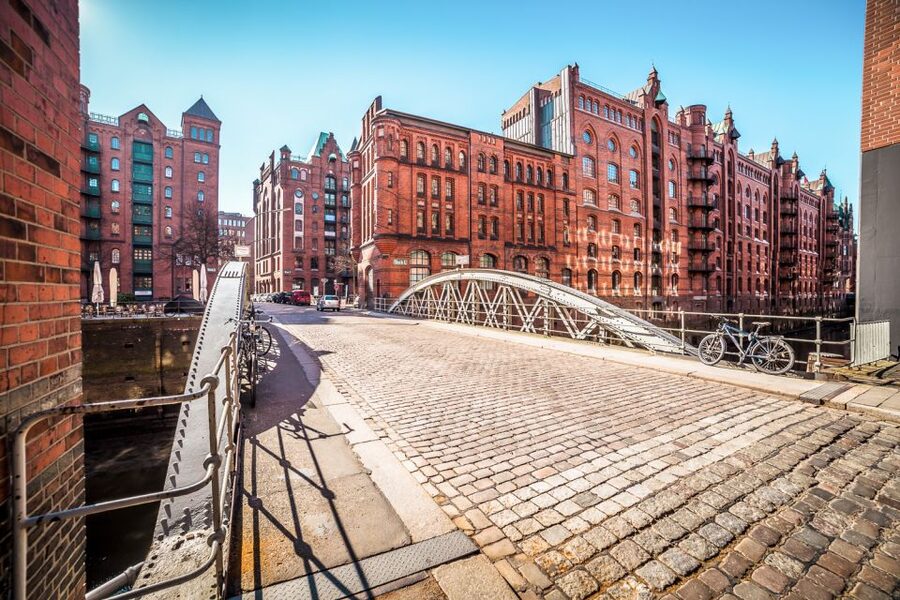
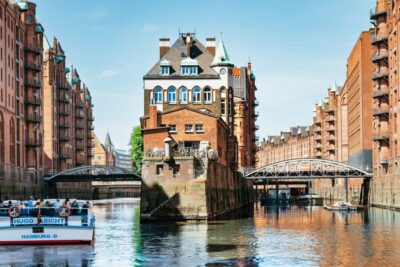
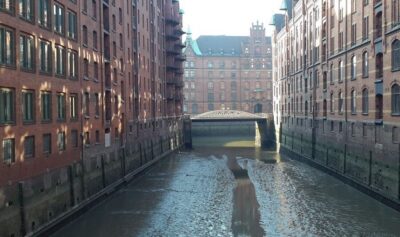
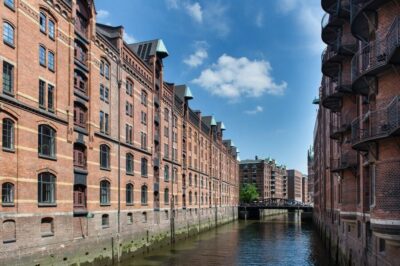
The walk begins in Speicherstadt, Hamburg’s famous warehouse district. What makes it interesting is the mindset behind it: these buildings weren’t designed to look pretty. They were designed for convenience—to store goods, move them efficiently, and keep the operation running.
You’ll also get the architectural contrast inside the historic area itself. Even though different architects shaped different buildings, the overall district reads as one coherent picture. Exposed elements and the way buildings connect to the function of storage help explain why this place still feels intentional, not random.
A big plus here is the guide’s framing. Instead of treating Speicherstadt like a museum only for photos, you learn how the Hanseatic League era created a need for imposing storehouses—and how that purpose still shapes what you see today. If you like cities that explain their own logic, this will click.
Small consideration: if your priority is only scenic strolling, Speicherstadt’s value comes more from understanding what you’re looking at than from a soft, leisurely vibe.
The Kesselhaus stop (included, but only not on Mondays)
Your ticket includes a visit to the Kesselhaus, except on Mondays. That’s an important timing detail, because missing it would change how “complete” the warehouse-side experience feels.
Why this stop is worth noting: it gives the tour a chance to move from exterior storytelling into something more direct and tangible. Even if you’re not an architecture expert, you’ll likely appreciate the added perspective—this is where the district’s working character becomes easier to picture.
If your visit falls on a Monday, you should go in with expectations adjusted. You’ll still do the Speicherstadt portion and get the HafenCity walk, but the Kesselhaus visit won’t be part of the plan that day.
Follow your nose: coffee roaster or Spice Museum choice
As you move through the area, the tour encourages you to make a small detour decision on your own. You can decide whether you’d like to visit a coffee roaster or a Spice Museum.
This isn’t just a gimmick. It’s a smart way to match the tour to your interests:
- If you like modern food culture and production, the coffee roaster angle can feel lively.
- If you prefer the sensory-history side of travel, a Spice Museum fits perfectly with a warehouse district built around trade and goods.
It also keeps the 2-hour format from feeling like a nonstop lecture. You get a chance to steer your curiosity for a few minutes, then rejoin the group.
HafenCity: modern, sophisticated design with maritime flair
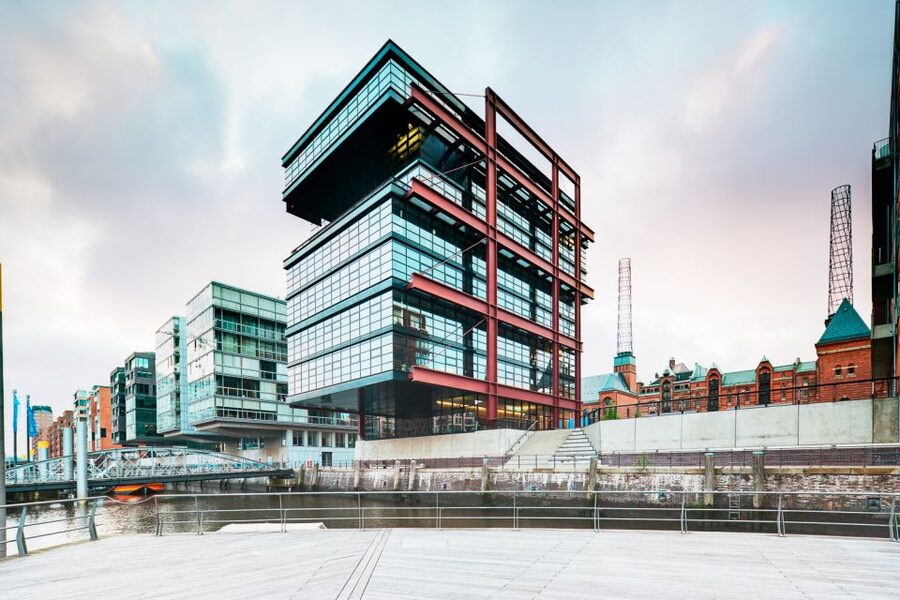
After Speicherstadt, you head into HafenCity, and the change is immediate. The buildings feel more modern, more polished, and designed with different priorities than the warehouse district. The tour highlights how HafenCity’s architecture brings a sophisticated vibe that still connects to the water and the working port atmosphere.
I like this contrast because you’re not stuck inside one era. You’re seeing how Hamburg reuses the idea of a port city: old storage logic gives way to new design language, but the harbor connection is still there. Walking between the two areas helps you notice what changes with time—materials, shape, and how public space is treated.
You’ll also get the right kind of pacing here. It’s not a sprint, and it’s not a slow wander. It’s built for understanding.
One consideration: HafenCity is the more modern, cleaner-feeling zone. If you love gritty, industrial texture, you may want to spend a little extra time back in Speicherstadt after the tour ends.





Elbe Philharmonic Hall: the controversial project you can see
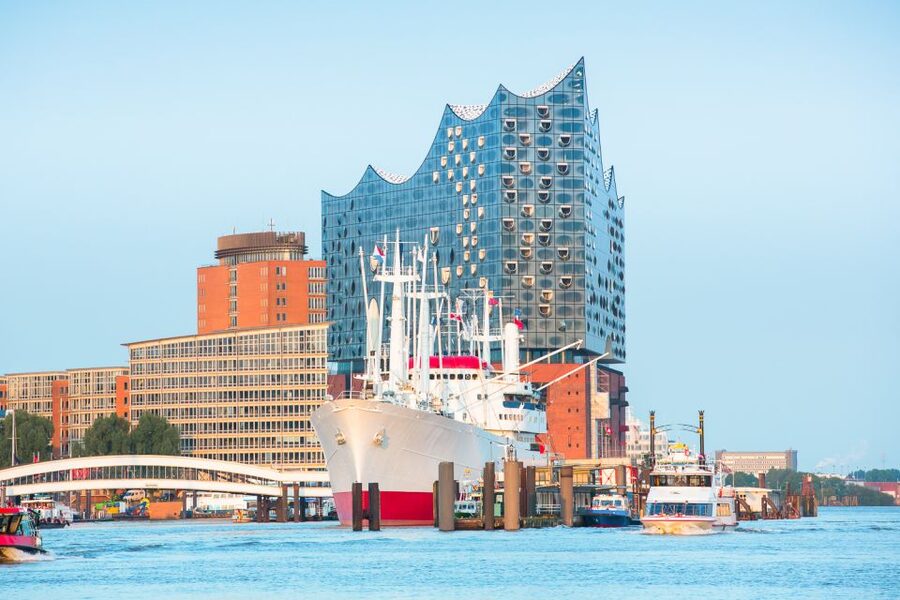
By the end of HafenCity and Speicherstadt, you’ll reach the Elbe Philharmonic Hall area. The tour points out this exciting and controversial project, with construction that began in 2007.
Even if you’re undecided about the style or the politics of big developments, it helps to see it in context. The hall sits at the end of this whole story arc: from storage and trade to culture and spectacle. The district shifts from goods to audiences, and the timing makes sense.
This is a good finish point because it gives you a visual anchor. You leave with a clear mental image of what Hamburg decided to prioritize next.
What makes the guide work (and why German matters)
The tour is led by a live guide in German. The effect of good guiding is obvious here: you want the story, not just the views.
The tone you can expect is practical and supportive. For example, past experiences highlight guides using an iPad to show lots of photos to back up what they’re saying. That’s a big help in Speicherstadt, where buildings can look similar at first glance. Photos make it easier to understand what your guide is pointing at and why.
And you might get a guide like Christian or Hannes, whose teaching style gets called out as well prepared and very informative.
One more honest note: because it’s German-only, you’ll get the most value if you’re comfortable following spoken narration—or if you’re comfortable switching to your own reading/looking skills for parts of the explanation.
Price and value: what $18 buys you for 2 hours
At $18 per person for about 2 hours, this tour is priced like a focused, guided overview rather than a long, slow deep-dive. And that’s the right expectation. You’re paying for the structure and the interpretation: the “why” behind Speicherstadt and the “what next” of HafenCity.
Value is strongest if:
- You like learning how a place works, not just what it looks like.
- You want both sides of Hamburg in one go.
- You’re interested in the Kesselhaus visit (when it’s included).
Value is weaker if you prefer total freedom to choose your own stops without a guided route. Also, food and drinks aren’t included, so plan on handling snacks or coffee separately if you want them.
Still, for a two-hour walk that covers two major districts and adds an included site visit (most days), it’s a fair deal.
Pace, timing, and who this tour fits best
This is a 2-hour format with a guided pace. That time window is ideal for:
- First-time visitors who want orientation fast
- People who like walking but don’t want half a day committed
- Travelers who enjoy architecture stories tied to trade, not just design awards
It’s also wheelchair accessible, which is a real plus for people who need a route that works with mobility devices.
If you’re traveling with kids, it can work if they enjoy looking at buildings and you’re comfortable translating bits on the fly. But it’s best for adults and older teens who like a guided narrative.
Practical tips to make your walk smoother
A few small things can improve your experience right away:
- Wear comfortable shoes. You’ll be walking between districts and standing at viewpoints.
- Bring your curiosity. The tour literally encourages you to make choices around coffee or spices.
- Watch your meeting spot carefully. Sandtorkai 74 is specific, and arriving early avoids stress.
- If you care about the Kesselhaus, check whether your day includes it, since it doesn’t on Mondays.
And if you’re the type who likes photos, this is a great route. The contrast between historic warehouse texture and modern HafenCity lines makes for easy comparisons.
Should you book the Hamburg Speicherstadt and HafenCity Tour?
I’d book this if you want a high-value orientation to two of Hamburg’s biggest urban identities—warehouse trade and modern waterfront reinvention—without having to plan two separate days. The live German guide plus the Kesselhaus visit (except Mondays) gives you more than a casual walk, and the walk ends in a place most people recognize: the Elbe Philharmonic Hall area.
Skip it or think twice if:
- You don’t speak German and can’t follow a guided explanation
- You want lots of free time to wander without structure
- Your travel day is Monday and you were specifically hoping for the Kesselhaus stop
If your goal is to leave Hamburg understanding what you saw—why Speicherstadt looks the way it does and how HafenCity signals what came next—this tour is a solid, well-priced way to do it.
FAQ
Is the Speicherstadt and HafenCity tour suitable for a wheelchair?
Yes. The tour is wheelchair accessible.
How long is the tour?
It lasts about 2 hours.
Is the Kesselhaus visit included?
Yes, the Kesselhaus visit is included except on Mondays.
What language is the live guide?
The live tour guide speaks German.
Is food or drinks included?
No. Food and drinks are not included.
Is there free cancellation?
Yes. You can cancel up to 24 hours in advance for a full refund.
More Tours in Hamburg

More Tour Reviews in Hamburg

More of Speicherstadt & HafenCity



Just In: The Newest Hamburg Reviews










Speicherstadt & HafenCity, compared.
 ★ 4.61.5-Hour Harbor and Speicherstadt Day CruiseFrom $4014,200 reviews
 ★ 4.41-Hour Harbor Sightseeing Cruise with HafenCityFrom $303,067 reviews
 ★ 4.7Elbphilharmonie Plaza and HafenCity Food TourFrom $691,711 reviews
 ★ 4.5Eerie Speicherstadt TourFrom $291,394 reviews
 ★ 4.7Speicherstadt and Hafencity Guided TourFrom $161,344 reviews
 ★ 4.8Speicherstadt and HafenCity 2-Hour TourFrom $2821,063 reviews
 ★ 4.7Treasure Hunt Game through HafenCityFrom $29364 reviews
 ★ 4.6Speicherstadt Walking Tour with Coffee TastingFrom $50360 reviews
Browse the lists this tour appears in