
Reviewed · ELBPHILHARMONIE PLAZA TOURS
Hamburg: Tour from St. Michael’s to the Elbphilharmonie
St. Michaelis to the Elbphilharmonie is a smart one. This 2-hour guided walk links Hamburg’s big traditional landmark with its modern showpiece, and you get plenty of stops where the city’s details actually make sense. I especially liked how the route mixes architecture and real-world stories, not just photo stops.
I also like that you’re not stuck in one neighborhood type. You’ll move from St. Michael’s Church into the Michelwiese area toward the harbor, then pass through places like the Portugiesenviertel and the older row-house settlement (Krameramtswohnungen). The tour keeps things varied, and it’s clear the guide aims to keep the group informed and moving.
One thing to consider: this is a rain-or-shine walking tour, and it is not suitable for people with mobility impairments. If your feet get sore quickly, plan on comfortable shoes and a steady pace.
In This Review
- Key things to look forward to on this Hamburg walk
- The route: old Hamburg meets the new Elbe skyline
- Stop 1 and 2: St. Michaeliskirche and the giant clock moment
- Krameramtswohnungen and the Michelwiese: row houses to harbor air
- Portugiesenviertel and Siel-Einsteigehäuschen: flood protection, explained simply
- From Hafen edge to Speicherstadt: UNESCO perspective without the museum crawl
- Elbphilharmonie stop: architecture you can see at street level
- What $25 really buys: guide value over entrances
- How the stops fit together (and where you’ll feel the time)
- Tips so you enjoy it fully on a rain-or-shine day
- Who this tour fits best (and who might not love it)
- Should you book this St. Michaelis to Elbphilharmonie tour?
- FAQ
- Where does the tour start?
- How long is the tour?
- How much does it cost?
- Is there a live guide, and what language is it?
- What is included in the price?
- Does the tour run in bad weather?
- Is this tour suitable for mobility impairments?
Key things to look forward to on this Hamburg walk
- St. Michaelis Church and its standout clock—Germany’s largest church clock is part of the story
- Krameramtswohnungen: Hamburg’s oldest still-existing row house settlement
- Michelwiese and harbor-facing views as you transition from old Hamburg to the waterfront
- Siel-Einsteigehäuschen + Baumwall: how flood protection fits into daily city planning
- UNESCO Speicherstadt perspectives on past and present, plus the switch into HafenCity
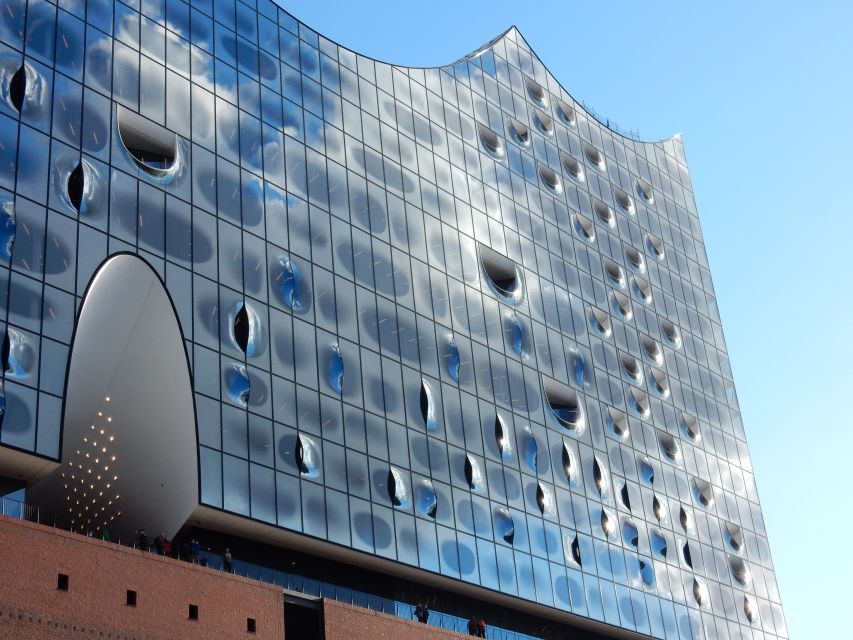
- Elbphilharmonie at the end with a harbor and music-theater view from street level
The route: old Hamburg meets the new Elbe skyline
This tour is built around contrast, but not in a shallow way. You’re walking a line from the city’s historic, faith-and-maritime center to the Elbe Philharmonic Hall, Hamburg’s newly built international landmark. The guide ties the pieces together so you understand why the waterfront matters, why the old city formed where it did, and how newer Hamburg chose a bold architectural path.
The walking order also helps. You start with the church landmark that dominates the skyline, then gradually shift closer to the harbor world. Along the way, you’ll learn about the water-defense logic behind Hamburg’s layout. That makes the modern buildings near the Elbphilharmonie feel less random.
At $25 per person for a 2-hour live guide route, this is the kind of sightseeing that’s more useful than you might expect. You’re paying for the connections—what to notice and what to ask about—more than for a single monument.
More of the Elbphilharmonie and its Plaza



Stop 1 and 2: St. Michaeliskirche and the giant clock moment
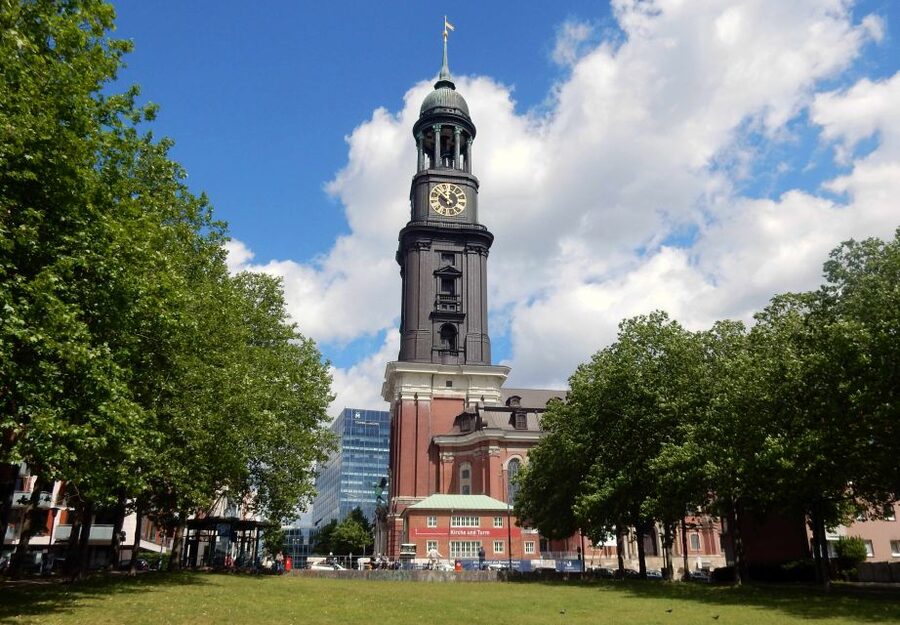
You begin at St. Michaelis Church (St. Michaeliskirche). The meeting point is on the right side of the main entrance, and you’ll recognize the guide by a white bag. You’ll want to arrive about 10 minutes early so you’re not juggling doors, crowds, and timing.
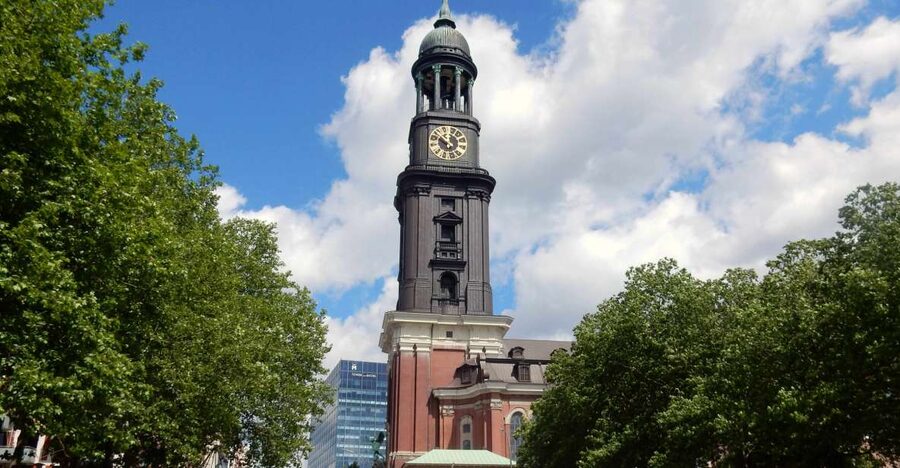
When you get inside the sight zone, the main draw is the church itself. This stop is built for viewing and photos, plus a guided explanation. The big standout detail is the largest church clock in Germany, which gives you a clear reason to focus your eyes upward and across the facade instead of only looking at the building shape.
I like this kind of start because it sets a theme. Churches in northern Germany aren’t just religious spaces; they’re major landmarks that helped people navigate and gather. After this, the rest of the walk feels like a guided walk through Hamburg’s wayfinding—first through a spiritual landmark, then through the city’s waterfront and defensive systems.
Practical note: plan for a short photo and sightseeing segment here (about 20 minutes total). If you’re the type who wants every detail, keep moving anyway—this tour’s pacing is designed to stay on track through multiple areas.
Krameramtswohnungen and the Michelwiese: row houses to harbor air
Next up is Krameramtswohnungen, the oldest row-house settlement still existing in Hamburg. This is one of those stops that sounds niche until you’re standing near it. The guide points out what makes it historically significant, and the short time here works because it’s focused: you’re learning how ordinary housing tells a bigger story about work, community, and survival in a port city.
Then you head toward the Michelwiese. This section is about walking and regrouping your sense of where you are. The Michelwiese area gives you a transition point toward the harbor—so you’re not just crossing between neighborhoods, you’re actively changing your perspective on the city.
This is where I’d advise slowing down for a minute. You’re moving from the tightly framed feel of older streets to broader waterfront lines. Take a second to orient yourself: where the harbor direction feels closest, and how the city’s skyline starts shifting into modern shapes.
This part of the tour is also brief (around 10 minutes), which is good if you want efficiency. If you tend to linger, you’ll still get the key takeaways, but you may want to do extra exploring after the guided portion ends.
Portugiesenviertel and Siel-Einsteigehäuschen: flood protection, explained simply
After the Michelwiese, the route passes through the Portugiesenviertel. You’ll mainly go by this neighborhood and get a guided pass-by viewing and short look (about 5 minutes). Even without lots of time on the street, it helps you understand that Hamburg’s port life created distinct communities, not just one uniform city center.
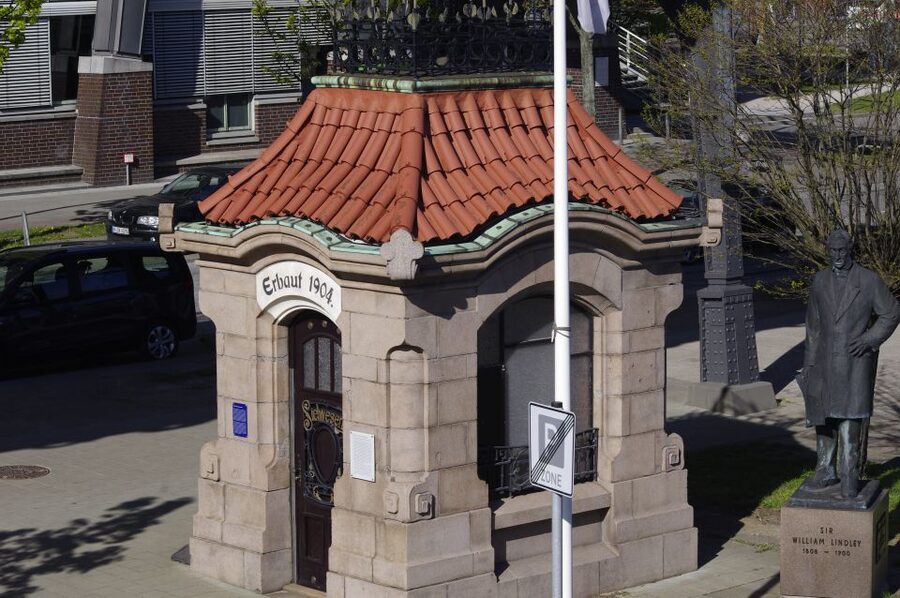
Then comes a stop that’s easy to underestimate: the Siel-Einsteigehäuschen. This is your clue that Hamburg’s relationship with water isn’t only about views and ships. The guide explains the city’s flood protection logic, and you also stop for photos and sightseeing while the story lands.
Right after that, the tour includes the underground station Baumwall, where the flood protection is explained in a very practical way. This is one of the most “useful information” sections of the walk. You’ll come away knowing that Hamburg’s waterfront planning is tied to survival, drainage, and protection—not only to aesthetics.
If you like tours that teach you how a city works, this portion is a win. If you prefer pure architecture and don’t care about infrastructure, you might find it slower, but it’s the kind of context that makes the later skyline more meaningful.
From Hafen edge to Speicherstadt: UNESCO perspective without the museum crawl
The next legs move you toward the Hamburg Port and then along the Speicherstadt, Hamburg’s UNESCO World Heritage Site. This is where the tour shifts from “what the buildings mean” to “how the city used to function.”
You’ll walk along the Speicherstadt and get a perspective on the city’s past and present. That matters because Speicherstadt isn’t just a pretty historic zone; it’s part of the commercial heartbeat that helped shape how Hamburg grew. The guide’s explanation keeps it grounded, so you’re not just ticking off a UNESCO label.
Then you’ll transition into the modern side of Hamburg, described through HafenCity and its striking buildings. And you’ll get context on the Elbphilharmonie itself as a project that’s been controversial. That kind of framing helps you look at the Elbphilharmonie with your eyes open: you’re not only admiring design, you’re learning why people argue about it.
This section is excellent for people who enjoy a “city brain” tour: you want to understand the relationship between infrastructure, architecture, and local life.




Elbphilharmonie stop: architecture you can see at street level
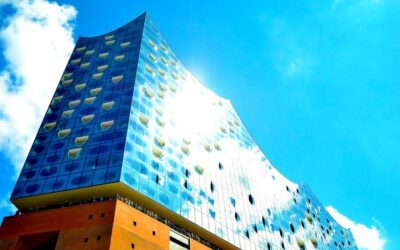
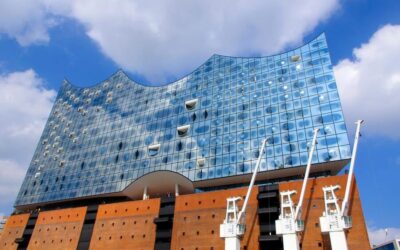
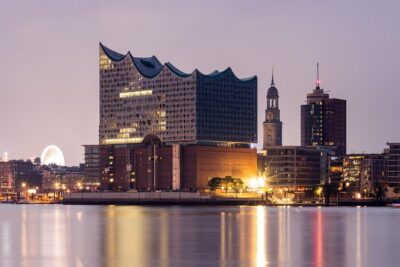
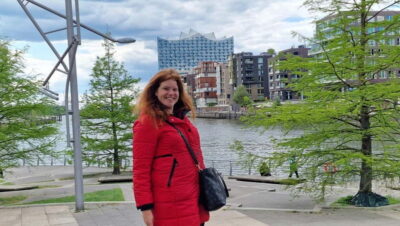
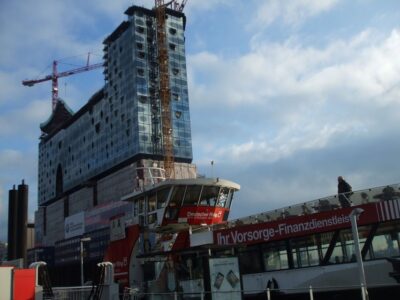
The final highlight is the Elbphilharmonie. You’ll have a photo stop and guided sightseeing here (about 20 minutes). The tour ends with views from the foot of the building, looking out toward Hamburg’s harbor and the musical theatres on the other side of the water.
That street-level ending is a big deal. It’s easy to leave Hamburg thinking you only saw this place through postcards. Here, the guide helps you notice how the design sits in the city, and you get a view that’s less “look at the building” and more “look at the whole harbor setting.”
After the tour, you can explore the Elbphilharmonie Plaza on your own, but it may be subject to closures. I like having this optional add-on, because it means you can linger longer if the weather is good—or move on quickly if you’re done with photos.
One detail to keep in mind: the activity is listed as ending back at the meeting point, even though the sightseeing emphasis finishes at the Elbphilharmonie base. In plain terms, expect the Elbphilharmonie area to be your last major viewpoint, with the group route continuing back afterward.
What $25 really buys: guide value over entrances
At $25 per person, this tour is priced like a straightforward guided walk. You’re paying for a live guide and a guided route that lines up several key areas efficiently.
Here’s what’s included and what isn’t:
- Included: the guide
- Not included: food and drinks, and entrance to sights
That combination is important. Since entrance isn’t included, you should treat this as a “see from outside, learn from a guide” tour. If your priority is going inside major attractions, you’ll likely need to plan separate visits. But if your priority is understanding Hamburg and knowing where to look, this format gives you a lot of learning per hour.
The reviews’ best theme fits: lots of information, and a friendly guide experience that feels varied. That’s exactly what you want at this price point—someone helping you connect the dots while you walk.
How the stops fit together (and where you’ll feel the time)
This schedule is built for a steady flow, not long dwell times. Here’s how the structure feels in real life:
- St. Michaelis Church gives you the landmark anchor and the big clock story.
- Krameramtswohnungen gives you a quick but meaningful look at historic housing.
- Michelwiese creates a walk-through transition toward the harbor area.
- Portugiesenviertel is brief pass-by viewing, quick context, then moving on.
- Siel-Einsteigehäuschen + Baumwall is the “how the city survives water” stretch.
- Hamburg Port + Speicherstadt connects maritime activity to UNESCO-era preservation.
- HafenCity + Elbphilharmonie finishes by turning the earlier context into a modern skyline viewpoint.
If you’re someone who likes to absorb information while moving, this will feel smooth. If you’re hoping for lots of time in one place, you might wish it ran longer—but you’ll still cover the core ideas and visuals in two hours.
Tips so you enjoy it fully on a rain-or-shine day
This tour runs rain or shine, so you’ll want gear that keeps you comfortable and mobile. Comfortable shoes are explicitly recommended, and I agree. Even short distances can feel longer when you’re walking to multiple photo stops.
A few practical tips that help:
- Wear shoes with good grip. You’ll be on sidewalks and outdoor paths, and wet streets happen.
- Bring a light layer. Church areas and waterfront breezes can shift how the weather feels.
- Plan your camera quick-shots at each photo stop. You’ll get chances, but the tour is time-managed.
Also, keep an open mind about the flood protection segment. It’s the kind of topic that sounds technical until a guide makes it real with the places you’re standing near.
Who this tour fits best (and who might not love it)
This is a great match if you want a guided overview of Hamburg that connects old and new. You’ll enjoy it most if you like:
- landmarks with context (not just a building name)
- architecture and city planning
- short, focused stops with a guide’s explanation
It’s not a fit if you have mobility limitations, since it is not suitable for people with mobility impairments. And if you only want museum-style time inside major sites, remember entrances aren’t included and many stops are exterior photo/sightseeing moments.
Should you book this St. Michaelis to Elbphilharmonie tour?
Yes—if you want a high-value, guide-led route that helps you understand Hamburg fast. At $25 for two hours, you’re getting a lot of visual variety plus practical explanations, especially around the church landmark and the flood protection stories.
I’d skip it only if you strongly prefer long stays at one attraction or you need a mobility-friendly route. Otherwise, book it early in your trip. It gives you a framework for the neighborhoods you’ll see later on your own, and it makes the modern Elbphilharmonie feel part of the same city story, not a separate world.
FAQ
Where does the tour start?
You meet on the right side of the main entrance of St. Michaelis Church, and the guide will be recognizable by a white bag.
How long is the tour?
The duration is 2 hours.
How much does it cost?
The price is $25 per person.
Is there a live guide, and what language is it?
Yes, it’s a live tour guide, and the tour is in German.
What is included in the price?
The guide is included. Food, drinks, and entrance to sights are not included.
Does the tour run in bad weather?
Yes. The tour takes place rain or shine.
Is this tour suitable for mobility impairments?
No. It is not suitable for people with mobility impairments.
More Tours in Hamburg
More Tour Reviews in Hamburg

More Elbphilharmonie Plaza Visits



Just In: The Newest Hamburg Reviews







Elbphilharmonie Plaza Tours, compared.
 ★ 4.6Elbphilharmonie Plaza, Highlights & SurroundingsFrom $272,270 reviews
 ★ 4.7Elbphilharmonie Plaza and HafenCity Food TourFrom $691,711 reviews
 ★ 4.7Elbphilharmonie Highlights and Plaza Guided TourFrom $27709 reviews
 ★ 4.6Elphi Plaza Guided Tour with Störtebeker BeerFrom $34245 reviews
 ★ 4.0Elphi Plaza FührungFrom $26231 reviews
★ 4.6Elbphilharmonie Plaza and HafenCity Food TourFrom $69168 reviews
★ 4.0Elphi Plaza FührungFrom $26231 reviews
★ 4.6Elbphilharmonie Plaza and HafenCity Food TourFrom $69168 reviews
 ★ 4.8Speicherstadt, HafenCity + Elbphilharmonie TourFrom $2383 reviews
 ★ 4.5City Tour by Bike with ElbphilharmonieFrom $3960 reviews
Browse the lists this tour appears in