
Reviewed · ELBPHILHARMONIE PLAZA TOURS
Hamburg: City Tour by Bike with Elbphilharmonie
Hamburg looks good from land and even better from the saddle. This bike tour strings together old harbor vibes with the city’s newer sides, from the Alster lakes to UNESCO Speicherstadt and the Elbphilharmonie area. I like the way it balances big-ticket sights with neighborhood texture, and the guide’s focus on how the city actually works. One thing to consider: access to the Elbphilharmonie plaza can be limited on major event days or when conditions change.
You’ll ride a clear loop, stop often for photos, and get live explanations in English or German along the way. The route is set up so you can see how Hamburg’s maritime story shifts across time—steam-and-brick Speicherstadt to the sleek HafenCity plan, then back toward historic churches and piers. The only drawback is simple: at 3.5 hours, you’ll want to keep moving and enjoy the stops fast, not slow-stroll.
In This Review
- Key Points You’ll Care About
- Why This Hamburg Bike Tour Works So Well
- Rotherbaum to Alster Lake: Getting Oriented the Easy Way
- Alster to the New Town: Gängeviertel and the Brahms Connection
- Through Hamburg’s Historic Heart: Rathaus and Old-Town Stops
- Deichstraße and the Great Fire Trail: How Hamburg Rebuilt Itself
- Speicherstadt: UNESCO Brick Architecture on Fleete Waterways
- HafenCity and the Elbphilharmonie: Modern Design With a Real Past Nearby
- Baumwall, Steel Publishing, and St. Michael’s: City Energy Through Landmarks
- Neustadt, Peterstraße, and Museum-Area Stops: Names You Recognize
- St. Pauli Piers and the Maritime Mood Before You Ride Back
- Price and Value: Is $39 Worth It?
- Who Should Book This Tour (and Who Might Not)
- Practical Tips to Make the Most of Your Ride
- Should You Book Hamburg: City Tour by Bike with Elbphilharmonie?
- FAQ
- How long is the Hamburg bike tour with Elbphilharmonie?
- Where does the tour start and end?
- What does the tour cost?
- What’s included in the price?
- What languages are the tours offered in?
- Will we definitely be able to go to the Elbphilharmonie plaza?
- What major areas and stops are covered?
Key Points You’ll Care About
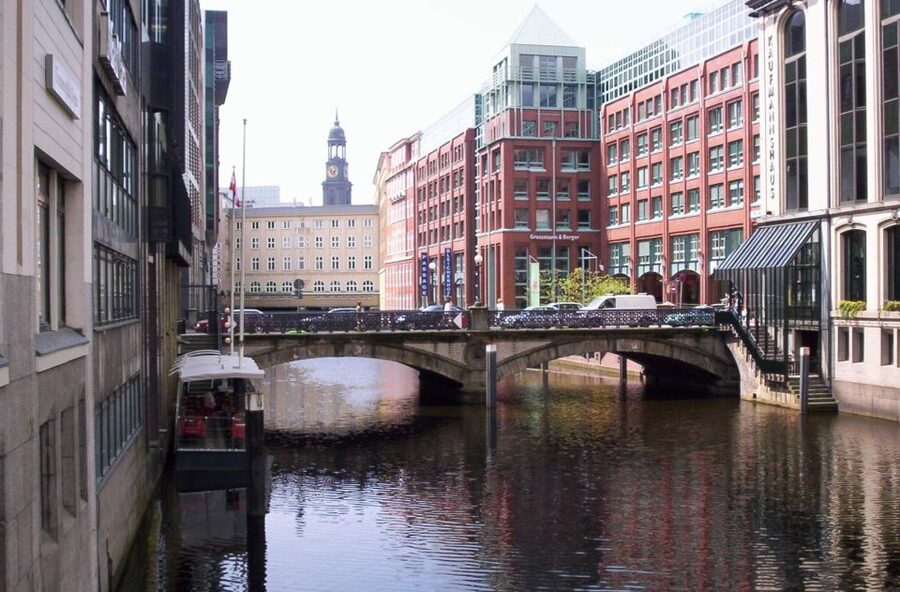
- Alster to Binnenalster: a guided glide with postcard water views
- Gängeviertel stop: a preserved working-class area tied to Brahms
- UNESCO Speicherstadt: massive brick architecture sitting on oak poles in the Fleete
- HafenCity + Elbphilharmonie: modern skyline views with a “from below” perspective
- St. Michael’s and St. Pauli: church and waterfront energy before you ride back
Why This Hamburg Bike Tour Works So Well
Hamburg is one of those cities where the distance can fool you. The center is spread out, and water fills in the gaps. A bike tour fixes that fast. You cover ground without feeling like you’re stuck in buses, and you still get the human rhythm of a walking tour when you stop for guidance and photos.
I also like the way the route tells a story you can see. You start with the Alster water and the parks feeling of central Hamburg, then pivot to ports and industrial layers, then land at HafenCity’s modern waterfront and the Elbphilharmonie. It’s not just sightseeing—it’s how Hamburg evolved.
And you get a practical handhold. You’ll have a city map, and you’ll receive a photo series by email afterward. If you like remembering trips through images instead of just mental notes, that’s handy.
More of the Elbphilharmonie and its Plaza


Rotherbaum to Alster Lake: Getting Oriented the Easy Way
The ride begins at Schlüterstraße 11, outside the Fahrradstation of the University of Hamburg. This is a good starting point because it keeps you near the central neighborhoods you’ll be cycling through. You’re not dropped somewhere random with a guess-and-hope route.
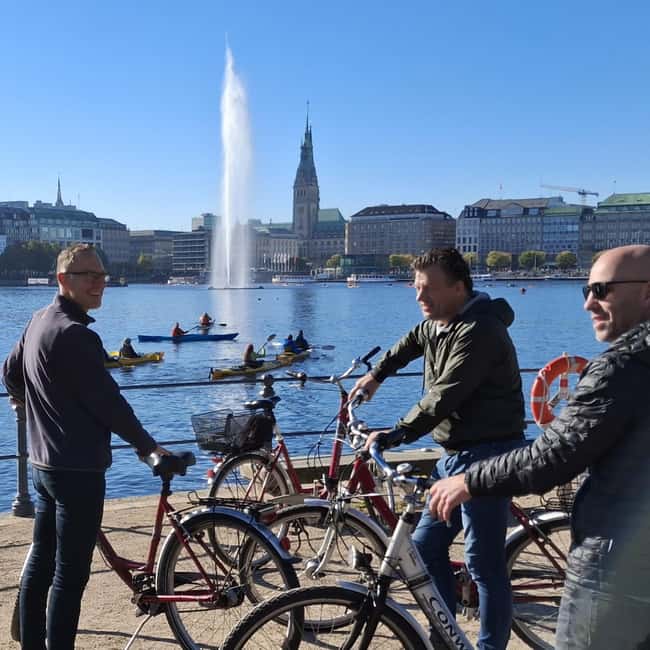
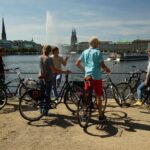
Right away, the tour points you toward Alster Lake views. You’ll head along the Außenalster and then reach the Binnenalster, where the scenery switches from open-water calm to the tighter, city-facing panorama. This part is great if you want to understand Hamburg visually—where the water sits next to streets, and where parks and city buildings trade places.
Photo stops make this section feel effortless. You’ll have time to pause without feeling like you’re holding up the group. The guided piece matters here too: the water is scenic, but it also sets the stage for the maritime mindset of the rest of the route.
Alster to the New Town: Gängeviertel and the Brahms Connection
Once you roll past the city’s newer areas, you reach the Gängeviertel, a preserved working-class district from the 18th century. Today it’s known for its arts scene, which changes the atmosphere without erasing the old shape of the neighborhood.
One standout detail is the memorial stone tied to the birthplace of Johannes Brahms. That kind of stop turns a neighborhood from scenery into context. You’re not just looking at streets; you’re connecting names you’ve heard to an actual place in the city.
This stop also helps you with pacing. In many tours, the center of town turns into nonstop landmarks. Here, the Gängeviertel gives you a smaller-scale moment: narrower passages, local character, and a sense of how Hamburg’s “ordinary” life used to be.
Through Hamburg’s Historic Heart: Rathaus and Old-Town Stops
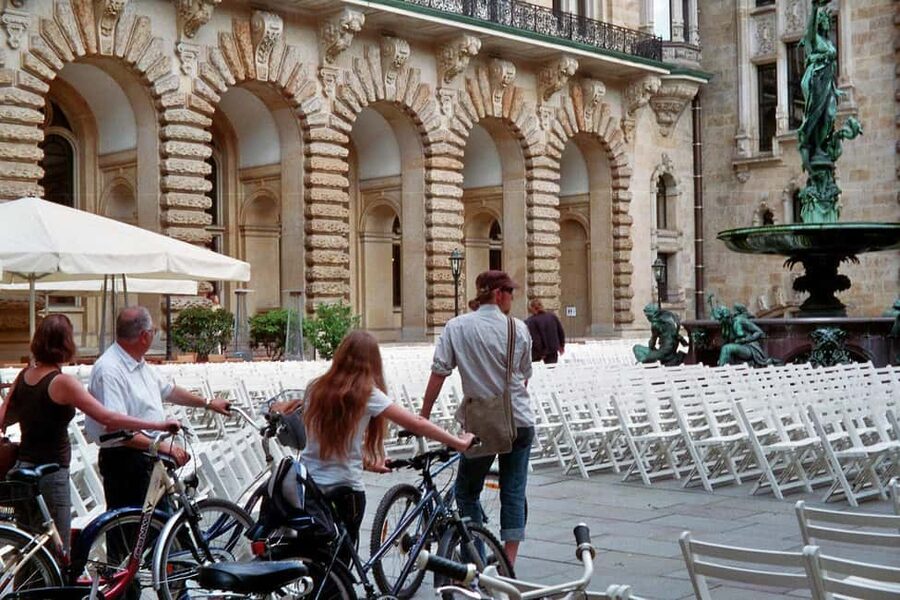
After the Alster-based opening, the route moves you into Hamburg’s core. Expect guided pauses around Hamburg’s Town Hall and Hamburg Old Town. These stops work for first-timers because they anchor the city’s identity. You can see the formal side of Hamburg here—buildings that signal civic pride and long-term stability.
A bike tour is especially helpful at this stage because the city layout can feel complicated if you’re walking. Riding keeps you moving, and the guide keeps you from getting lost. You’ll know what you’re looking at and why it matters.
You’ll also notice how quickly the tour shifts from formal landmarks into the port-and-fire story that comes next. That transition is one of the tour’s smartest moves.
Deichstraße and the Great Fire Trail: How Hamburg Rebuilt Itself
At Deichstraße, you’re stepping into the origin zone of port operations of Alt-Hamburg. That means this isn’t just a pretty street stop—it’s tied to how the port moved and operated.
Then comes a major historical thread: you ride following the tracks of the Great Fire of 1842. The fact that the route explicitly follows those traces is useful. It turns a headline event into something you can physically sense in the city plan and geography.
This is one place where your guide’s storytelling really counts. A good bike guide doesn’t just list dates. They connect how the city changed and what that change left behind in today’s streets.
If you like learning while you move, this section is a strong match.
Roll out on two wheels for more of Hamburg


Speicherstadt: UNESCO Brick Architecture on Fleete Waterways
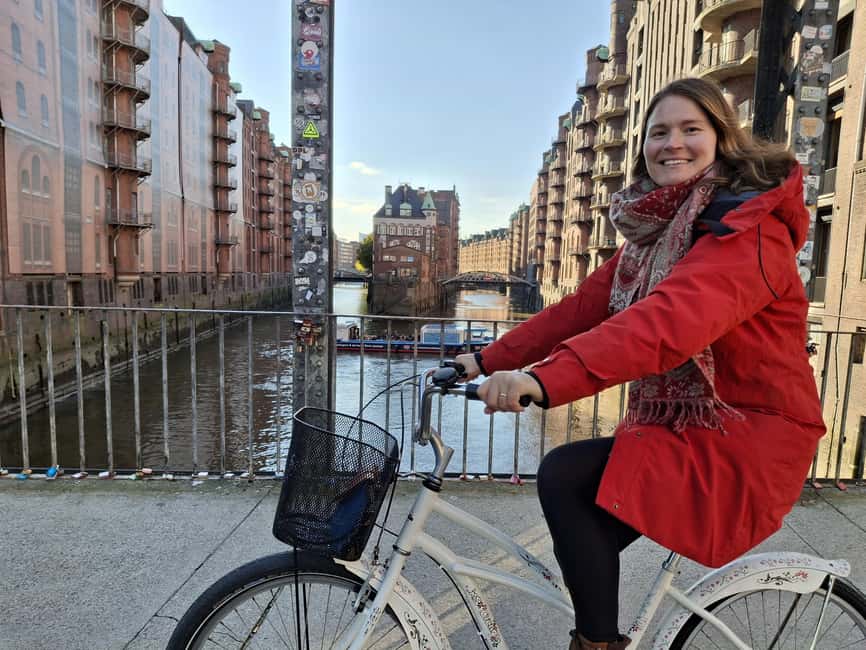
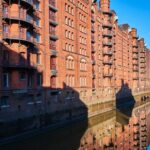
The tour spends real time in Speicherstadt, a UNESCO site you’ll reach via the Deichstraße area. The key impression here is the massive brick architecture from the 19th century. You’re not looking at delicate old buildings—you’re seeing a whole port-world built to last.
The most memorable technical detail: the structures sit on millions of oak poles, driven into the ground beneath waterways called Fleete. That’s the kind of fact that changes how you see the place. The buildings don’t just look old; they look engineered for a wet environment.
At the photo stop level, you’ll want to look beyond the obvious shots. Try framing views that show both the brick forms and the water canals. Speicherstadt is famous, but it still has depth if you keep your eyes on the way water channels the space.
One practical note for your expectations: these areas can feel visually dense. The guide helps you prioritize. Without that, it’s easy to snap photos and miss the story connecting Fleete, storage, and port operations.
HafenCity and the Elbphilharmonie: Modern Design With a Real Past Nearby
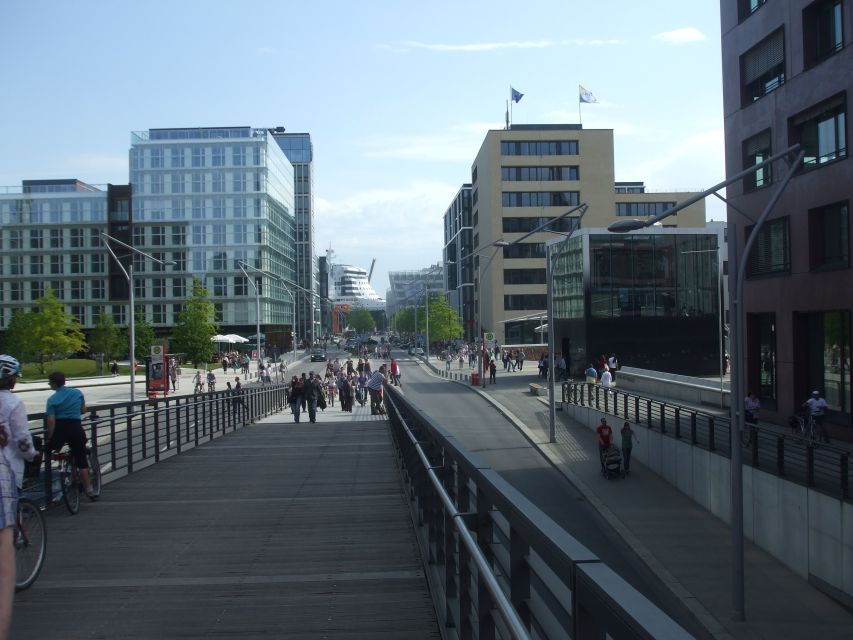
From Speicherstadt you continue into HafenCity, Hamburg’s former harbor area rebuilt into a modern district. This transition is one of the tour’s big “wow, okay, that’s the point” moments. You can feel the shift from old brick docks into a cleaner, planned cityscape.
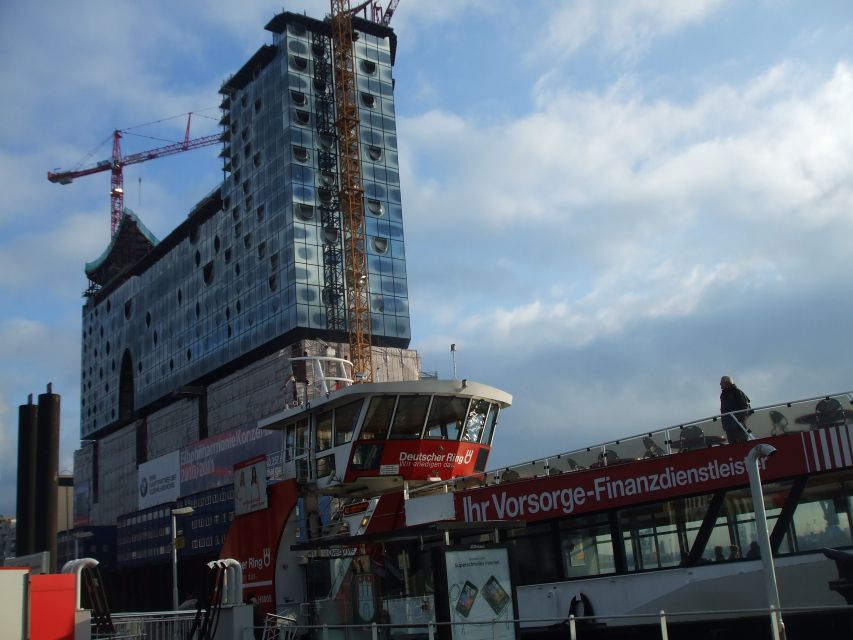
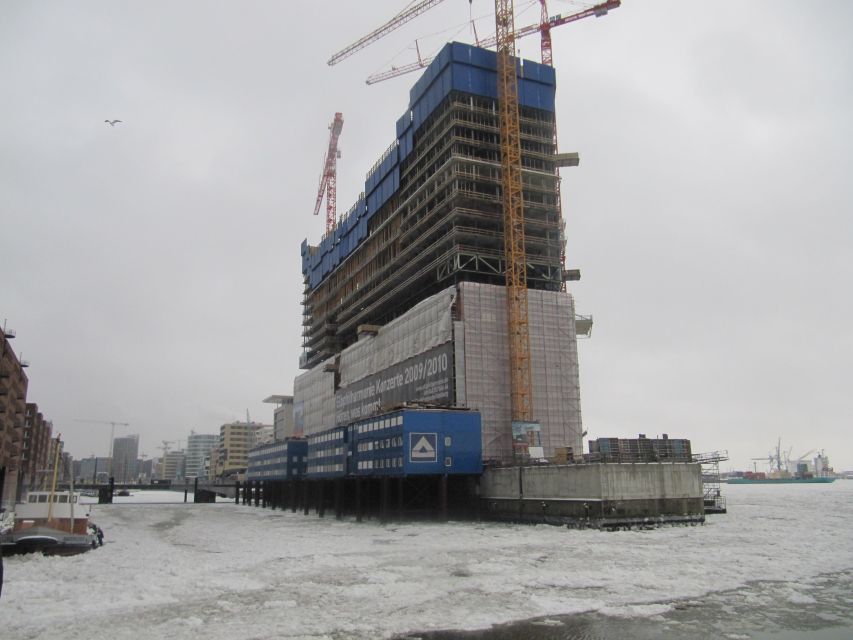
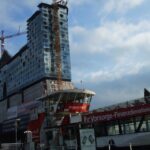
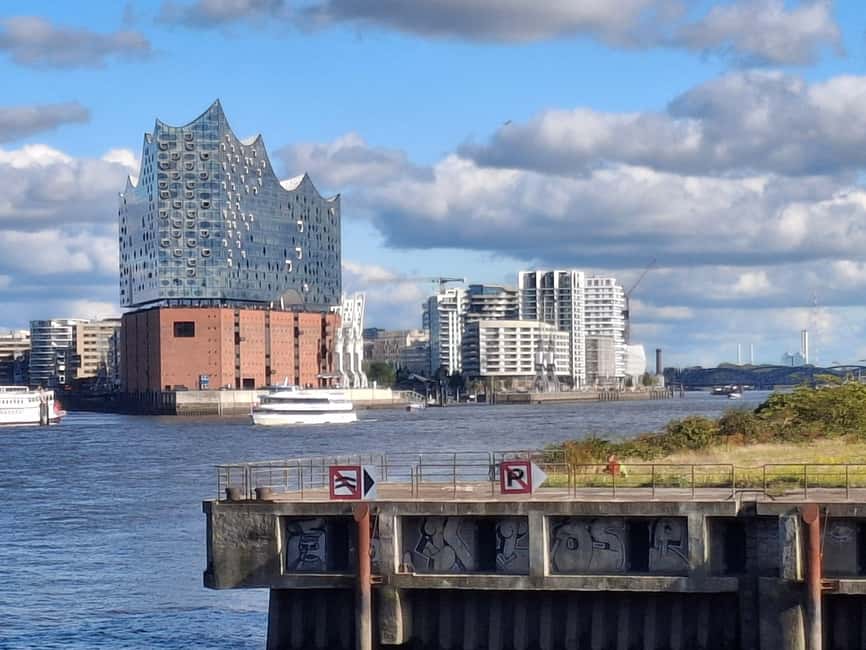
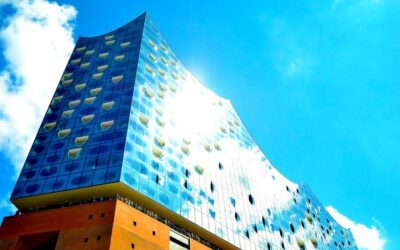
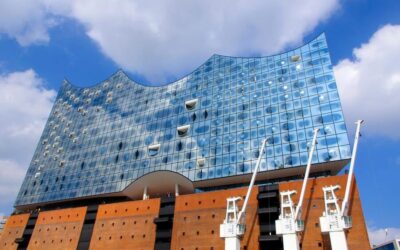
Then the star shows up: the Elbphilharmonie, described in the tour as a controversial 110-meter-high landmark. Even if you have strong opinions about architecture, it’s hard not to respect the scale. From street level and along the approach areas, you start noticing how the building dominates views, but also how it fits into the harbor geometry.
The tour also includes a path across a new flood protection system, built for the area’s water risks. That’s a fascinating contrast: a cultural venue on one side, and practical engineering on the other. You’ll get splendid views of the Elbphilharmonie from below, which is a very different angle from postcards.
Also, your time at the Elbphilharmonie plaza is handled thoughtfully. There’s time to reach the plaza, but it depends on accessibility and unpredictable situations. On some days, access can be restricted, especially when major events are happening. So go in with a flexible mindset. Even without the plaza, you’ll still get the area’s best angles from the ride.
Baumwall, Steel Publishing, and St. Michael’s: City Energy Through Landmarks
As you move toward Baumwall, you’ll pass a publishing building made of steel. The tour frames this as an utopic-like sight, and in practice it works as a visual breather between major water landmarks.
You’ll also pass St. Michael’s Church. This isn’t just a photo stop. It’s a moment that gives you a sense of Hamburg’s religious and architectural presence alongside the port economy. From a bike, churches feel less like isolated monuments and more like anchor points in the city’s grid.
Neustadt, Peterstraße, and Museum-Area Stops: Names You Recognize
The itinerary includes Neustadt and guided stops around Peterstraße, with the Brahms and Telemann Museum connected in the tour flow. If Brahms already sparks interest for you, this is where the tour makes those musical names feel local instead of abstract.
I like museum-area stops on a bike tour because they’re easy to absorb without turning the day into an indoor marathon. You get the sense of place and the references, and you can decide later if you want to step inside.
St. Pauli Piers and the Maritime Mood Before You Ride Back
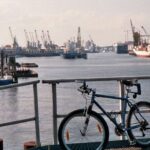
As the tour nears its end, you reach St. Pauli Piers. This is where Hamburg’s waterfront mood becomes more raw and working-port in feeling. You’re closer to the energy of docks and piers, and it’s a good reminder that HafenCity isn’t the only version of “port Hamburg.”
Then the ride returns to the starting area at Schlüterstraße 11. The pacing is designed so you’re finishing near where you began, which keeps logistics simple. You’re not ending across town and then scrambling for transport.
Price and Value: Is $39 Worth It?
At $39 per person for about 3.5 hours, you’re paying for three things at once: guided interpretation, bike transportation, and a concentrated route through the core highlights. That’s not a cheap snack stop. It’s a structured way to see a lot of city in a short time.
Here’s what makes the value make sense. This tour hits multiple major zones that are harder to connect efficiently on your own: Alster waters, Speicherstadt’s UNESCO pocket, HafenCity and Elbphilharmonie views, plus church-and-waterfront stops like St. Michael’s and St. Pauli. The guide does the heavy lifting of telling you what matters and where to look.
You also get extras that help you remember the trip: a city map and a photo series emailed to you. If you prefer not to manage a photo scavenger hunt while pedaling, that’s a real quality-of-life bonus.
So yes, I’d call it good value—especially if you want an organized route and explanations rather than just “ride around and hope.”
Who Should Book This Tour (and Who Might Not)
This is a great fit if you’re:
- New to Hamburg and want orientation fast
- Interested in the port story—from old storage areas to modern waterfront redevelopment
- Happy to pause for guided stops and photos every so often
- Comfortable cycling for a few hours at a city pace
You might want to skip or choose another option if:
- You dislike bike tours or don’t feel confident cycling in traffic-adjacent city areas
- You’re only interested in one single landmark and don’t care about the route connecting them
Practical Tips to Make the Most of Your Ride
Bring the basics: comfortable clothing, sun or rain protection, and a plan for quick photos. Since this is a bike tour, you’ll get more enjoyment if you’re dressed for movement.
Because Elbphilharmonie access can change on some days, don’t build your entire day around standing at one specific plaza. Let the tour do what it’s designed to do: show you angles and context, even if one piece is temporarily restricted.
Finally, if your guide offers historical details in a lively pace (and you can often ask questions in English or German), jump in. A bike tour is a conversation on wheels, not a silent bus ride.
Should You Book Hamburg: City Tour by Bike with Elbphilharmonie?
I’d book it if you want a smart route that connects Hamburg’s water identity to its historic port zones and its modern architectural headline. The blend of Alster panoramas, UNESCO Speicherstadt engineering facts, and HafenCity/Elbphilharmonie views from different levels is exactly the kind of day that’s hard to replicate on your own without spending time researching.
If you’re a fan of structured travel—clear stops, guided interpretation, and photo help—this one fits. And if you’re lucky and your guide is Bernhard, you’ll get that extra layer of city storytelling that makes the sights feel more personal.
FAQ
How long is the Hamburg bike tour with Elbphilharmonie?
The tour lasts about 3.5 hours. Starting times vary, so you’ll want to check availability for the exact times.
Where does the tour start and end?
It starts at Schlüterstraße 11, outside the Fahrradstation of the University of Hamburg, and it ends back at the same meeting point.
What does the tour cost?
The price is listed as $39 per person.
What’s included in the price?
Included are the bike, a live guide, a city map, and a photo series about Hamburg sent by email. The tour also includes time to drive to the Elbphilharmonie plaza depending on accessibility.
What languages are the tours offered in?
The live guide speaks English and German.
Will we definitely be able to go to the Elbphilharmonie plaza?
Not always. The tour includes time to reach the plaza, but access can be restricted or closed on days with major events or due to unpredictable situations.
What major areas and stops are covered?
You’ll cycle through areas connected to Alster Lake and Binnenalster, Speicherstadt, HafenCity, the Elbphilharmonie area, and stops that include places like St. Michael’s Church and St. Pauli Piers, with multiple guided photo stops along the way.
More Tour Reviews in Hamburg


More of Hamburg by Bike
More Elbphilharmonie Plaza Visits



Just In: The Newest Hamburg Reviews






Elbphilharmonie Plaza Tours, compared.
 ★ 4.6Elbphilharmonie Plaza, Highlights & SurroundingsFrom $272,270 reviews
 ★ 4.7Elbphilharmonie Plaza and HafenCity Food TourFrom $691,711 reviews
 ★ 4.7Elbphilharmonie Highlights and Plaza Guided TourFrom $27709 reviews
 ★ 4.6Elphi Plaza Guided Tour with Störtebeker BeerFrom $34245 reviews
 ★ 4.0Elphi Plaza FührungFrom $26231 reviews
★ 4.6Elbphilharmonie Plaza and HafenCity Food TourFrom $69168 reviews
★ 4.0Elphi Plaza FührungFrom $26231 reviews
★ 4.6Elbphilharmonie Plaza and HafenCity Food TourFrom $69168 reviews
 ★ 4.8Speicherstadt, HafenCity + Elbphilharmonie TourFrom $2383 reviews
 ★ 4.6Tour from St. Michael’s to the ElbphilharmonieFrom $2572 reviews
Browse the lists this tour appears in