
Reviewed · PRIVATE
World War 2 Hamburg Private Guided Tour
Hamburg tells its war story in plain sight. This private WWII route connects big-picture causes to specific streets, and I especially like two things: having a private guide who helps you follow the story without getting lost, and seeing former bunkers and memorials in context instead of as random photo stops. The only drawback: the tour deals with sensitive, painful topics, so it can feel intense if you’re looking for a lighter day of sightseeing.
You’ll walk for about 5 hours at a steady pace, with most stops offering free access and time for questions. The experience uses a mobile ticket, runs in English, and finishes at a WWII bunker on Feldstraße (with drop-off available by request), so it feels organized from start to finish.
In This Review
- Key highlights at a glance
- A 5-hour private route that makes Hamburg’s WWII story make sense
- Laeiszhalle: from Versailles to the pressure cooker Germany stepped into
- Sievekingplatz: when politics and justice start failing people
- Feldstraße bunker: the WWII structure you can still picture
- Planten un Blomen: park beauty with a wartime past
- Kriegerdenkmal am Dammtordamm: how remembrance changes across generations
- Turmbar: why Hamburg built so many bunkers
- Grindel: Jewish life, Kristallnacht, and the changing neighborhood
- Jungfernstieg: the decoy city centre idea
- Rathausmarkt: Nazi power in the city’s symbolic heart
- Afrikahaus: colonial history that helps explain WWII-era racism
- St. Nikolai Memorial: ruins, victims, Neuengamme, and a view of Hamburg
- Price and value: when group tours actually feel fair
- Who should book this Hamburg WWII private tour
- Should you book it?
- FAQ
- How long is the World War 2 Hamburg private guided tour?
- Is the tour private, and how many people can be in my group?
- What language is the tour offered in?
- Are entrance fees included?
- Where does the tour start and where does it end?
- Is the tour okay for people with moderate physical fitness, and are service animals allowed?
Key highlights at a glance
- Private, English-guided route focused on WWII-era Hamburg and the events that led up to it
- Bunkers and repurposed sites, including a WWII bunker now used as a skyline garden
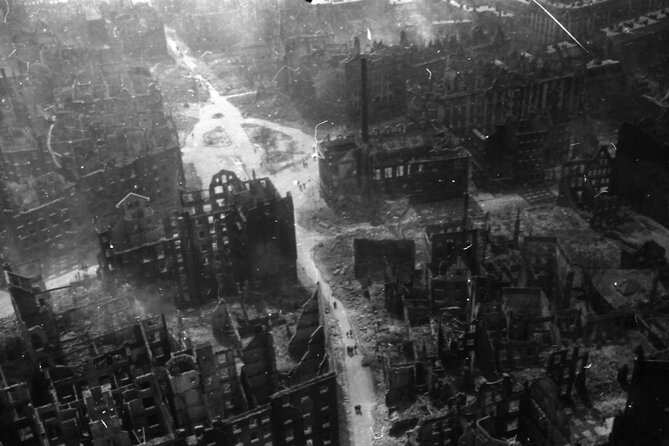
- Jewish history in Grindel, including key moments like Kristallnacht and 1933 book burnings
- Memorials that show how remembrance evolved, from multiple war periods at Kriegerdenkmal am Dammtordamm
- Colonial history at Afrikahaus, linked to racial segregation and genocide in WWII Germany
- St. Nikolai Memorial option for a museum and tower view, with one admission not included
A 5-hour private route that makes Hamburg’s WWII story make sense
This is the kind of tour that helps you read a city. Hamburg wasn’t just bombed in WWII; it changed step by step—from the political breakdowns of the 1930s to the machinery of terror, forced deportations, and mass destruction. A private guide matters here because you’re not just standing at plaques. You’re walking through cause and effect.
I like that you’re not dumped into WWII cold. The tour starts with the lead-up: WWI consequences, the economic shock of the 1920s, and the rise of antisemitism. That structure helps your brain connect the dots while you’re outside, on real streets.
One more plus: your group can ask questions as you go. In a subject this serious, that turns a “walk and listen” into a conversation with context. If you’re traveling with mixed generations, it also gives you flexibility to spend more time on the parts that matter most to your group—as in past tours led by guides like Evan and Sarah, who both adjusted the experience to what people wanted to understand.
Let a Hamburg local lead the way



Laeiszhalle: from Versailles to the pressure cooker Germany stepped into
You begin at Laeiszhalle, and the first thing your guide does is widen the lens. Instead of starting with 1939, you start with the interwar period—especially the lesser-known WWI story, the hyperinflation of the 1920s, the rise of antisemitism, and the Treaty of Versailles.
Why this works: it stops the story from feeling random. When the 1930s turn darker, you’ll already know why people were primed to accept extreme politics. Hyperinflation is one of those historical events that can feel abstract in a textbook. Here, it’s treated as a human trigger—fear, anger, instability—set against the political shifts that followed.
A practical note: this first stop is short (about 20 minutes). If you like to take notes, I’d start early and jot down the big terms your guide mentions—so later street-level details click.
Sievekingplatz: when politics and justice start failing people
Next is Sievekingplatz, where the focus becomes the downfall of Hamburg’s judicial and political system in the 1930s. The goal isn’t just to name what happened. It’s to show how institutional collapse turns into everyday harm.
This stop is only around 15 minutes, so expect it to be focused. You’ll likely hear how changes in courts and political control didn’t just shift laws on paper—they changed what ordinary people could expect from the system meant to protect them.
If you’re the type who gets restless when a tour feels too abstract, this is a good moment to ask your guide for a simple example of what changed day-to-day. Since it’s private, you can tailor that question to your interests.
Feldstraße bunker: the WWII structure you can still picture
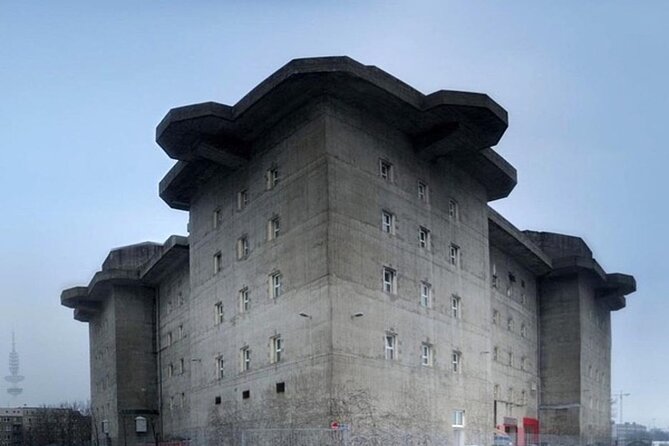
Then you head to Feldstraße, marked by one of the largest WWII bunkers in Hamburg. Today it’s being repurposed as a skyline garden, which is exactly why this stop is memorable.
Bunkers are easy to treat as symbols. But standing near one that has been transformed helps you understand the longer arc: not only how cities survived war, but what they chose to do with that survival afterward. It also gives you an immediate way to visualize the scale of planning behind the air-raid world people lived in.
This stop is about 15 minutes and admission is free. Don’t rush it—take a moment to look for details your guide points out, because later you’ll compare it to another WWII bunker site.
Planten un Blomen: park beauty with a wartime past
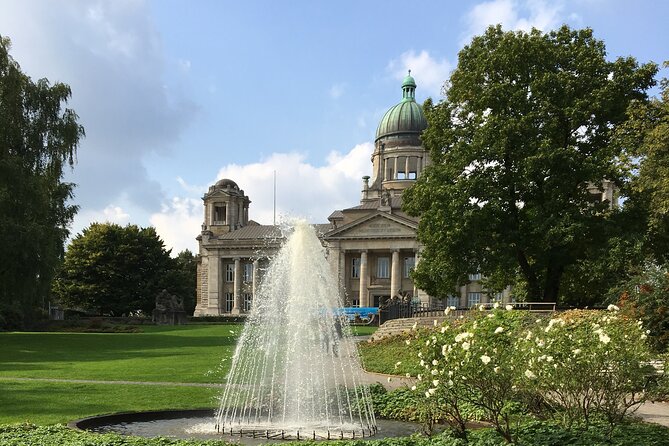
Planten un Blomen is one of the scenic highlights of Hamburg. It’s also one of the most surprising stops on this tour, because the park has a forgotten, darker past—used for executions during WWII, a propaganda project, a human zoo, and a displaced persons camp.
This is the stop where your “Hamburg is pretty” brain gets corrected in the best possible way. The contrast is jarring: tranquil paths and garden views paired with violent history. And that mismatch is part of the lesson. War doesn’t only destroy buildings. It also rewires public life—what spaces are used for and who is treated as human.
You’ll have about 30 minutes here, which is a good length because you’ll want a little time to absorb both the location and the story. If you’re sensitive to heavy topics, pace yourself on this one. It’s not “light sightseeing.”
Keep it to your own group with a private tour




Kriegerdenkmal am Dammtordamm: how remembrance changes across generations
At Kriegerdenkmal am Dammtordamm, the focus shifts from WWII events to what Hamburg decided to remember, and how. The area includes five war memorials from different periods that shape both the physical space and modern remembrance culture.
This is a smart stop for two reasons:
1) it shows that memory isn’t one fixed thing—it’s layered, and
2) it encourages you to notice how the same city can carry multiple narratives at once.
The time here is around 25 minutes. If your goal is to understand how history is publicly framed, ask your guide what each memorial period is emphasizing and how those messages differ.
Turmbar: why Hamburg built so many bunkers
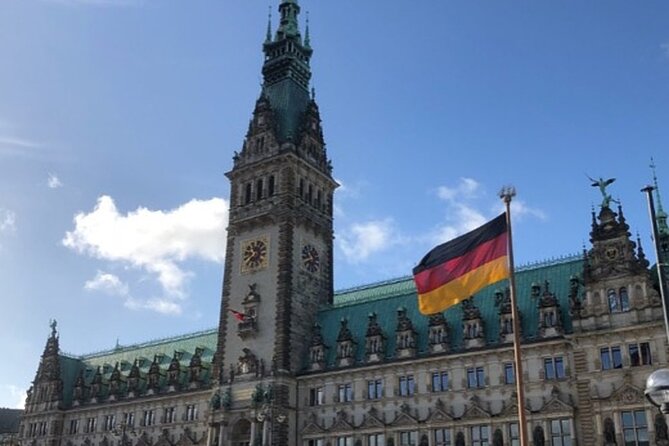
Next is Turmbar, where what looks like a water tower turns out to be part of the city’s bunker system—one of more than 2,000 bunkers built in Hamburg during WWII.
That number alone gives you perspective. It suggests a city planned for endurance, not just reaction. And it helps you connect the dots between air raids, shelters, and how civilians tried to keep living while war closed in.
This is a quick stop—about 5 minutes—so rely on your guide’s cue points. If you want more time, ask for one or two extra explanations. Private tours are good for exactly that.
Grindel: Jewish life, Kristallnacht, and the changing neighborhood
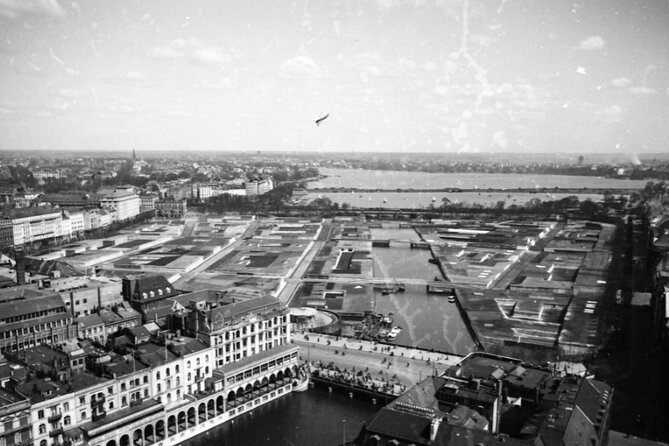
The Grindel district is where the tour becomes deeply personal in a historical sense. You’ll look at how the area became home to a Jewish community, who lived there, what happened during the war, and what life looks like today.
Your guide covers key landmarks and key moments, including:
- where deported Jewish people from Hamburg were placed
- Kristallnacht (the night of broken glass) in 1938
- book burning in 1933
- the Born Synagogue
- the Talmud Torah School
Why this matters: it doesn’t treat Jewish history as only a tragedy timeline. You get details that point to daily community life before the violence and deportations. Then the story turns to the mechanisms of persecution—events like Kristallnacht and 1933 book burnings that show how ideology became policy and then action.
Plan about 1 hour here. That time is well used because you’ll want a slower pace for reflection, and you’ll likely have questions—especially if this is your first serious encounter with WWII-era Jewish history in Germany.
Jungfernstieg: the decoy city centre idea
At Jungfernstieg, you’ll hear about a decoy plan. Hamburg tried to build a decoy city center to avoid bombings during WWII.
This stop is short (around 10 minutes), but it’s a memorable “how war changes cities” moment. Decoys mean someone is thinking in fake signals and misdirection. It’s a reminder that war isn’t only fought in battlefields—it’s fought in maps, lighting, and what enemies are expected to believe.
If you like military logic or urban planning, ask your guide how these decoy ideas fit into Hamburg’s larger bombing experience.
Rathausmarkt: Nazi power in the city’s symbolic heart
At Rathausmarkt, you’re at the symbolic and literal seat of power in Hamburg. Here you learn how the location was used by the Nazi party during WWII. The square is dotted with memorials tied to political opposition to the Nazis, the book burnings of 1933, and WWI propaganda in Nazi Germany.
This stop gives you something useful for reading the city later. When you see memorials around the Rathaus area, you’ll understand they aren’t random markers—they’re part of a story about control, public messaging, and resistance.
Time here is about 40 minutes, so it’s one of the longer stops. Use that time to ask your guide to connect the square’s symbolism to the events you’ve already heard—especially the 1933 book burning theme that keeps reappearing.
Afrikahaus: colonial history that helps explain WWII-era racism
Afrikahaus is a leftover from the German colonial period. The tour treats colonial history as essential to understanding racial segregation and genocide in WWII Germany, which is an honest and often-missed link.
This stop is about 15 minutes and admission is free. It’s also a good moment to reframe your thinking. If you’ve previously learned WWII mainly through the lens of events in Europe, this is where you get the broader context for how racist ideologies were built and justified.
If you’re curious how colonial systems fed later atrocity policies, ask directly. A private guide is ideal for that kind of targeted question.
St. Nikolai Memorial: ruins, victims, Neuengamme, and a view of Hamburg
The tour ends at St. Nikolai Memorial. This church functions as a memorial to victims of war and the rule of terror. The site is the remains of the former church bombed in 1943, along with much of the city.
Your guide also points out memorials connected to:
- the bombing of Hamburg
- victims of the concentration camp Neuengamme
- reconciliation between post-war Germany and the UK
And there’s a built-in “bonus” option: a museum and a tower with an elevator, for a spectacular view over the city. Admission for the museum/tower is not included, so you’ll choose whether it’s worth it for you. Time here is about 25 minutes—enough to read what you need and decide.
For many people, this is the emotional endpoint that makes the rest of the walk feel coherent. You’ve seen the rise of ideology, the breakdown of systems, the persecution of Jewish people, and the war’s physical damage. Now you see remembrance built into the ruins themselves.
Price and value: when group tours actually feel fair
The price is $714.85 per group for up to 15 people, in English, with a private guide for about 5 hours. That can sound steep if you’re thinking in per-person terms. But group pricing is the point.
To sanity-check the value:
- If you travel as a couple, you’ll split that cost and the tour can feel quite reasonable for a private, structured walk.
- If you have a family or small group (say 5–8 people), your per-person cost drops a lot compared with paying separate guides.
- If you’re coming with a larger group up to the maximum size, you’re essentially paying for a shared experience with one guide, which is usually better than doing it piecemeal.
Most stops are free to enter, and the schedule is designed to keep the story moving without burning time in lines. The only stop with admission not included is the St. Nikolai museum/tower, so you still get a lot even if you skip that extra.
Who should book this Hamburg WWII private tour
This is a great fit if you want:
- a private guided walk where you can ask questions instead of just passively listening
- a route that links WWI consequences to WWII actions, so the timeline feels logical
- specific Hamburg sites tied to bunkers, Jewish history, deportation context, memorial culture, and colonial background
- a structured 5-hour plan rather than trying to stitch together history stops on your own
You might want a different style of tour if you’re easily overwhelmed by heavy subject matter, or if you prefer “bigger landmarks only” instead of a more interpretive route through many meaningful sites.
Should you book it?
If you’re coming to Hamburg for more than architecture and harbor views, yes—book it. This tour is built for understanding: you’ll walk away with a clearer sense of how ideology, institutions, and urban life connected. And the private format matters because you can steer the conversation toward what you care about most—whether that’s Jewish history in Grindel, Nazi power at Rathausmarkt, or why Hamburg remembers the war the way it does.
If you want a tour that’s structured, respectful, and heavy on context, this one is a strong choice.
FAQ
How long is the World War 2 Hamburg private guided tour?
It lasts about 5 hours.
Is the tour private, and how many people can be in my group?
It’s a private tour for your group only. The price is listed per group and it allows up to 15 people.
What language is the tour offered in?
The tour is offered in English.
Are entrance fees included?
Admission tickets are free at the listed stops. The St. Nikolai Memorial museum and tower admission is not included.
Where does the tour start and where does it end?
It starts at Denkmal für die Gefallenen beider Weltkriege, Schleusenbrücke 1, 20354 Hamburg, Germany. It ends at Hamburg BUNKER, Feldstraße 66, 20359 Hamburg, Germany. Drop-off to a location of your choice is available upon request.
Is the tour okay for people with moderate physical fitness, and are service animals allowed?
The tour is suitable for travelers with a moderate physical fitness level, and service animals are allowed.
More Guided Hamburg Tours

More Tours in Hamburg


More Tour Reviews in Hamburg

Just In: The Newest Hamburg Reviews




Private, compared.
 ★ 5.0Your private 3-hour Hamburg driving tour with a former policemanFrom $337304 reviews
 ★ 4.7Private Tour Red Light District Walking TourFrom $460227 reviews
 ★ 4.9Private Couples’ Photoshoot and Walking TourFrom $64212 reviews
 ★ 5.0Private 2-Hour Hamburg Highlights Walking TourFrom $302105 reviews
 ★ 5.0Private Romantic Urban & Street PhotoshootFrom $7269 reviews
 ★ 5.0Hamburg Private Walking Tour with a Local: Icons & Hidden GemsFrom $6755 reviews
 ★ 4.6Private 2-Hour Guided Tour in Your Own BusFrom $22748 reviews
 ★ 4.5Hamburg Private Tour with a Local GuideFrom $5445 reviews