
Reviewed · SCHANZENVIERTEL & ALTERNATIVE HAMBURG
Hamburg: 2-Hour St. Georg Walking Tour
St. Georg tells Hamburg’s story on foot. In just two hours with a local guide, you’ll move through a neighborhood where different communities live side by side, and you’ll also get the practical “how this area works” context that maps alone can’t explain. I especially liked the way the tour connects everyday street scenes around Lange Reihe with what’s shaped the area over time, from migration patterns to religious life.
Two things really won me over: the guide’s personal, high-signal explanations, and the mix of sights that goes beyond Hamburg’s main tourist routes. You’ll see the fashionable coffee-shop stretch near the station area, then shift into areas that can feel more sensitive and less familiar. One caution: the tour is German only, so if you don’t read bodies and context easily, you may miss parts of the story.
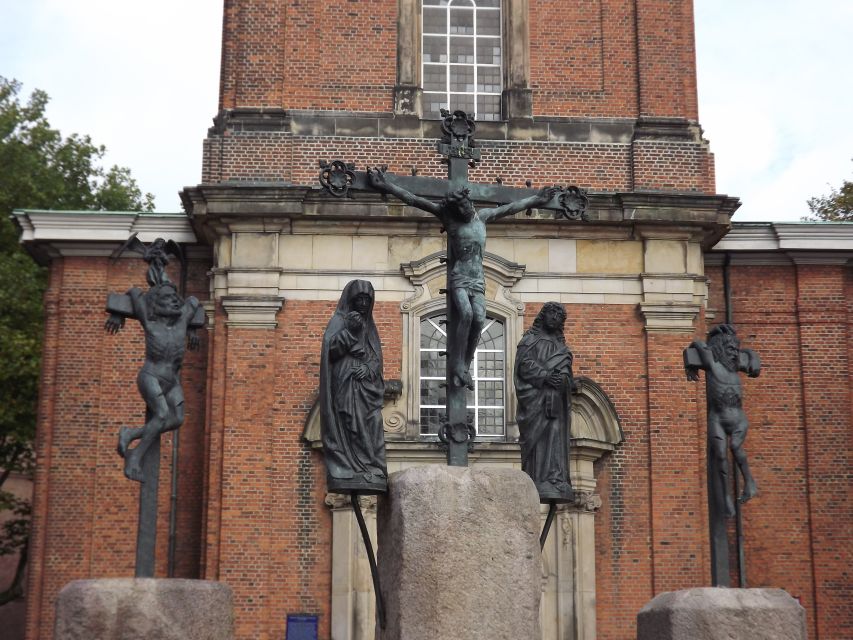
You also get a nice, straightforward structure—start at a clear landmark and end back where you began. The meeting point is the Crucifixion Group statue in front of the Trinity Church (St. Georg Kirchhof, 20099 Hamburg), so you can show up, orient fast, and spend your energy on the streets instead of on logistics.
In This Review
- Key highlights you’ll actually feel walking through St. Georg
- Why St. Georg is such a good choice for an alternative Hamburg
- Starting at the Crucifixion Group statue outside Trinity Church
- Lange Reihe’s café streets: where the neighborhood feels current
- Mosques and the Catholic Cathedral: religion as visible street life
- The redlight district on foot: sensitive streets, real context
- The gay village: culture, community, and belonging in plain sight
- How the guide turns streets into history you can remember
- Price and value: is $23 worth two hours of walking?
- Who this tour fits best (and who should think twice)
- The pace: what two hours means on these St. Georg streets
- A few practical tips before you set out
- Should you book this St. Georg Walking Tour?
- FAQ
- Where does the tour start?
- How long is the St. Georg walking tour?
- What is the price per person?
- Is the tour guided?
- What language is the guide in?
- Are there different start times?
- Where does the tour end?
- Is free cancellation available?
- Do I have to pay right away?
- What can I expect to see on the walk?
Key highlights you’ll actually feel walking through St. Georg
- A neighborhood map you can use later: how the station-area streets connect to cafés, nightlife, and everyday life
- Religious variety in one walking radius: you’ll pass mosques and a Catholic Cathedral so you can see how faith shows up in public space
- Lange Reihe’s “quasi-center” energy: trendy sidewalks and coffee-shop culture near the main hub
- Hamburg’s gay village area: you’ll get the background for the community and its place in the neighborhood
- History tied to street corners: migration, religious minorities, and student revolt show up as part of the local story
Why St. Georg is such a good choice for an alternative Hamburg
St. Georg sits close to Hamburg’s main station, but it doesn’t feel like the same old “tour bus” Germany. Instead, it’s a place where you notice differences quickly: languages, clothing styles, places of worship, and nighttime energy all share the same sidewalks. That mix is exactly what makes this 2-hour walk useful—you get variety without needing a full day of hopping across the city.
I like tours that help me understand “how people live,” not just “what buildings look like.” Here, the focus on migrants and religious minorities gives you a reason to pay attention to details you’d otherwise skim past. When a guide explains why a street looks the way it does, the neighborhood stops feeling random and starts feeling readable.
There’s also a practical angle. If you’re only in Hamburg for a short time, this kind of route helps you build a mental map of a large area quickly. It’s a way to get perspective before you decide what else to do that day.
More of the Schanze and Hamburg off the postcard



Starting at the Crucifixion Group statue outside Trinity Church
Your tour begins at the Crucifixion Group statue in front of the Trinity Church, St. Georg Kirchhof, 20099 Hamburg. I like this kind of meeting point because it’s easy to find and it anchors you to the exact street situation. You’re not searching for a tour company booth tucked inside a mall or a side alley.
The Trinity Church area also sets the tone. You’re starting in a place that signals “official” and religious, then you’ll walk into a neighborhood where you’ll see other kinds of faith and community spaces. That contrast helps the whole tour make sense, because the streets themselves become your timeline.
This route also ends back at the meeting point. That matters more than people think, especially if you’re tired, traveling solo, or trying to coordinate with dinner plans. You’re not left guessing how to get back after two hours of walking.
Lange Reihe’s café streets: where the neighborhood feels current
Lange Reihe is described as the quasi-center of St. Georg, and the tour leans into that reality. You’ll spend time in the stretch where trendy coffee shops and sidewalk life create a steady rhythm. This is the kind of place where you can easily get lost in everyday scenes—unless someone gives you the context.
What I liked most here is how the tour treats cafés as more than decoration. In neighborhoods like this, cafés often act as informal meeting places, especially near transit. When the guide ties what you’re seeing to who uses the area and why, you start noticing patterns: who lingers, what languages you hear, and how the street “feels” by time of day.
If you want a practical takeaway, aim to remember the area as a “base zone.” Even after the tour ends, you can use the Lange Reihe stretch as a simple reference point for food and coffee. It’s the sort of location that helps you plan the rest of your day without overthinking it.
Mosques and the Catholic Cathedral: religion as visible street life
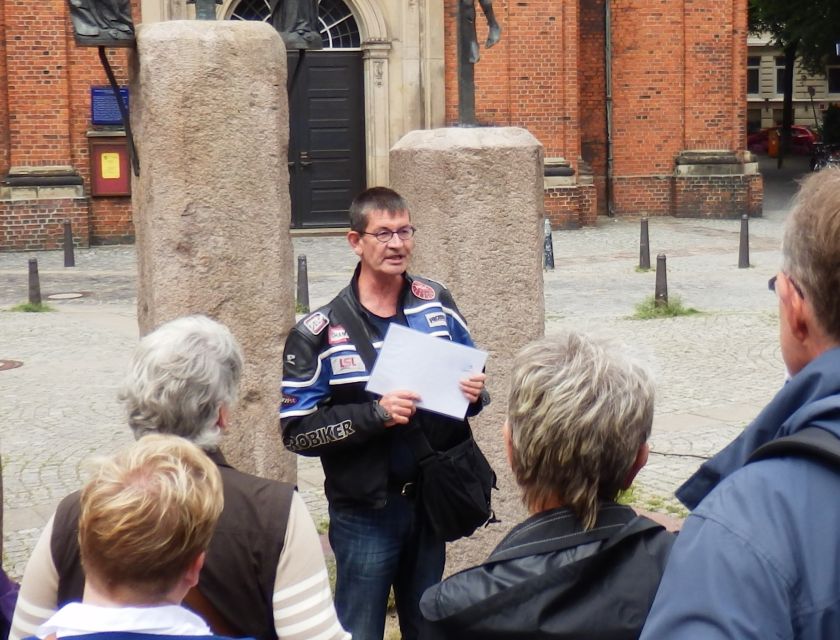
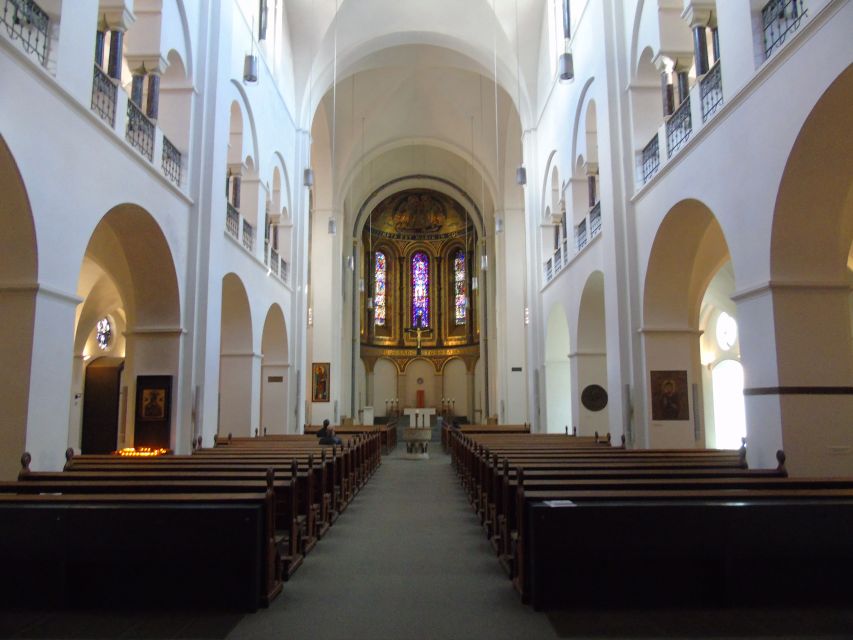
One of the strongest parts of this walk is the way it moves from the trendy station zone into religious landmarks. You’ll see mosques and a Catholic Cathedral during the route, which makes the neighborhood feel grounded and real. It’s not just sightseeing of architecture; it’s noticing how different communities share the same city space.
I found this especially valuable because it pushes you to look beyond labels. Instead of treating religion as a topic you read about later, you see it in daily geography—facades, entrances, and the way people flow near these places. That kind of observation sticks.
Do keep expectations realistic. This isn’t a slow, museum-style explanation of theology or church history. It’s a street tour focused on what’s around you and what it suggests about the neighborhood’s past and present. If you’re looking for detailed dates and building histories, you might still want extra reading afterward.
The redlight district on foot: sensitive streets, real context
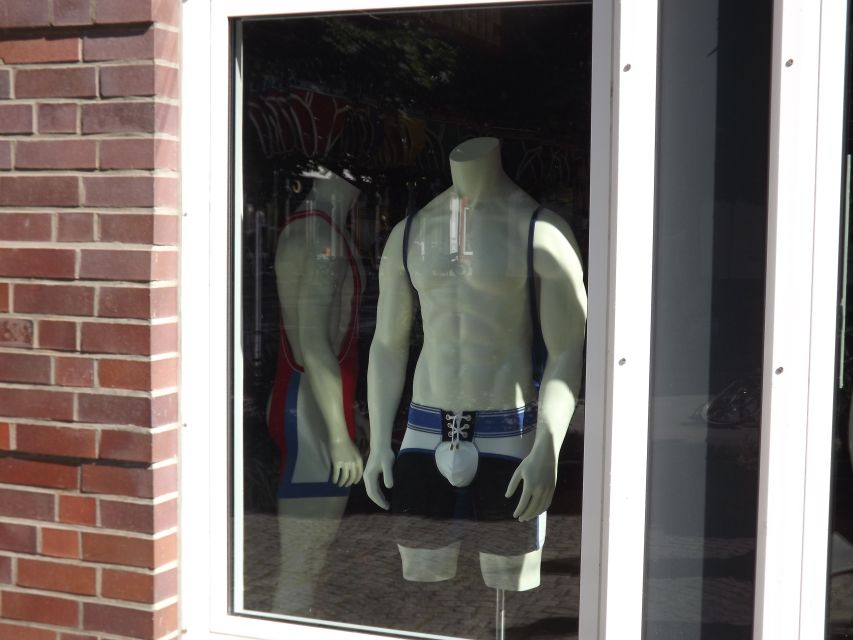
The tour also includes time around the redlight district. That can be a lot for some people—mainly because it’s not the “comfortable curiosity” type of walking. Still, with a local guide, the value is in framing: understanding what you’re seeing and why it exists in this particular part of Hamburg.
I appreciated that the tour doesn’t treat the area as pure shock value. Instead, it’s part of a bigger picture about how St. Georg evolved and how different communities and economic realities shape a district. Even if you keep it brief in your mind, you’ll walk away with clearer context.
Your consideration here is simple: match your comfort level. If you’re sensitive about adult nightlife scenes, go into this with eyes open and be ready to focus on the guide’s explanations rather than on trying to “capture everything” with photos.
Cover more of Hamburg on foot





The gay village: culture, community, and belonging in plain sight
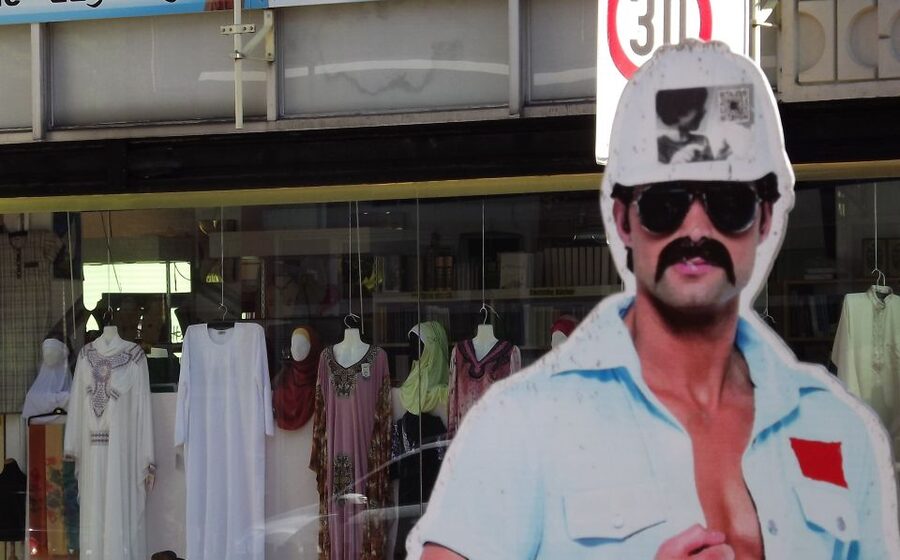
This walk also covers the gay village, one of St. Georg’s most notable social identities. The tour positions this as part of Hamburg’s broader story—where a neighborhood can hold both everyday routines and clear community spaces.
I like that the guide connects the gay village to the idea of minorities and community life rather than making it purely “entertainment district” talk. When you understand a neighborhood’s social purpose, the area reads differently. It’s less about what’s visible and more about what it means for people who live nearby.
If you’re not familiar with the term gay village, think of it as a district where LGBTQ+ culture has a strong presence, including businesses and community gathering points. On this tour, you’ll get a guided look so you can see it as part of the neighborhood’s identity—not a random stop on a checklist.
How the guide turns streets into history you can remember
This isn’t just a “here’s a street, here’s a building” route. The tour explicitly links the neighborhood to bigger themes: migrants, religious minorities, and student revolt all come up as part of the local story. That’s a strong way to learn history because it connects events to places where you can still feel the results.
The feedback also points to what makes the guide work: clear explanations, lots of insider detail, and a personal touch. I’d treat that as a clue for how you should approach the tour. Ask follow-up questions in the language you can manage. Even a few small prompts can help you catch the thread the guide is offering.
One more thing: since the tour runs in German, your best strategy is to lean on the visual cues. Follow where the guide points, watch how they describe transitions between areas, and let the neighborhood do some of the teaching. Even without perfect comprehension, you’ll likely catch the overall narrative arc.
Price and value: is $23 worth two hours of walking?
At $23 per person for a 2-hour guided walk, the value comes down to what you’re buying: a local’s context and a route you can understand afterward. You’re not paying for transportation, entry tickets, or a long, multi-stop day where you’re constantly on and off trains. You’re paying for a focused walk with interpretation.
That price makes sense when you consider the content. You’ll cover multiple kinds of spaces—café streets, religious landmarks, the redlight district, and the gay village—within a short timeframe. Doing that on your own would take more time figuring out where to go and how to interpret what you’re seeing.
Also, the guide being live in German matters. If you can follow German, you’ll likely get more from the explanations than you would from a generic audio guide. If you can’t, you can still get a lot from the street-level experience, but you should temper expectations about depth.
Who this tour fits best (and who should think twice)
This tour is ideal if you want an alternative view of Hamburg that still feels grounded and practical. I’d steer you toward it if you like neighborhoods with real social variety and you enjoy walking through areas that have distinct identities. It’s also a good option if you want to connect “city facts” to street scenes without spending a full day doing it.
It might be less ideal if you need English-language guiding throughout. Since the tour is in German, you should ask yourself honestly whether you’ll enjoy a guided experience you can only partially follow. You can still watch, observe, and enjoy the walk, but the full benefit depends on understanding the guide.
And because the route includes the redlight district, it’s best for people who can handle that topic with a neutral, respectful mindset. If you’d rather avoid anything adult-nightlife related, pick a different St. Georg or Hamburg walking option.
The pace: what two hours means on these St. Georg streets
Two hours can feel short until you’re actually walking with a guide. In this time window, you’ll likely cover a lot of distance and pass multiple types of street scenes. So treat it as a “fast orientation” tour rather than a slow historical seminar.
Your best move is to keep your phone storage ready, but don’t treat photos as your main job. Use your attention for transitions: when the walk shifts from cafés to religious spaces, or when it changes from day-to-day street life toward nightlife zones. Those shifts are part of the learning.
If you’re the type who likes to linger at every doorway and corner, you may feel mildly rushed. The tour is built for seeing and understanding quickly—then you can return later on your own if a particular area interests you.
A few practical tips before you set out
Since the tour starts and ends at the same point, plan your day so you can handle two hours of walking without stress. Wear shoes you’d be comfortable in for city sidewalks, especially if you’re also doing other sightseeing later.
Also, think about comfort and respect. St. Georg covers public spaces and adult-nightlife territory, plus active community areas tied to religious life. Staying calm, observing rather than intruding, and listening to the guide’s framing will make the tour better for everyone.
Finally, if you’re comfortable with German basics, you’ll likely get more out of the explanations. If not, focus on what you can confirm visually and ask the guide simple questions when possible.
Should you book this St. Georg Walking Tour?
I’d book it if you want Hamburg that feels real: multicultural, layered, and close to the main station without being the same old center-route. The local guide focus, the mix of Lange Reihe, mosques, the Catholic Cathedral, the redlight district, and the gay village makes it a strong value for short stays.
I wouldn’t book it if you strongly need an English-speaking guide or you’d rather avoid adult nightlife areas. And if you want deep architectural or religious-study details, you’ll probably want to complement this with other experiences.
If your goal is a readable neighborhood snapshot—with context you can actually use when you walk around on your own afterward—this one is a solid pick.
FAQ
Where does the tour start?
The tour starts at the Crucifixion Group statue in front of the Trinity Church, St. Georg Kirchhof 20099 Hamburg.
How long is the St. Georg walking tour?
It lasts 2 hours.
What is the price per person?
The price is $23 per person.
Is the tour guided?
Yes. It includes a 2-hour guided tour with a local guide.
What language is the guide in?
The live tour guide speaks German.
Are there different start times?
Starting times depend on availability, so you’ll need to check what’s offered.
Where does the tour end?
The activity ends back at the meeting point.
Is free cancellation available?
Yes, you can cancel up to 24 hours in advance for a full refund.
Do I have to pay right away?
You can reserve now and pay later, with the option to pay nothing today.
What can I expect to see on the walk?
You’ll explore Lange Reihe’s trendy café area, plus the redlight district, mosques, a Catholic Cathedral, and the gay village.
More Tours in Hamburg





More Tour Reviews in Hamburg


More of the Schanze & Alternative Hamburg



Just In: The Newest Hamburg Reviews









Schanzenviertel & Alternative Hamburg, compared.
 ★ 4.6Schanzenviertel Culinary TourFrom $572,051 reviews
 ★ 4.5Culinary Insider Tour of St. GeorgFrom $589272 reviews
 ★ 4.5Downtown, Alster & Creative Neighborhoods by BikeFrom $43217 reviews
 ★ 4.6Mystical Hamburg – Walking Tour in GermanFrom $29168 reviews
 ★ 4.5Schanzenviertel Food and Beer TourFrom $6144 reviews
 ★ 4.4Hamburg – Freemason Walking Tour in GermanFrom $2938 reviews
 ★ 4.8Private Tour – Schanzenviertel & KarolinenviertelFrom $29415 reviews
 ★ 4.9Safari tour in St. PauliFrom $3511 reviews
Browse the lists this tour appears in