
Reviewed · HISTORICAL TOURS
Photo Tour of Hamburg’s UNESCO World Heritage Site
Four hours can change how you see a city. This photo tour threads UNESCO Hamburg sights into clear, hands-on photo composition lessons, so you walk away with smarter angles and better images, using a smartphone or a digital camera. I also like that you get a real historical thread through Kontorhausviertel and the Speicherstadt area, not just places to pose—plus the guide adjusts to your experience level.
The main thing to consider is that it’s weather-dependent and you’ll be doing a fair amount of walking outdoors, with no private transport included.
With a max group size of 8, you get more attention and fewer guesswork moments, and the mobile ticket keeps things simple on arrival. It starts and ends right back near the meeting point at Fischertwiete 1A, so you’re not juggling logistics mid-walk.
In This Review
- Key highlights you’ll feel fast
- Getting oriented at Fischertwiete 1A (the start that sets you up)
- Chilehaus and the Kontorhausviertel: learning composition on Germany’s sharpest lines
- Speicherstadt: brick gorges, close detail, and the craft of shooting depth
- Walking the Fleete: the payoff stop for water reflections
- Speicherstadt Town Hall and the walk past the warehouses: history with a camera in hand
- The first artificial harbour basin: port geometry and the moment you level up
- Mid-tour break (around the 2-hour mark): where questions actually get answered
- What’s included (and why it’s more than just walking with a camera)
- Price and value: $62.45 for 4 hours with coaching in a small group
- Who this tour suits best (and who might want a different style)
- Practical tips before you go (so the tour feels worth it)
- Should you book this Hamburg UNESCO photo walk?
- FAQ
- How long is the photo tour in Hamburg?
- What time does the tour start?
- Where does the tour start and where does it end?
- What is the group size limit?
- How much does the tour cost?
- What is included in the ticket price?
- Do I need good weather for the tour?
Key highlights you’ll feel fast
- Chilehaus as a perspective classroom: dramatic architecture that teaches angles, lines, and framing.
- Speicherstadt brick detail and depth: learning how to shoot the “brick gorges” up close.
- Fleete walkways for reflections: water views that reward careful positioning.
- Artificial harbour basin photo ops: a satisfying shift from canals to port geometry.
- Exposure aid for real control: help that matters whether you’re new or just rusty.
- A mid-tour break for questions: a calm moment to fix settings and technique on the spot.
Getting oriented at Fischertwiete 1A (the start that sets you up)
The tour begins at Fischertwiete 1A, 20095 Hamburg, starting at 5:00 pm and running about 4 hours. Because the meeting point is in the city center of the UNESCO core, you’re not spending your prime photo time commuting; you’re already in the zone where the architecture and canals give you strong compositions.
If you’re using a phone, this is a good time to do a quick mental checklist: can you switch between wide and zoom, can you tap to focus, and do you know how to adjust exposure on your screen? The tour’s whole point is that you should stop shooting on autopilot and start shooting with intention.
One practical note: since it runs outdoors through key photo areas, bring shoes you’d actually wear for long city walks. Even if the guide finds shelter during rough weather, you’ll still want comfort so you can focus on seeing shots, not nursing sore feet.
More of the Hanseatic history, up close


Chilehaus and the Kontorhausviertel: learning composition on Germany’s sharpest lines
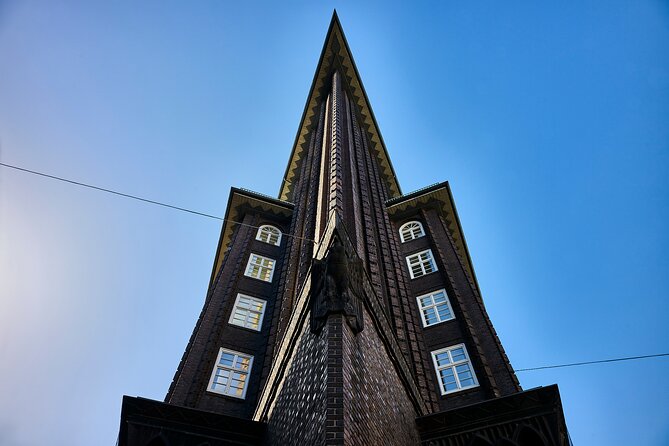
Your first big stop is the Chile House (Chilehaus) in the Kontorhausviertel, a place famous for its dramatic form and the sculptural details that sit high on the building. The tour focuses on seeing the building the way the architecture rewards—through perspective, strong image structure, and framing that makes lines work for you.
Here’s why I think this early lesson matters: Chilehaus is the kind of building where a casual photo looks flat, but a guided one starts to feel 3D. The guide’s instruction style is aimed at getting you to notice leading lines, height cues, and the effect of where you stand relative to the façade.
If you’re shooting with a phone, this is also where you’ll likely learn a useful habit: don’t just zoom in. Move your body first. Even a small shift can change whether the building’s edges converge or feel chaotic. If you’re on a digital camera, it’s a great time to get comfortable with how your focal length and angle affect the “clean geometry” look people want from city architecture shots.
Speicherstadt: brick gorges, close detail, and the craft of shooting depth
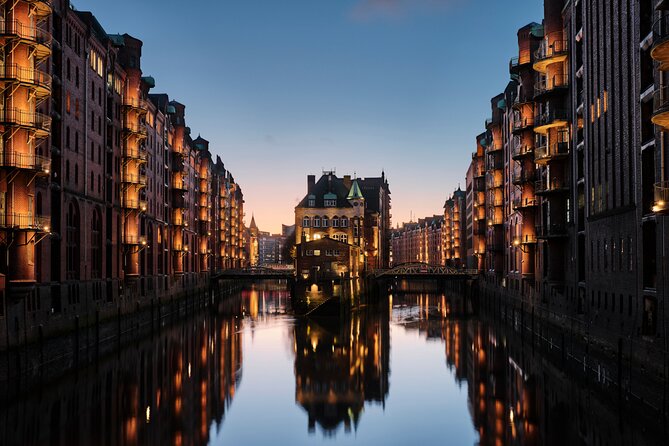
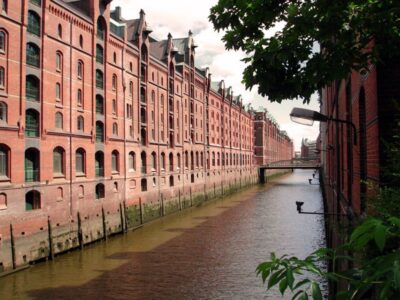
After you transition toward Speicherstadt, the mood shifts. You move into that distinctive world of warehouses and canal-side streets—often described as brick gorges for a reason. The alley-like spaces and repeating forms create depth, and that’s where composition lessons start to pay off.
This is a strong stop for anyone who’s tired of flat tourist shots. You’re not just photographing a single façade; you’re building an image that has layers: foreground texture, midground shapes, and background structure. The guide’s feedback helps you translate that idea into actual technique—how to place yourself, how to frame for depth, and how to keep lines from tilting when you’re walking and shooting quickly.
A practical drawback to remember: brick-and-stone areas can mean mixed lighting. You may swing from bright open patches to shaded passages. That’s exactly the kind of situation where an exposure aid becomes useful, because it encourages you to think beyond brightness and to keep your subject and details readable without blowing out highlights.
Walking the Fleete: the payoff stop for water reflections
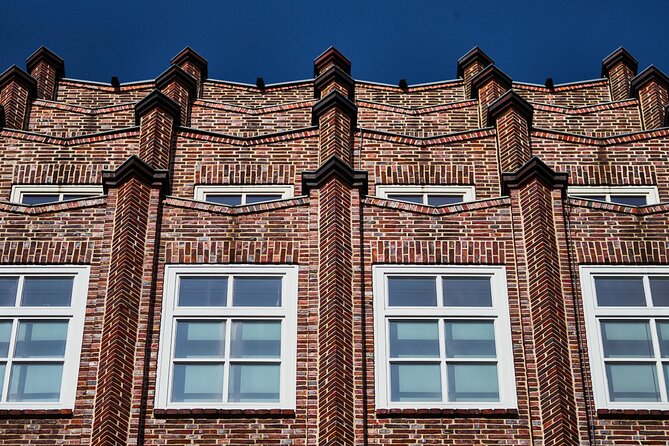
Next comes the Fleete—Hamburg’s canal network. This part of the walk is one of the tour’s smartest pacing choices. After you train your eye on brick shapes and building edges, you’re handed water: reflective surfaces, long sightlines, and softer gradients that can make even average photos look better if your composition is on point.
Water shots reward patience. The guide’s creative instructions help you position yourself for a better angle—often a slightly lower viewpoint or a cleaner horizon can change the whole mood. If you’re using a smartphone, pay attention to glare and reflection intensity. Sometimes the best photo isn’t the brightest one; it’s the one where details stay crisp without turning the canal into a blown-out mirror.
If the weather turns, this is also a practical area because the guide can steer you toward sheltered photo spots. You’re still learning, not just waiting for skies to improve.
Speicherstadt Town Hall and the walk past the warehouses: history with a camera in hand
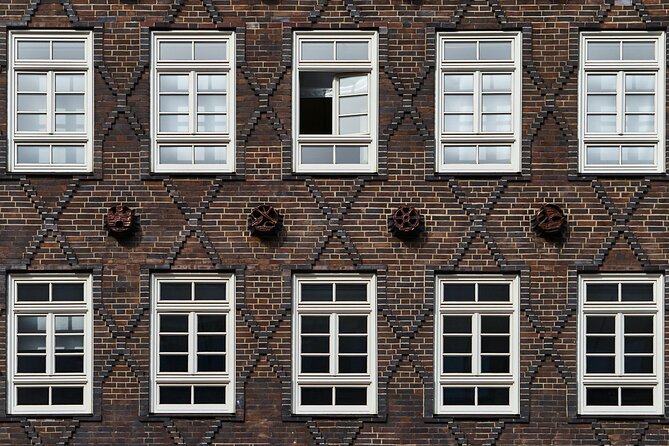
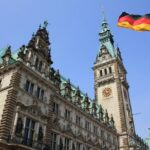
As you continue along Speicher and near the Speicherstadt Town Hall, you get a bridge between architecture and story. The tour includes a historical introduction to the sights, and that context matters more than you might think.
When you understand what you’re looking at—why these areas were built and how the port-world functioned—you tend to photograph differently. You stop aiming for generic postcard angles and start choosing images that explain the place. That shift is a huge value for day-trippers. You’ll see more, and your photos will feel more like a narrative.
This is also where the guide’s flexible approach can show up. The tour adapts based on the number of participants and your prior knowledge (up to 8 people). If you’re new to photography, you’ll get simpler guidance and supportive explanations. If you’ve got some experience, you can expect more targeted feedback on perspective and structure.
More photo walks around the city


The first artificial harbour basin: port geometry and the moment you level up
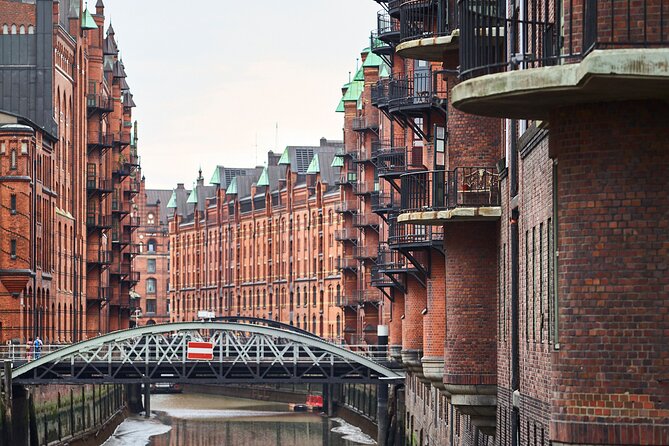
About two-thirds through the walking route, you reach the first artificial harbour basin of the Port of Hamburg. This is a great finish-style photo zone because port areas naturally create strong lines, industrial shapes, and wide angles—especially when you learn how to frame them without drowning your image in clutter.
What makes this stop special is the contrast. You’ve spent the earlier segment learning how to work with brick textures and narrow canal spaces. Now you switch to a more open, structured environment where you can practice how to balance the “big shapes” with the smaller details.
If you’re using a phone, watch your vertical/horizontal balance. It’s easy in port basins to tilt everything because you’re moving and looking around. This is a good time to slow down for 30 seconds: lock your frame, tap to focus, then take the shot. The tour’s coaching style pushes that kind of intentional pace.
Mid-tour break (around the 2-hour mark): where questions actually get answered
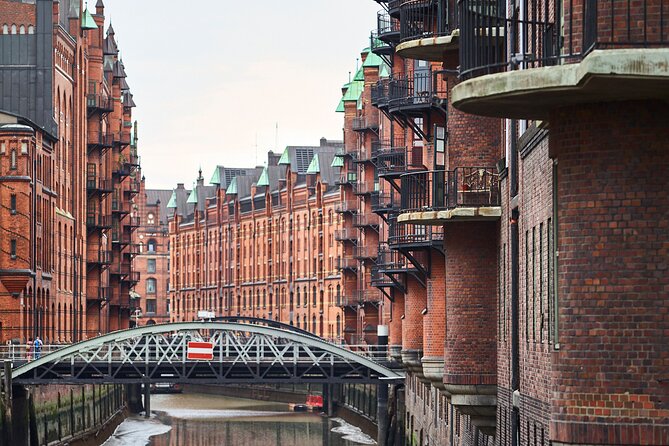
At about two hours, you take a short break. This isn’t filler time; it’s when you can ask the exact technical questions that came up during the walk.
Maybe you struggled with focus while moving. Maybe your photos look too dark or too bright. Maybe your lines seem to lean. This break gives you a chance to fix the problem before you reach the next set of photo opportunities—so you leave the session with a higher success rate.
It’s also a good moment to get to know the group, which matters for the flow. With a small group size, conversation stays relevant to the tour. You can often hear a question that mirrors your own, and learn without even having to ask.
What’s included (and why it’s more than just walking with a camera)
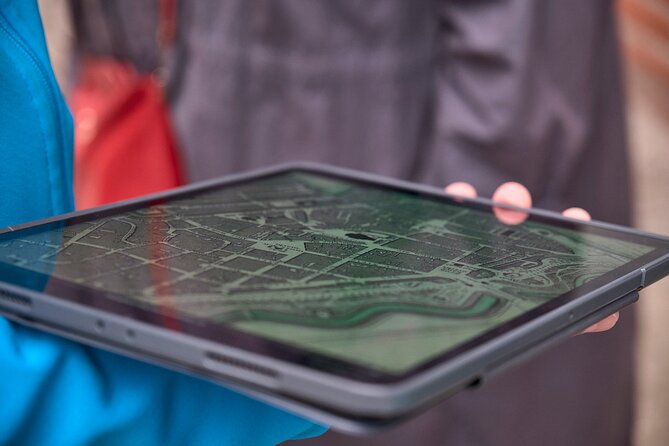
The tour includes:
- Photographic and photographic support throughout the tour
- Historical introduction to the sights
- Exposure aid to help you understand photography (especially useful for beginners)
I like this bundle because it targets two things that usually don’t get handled together. Most sightseeing walks give you the where. Most photography workshops give you the how. This format tries to connect them: you learn how to shoot the places you’re seeing right then.
The exposure aid is also a practical inclusion. It’s easy to assume exposure is only for people with advanced cameras, but basic exposure understanding helps with both phones and digital cameras. If you can control brightness and contrast more intentionally, your results improve fast—even without knowing every technical term.
And since there’s no private transportation included, you’re paying for the actual experience: guidance, history, and photo coaching during the walk.
Price and value: $62.45 for 4 hours with coaching in a small group
At $62.45 per person for about 4 hours, this doesn’t feel like a “cheap” tour, but it also doesn’t feel inflated. You’re paying for a guided route through major UNESCO-area photo zones plus hands-on instruction.
The best part of the value equation is the small group limit of up to 8 travelers. In a large group, photo advice turns into vague tips. Here, you’re more likely to get feedback that matches what you’re actually shooting.
You also get a combination that reduces trial-and-error time. Instead of wandering around the UNESCO core trying to figure out perspectives on your own, you’re guided into the best teaching moments: Chilehaus geometry, Speicherstadt depth, Fleete water angles, and the port basin’s structure.
If you’re mostly interested in casual sightseeing with no photography focus, you might decide it’s not worth it. But if you want better photos without enrolling in a full-day workshop, the price-to-instruction balance is pretty fair.
Who this tour suits best (and who might want a different style)
This is a good fit for:
- People who want better smartphone photos without feeling lost
- Anyone new to photography who needs simple, practical help
- People who like history, but also want their camera to make the story visible
- Walkers who don’t mind a focused route that prioritizes photo stops
If you’re an ultra-technical photographer expecting deep lens specs or advanced post-processing drills, you might find the instruction style more beginner-to-intermediate oriented. The tour is designed around perspective, composition, and exposure basics with real-time guidance—not a lab course.
Also, because it depends on good weather, consider it a plan that works best when you have flexibility. If the day’s weather doesn’t cooperate, you’ll be offered another date or a full refund.
Practical tips before you go (so the tour feels worth it)
Bring:
- A smartphone with a camera mode you can use confidently (focus and exposure control helps)
- Or your digital camera with a lens you like for architectural shots
- Comfortable shoes for city walking
- A light layer for the late-afternoon-to-evening feel in Hamburg
During the walk:
- Take fewer shots, but aim better. The guide’s coaching rewards your attention.
- If you get one good composition idea, repeat it from a slightly different angle. That’s how you build a set you’ll actually keep.
- When the guide stops, pause and look around without shooting. City photography improves when you train your eye first.
And if you’re worried about your skills level, don’t be. The tour is explicitly adaptable for different prior knowledge, and it’s friendly to beginners who want help creating photos they can be proud of.
Should you book this Hamburg UNESCO photo walk?
Book it if you want a focused, high-value mix of architecture, canals, port views, and hands-on photography coaching in a small group. The structure makes it easier to learn—Chilehaus teaches perspective, Speicherstadt teaches depth, the Fleete teaches water angles, and the harbour basin gives you port geometry to practice. If your goal is better photos with less guesswork, this style of guided photo walk is a strong match.
Skip it only if you dislike walking outdoors or you have no interest in taking photos beyond quick snapshots. With good weather and an open mindset, you’ll leave with a stronger eye for how to frame what you see—and that’s the kind of souvenir that keeps working long after your trip ends.
FAQ
How long is the photo tour in Hamburg?
The tour lasts about 4 hours.
What time does the tour start?
The start time is 5:00 pm.
Where does the tour start and where does it end?
It starts at Fischertwiete 1A, 20095 Hamburg, Germany, and ends back at the meeting point.
What is the group size limit?
The tour has a maximum of 8 travelers.
How much does the tour cost?
The price is $62.45 per person.
What is included in the ticket price?
It includes photographic support throughout the tour, a historical introduction to the sights, and an exposure aid to help you understand photography.
Do I need good weather for the tour?
Yes. The experience requires good weather. If it is canceled due to poor weather, you’ll be offered a different date or a full refund.
History Around Hamburg


More Tours in Hamburg



More Tour Reviews in Hamburg

Just In: The Newest Hamburg Reviews





Historical Tours, compared.
 ★ 5.0The Local Tour of Hamburg Historic CentreFrom $31,058 reviews
 ★ 4.4Historical Tour of the St. Pauli Sex Work DistrictFrom $39215 reviews
 ★ 4.7UNESCO-World Heritage Sites TourFrom $18137 reviews
 ★ 5.0Sightseeing Tour – Free Tour – Historic Center-Hamburg On FootFrom $3112 reviews
 ★ 4.8German Hamburg Historic City Center Pay-What-You-Want TourFrom $380 reviews
 ★ 4.7Speicherstadt Historical Guided Walking TourFrom $2971 reviews
 ★ 3.5Lights tour through the port of Hamburg and to the historic warehouse districtFrom $3070 reviews
 ★ 5.0Free Tour: History of the Port, Red Light District and the BeatlesFrom $348 reviews
Browse the lists this tour appears in