
Reviewed · SPEICHERSTADT & HAFENCITY
UNESCO World Heritage – Speicherstadt and Kontorhaus district
Hamburg’s office palaces tell a bigger story. This guided UNESCO walk through the Speicherstadt and Kontorhaus district focuses on architecture you can actually feel up close, including the 1920s staircases you can only access on weekdays. I especially like how the route zooms in on landmark buildings instead of doing a giant “look at this, then move on” loop, and I like that several key stops come with free admission tickets so your money goes to the guide’s explanation rather than entry fees. One potential drawback: if you’re sensitive to outdoor sound, the street noise can make the guide harder to hear because a mic isn’t mentioned as part of the setup.
The tour also has a smart length and pace. It runs about 2 hours, caps at 25 people, and uses a mobile ticket, so it feels manageable rather than rushed. I do think it’s best for people who enjoy details—brickwork, courtyards, staircases, and the way these buildings fit the Hanseatic city’s business life—because parts of the commentary happen at busy corners where you may not be able to ask questions the whole time.
Finally, the value is tied to what you get access to. The route stops quickly at three major Kontorhaus buildings, then you only see the International Maritime Museum Hamburg from the outside, so plan to linger nearby if you want museum time on top of the tour. If you’re visiting on a weekend, you may miss the staircase access that makes this tour feel special.
In This Review
- Key highlights to know before you go
- Why Speicherstadt and the Kontorhaus district earn UNESCO attention
- Price and timing: what $21.34 buys you in Hamburg
- Meeting point to finish line: plan your afternoon around the 3:00 pm start
- Sprinkenhof: courtyards and staircases that show how big business worked
- Chilehaus: Fritz Höger’s Klinkersticker brick identity
- Messberghof: the round staircase and a warning from history
- International Maritime Museum: exterior views only, so plan the rest smartly
- Weekday vs weekend: when the 1920s staircases actually happen
- Practical tips for noisy corners and hearing the guide
- Who this tour is best for (and who might want a different option)
- Should you book this UNESCO Speicherstadt and Kontorhaus tour?
- FAQ
- How long is the UNESCO Speicherstadt and Kontorhaus district tour?
- Where do I meet and where does the tour end?
- Is there an entrance fee included for all stops?
- Do I need to print anything or can I use a mobile ticket?
- How big are the groups?
- Are interior staircases included?
- What is the cancellation window for a refund?
Key highlights to know before you go
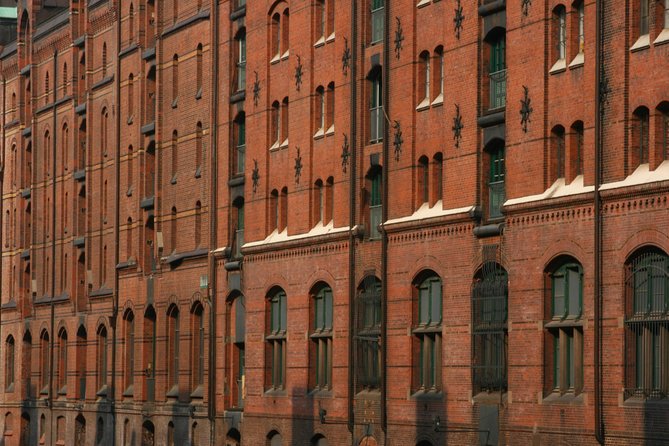
- UNESCO on foot: Speicherstadt and the Kontorhaus district, explained through standout office architecture
- Weekday staircase access: the 1920s interior staircases are only possible on weekdays
- Chilehaus brickwork by Fritz Höger: learn the story behind his striking brick design nickname, Klinkersticker
- Sprinkenhof courtyards and facades: one stop where you’ll spend time spotting scale, geometry, and function
- Messberghof’s round staircase: plus a reminder of the district’s turbulent 20th-century history
- Free on-route admissions: Sprinkenhof, Chilehaus, and Messberghof include free admission tickets
Why Speicherstadt and the Kontorhaus district earn UNESCO attention
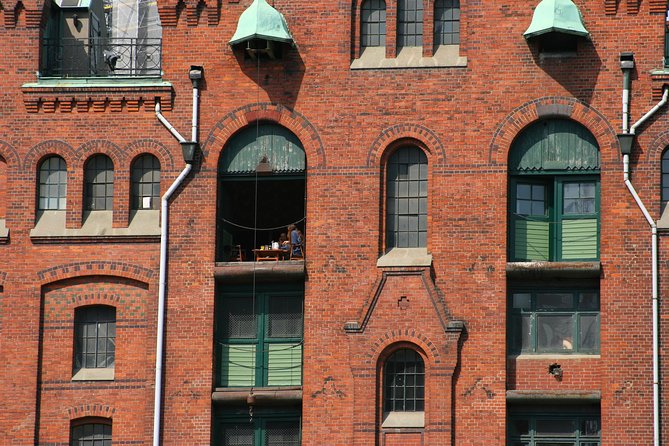
This part of Hamburg isn’t UNESCO because it looks old in a postcard way. It’s UNESCO because these districts show how the Hanseatic city built its business power in durable, design-forward ways.
You’ll be walking through a world where commerce shaped the streetscape. Kontorhaus buildings (commercial office blocks) were designed to handle modern work—offices, companies, and the practical machinery of trading—yet they also used architecture as branding. Even if you’re not an architecture fan, the buildings make it obvious: people once treated office space like civic infrastructure.
The tour’s focus helps you notice that difference. Instead of sweeping statements, you get directed attention to things like facades, courtyards, and staircases—features that show how these buildings were meant to function day after day.
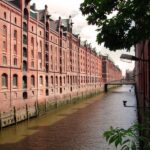
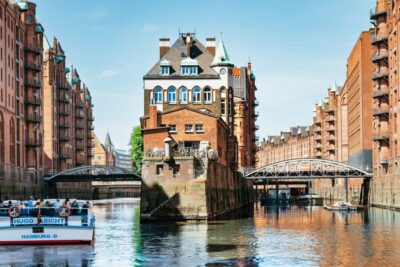
More time in the red-brick Speicherstadt and HafenCity

Price and timing: what $21.34 buys you in Hamburg
At about $21.34 per person for roughly 2 hours, the price makes sense if you like guided context. You’re not just buying a walk. You’re paying for someone to connect the design details—brick patterns, building shapes, interior circulation—to the larger story of Hamburg as a trading hub.
There’s also a practical value angle: the stops at Sprinkenhof, Chilehaus, and Messberghof list free admission tickets. That means you’re less likely to feel nickel-and-dimed while you’re trying to enjoy the tour.
Booking can be competitive. The experience is often reserved about 23 days in advance, and it’s limited to max 25 travelers, so if you already know your dates, it’s worth grabbing a spot rather than waiting until the last moment.
Meeting point to finish line: plan your afternoon around the 3:00 pm start
This tour starts at Jakobikirchhof 8, 20095 Hamburg and ends at the International Maritime Museum Hamburg, Koreastraße 1, 20457 Hamburg. It begins at 3:00 pm, so you’re looking at a late-afternoon stroll.
That timing is useful. It gives you daylight for exterior views and enough energy for walking without eating up your whole day. You’ll still want to wear comfortable shoes, because you’re moving between several architectural stops in a short window, and the route includes the kind of street corners where wind and city noise can bounce around.
It’s also helpful that the tour is described as near public transportation and that service animals are allowed. If you’re coming from another part of the city, you should be able to plug this into a larger itinerary without stress.
Sprinkenhof: courtyards and staircases that show how big business worked
Sprinkenhof is the stop where you’ll learn what a major office complex can look like when it’s designed to feel both grand and functional. It’s described as the largest office building in the route, and that scale matters because it changes how you experience the space.
Expect attention to:
- Impressive courtyards, where you can gauge the building’s internal volume
- Staircases, including the kind of interior vertical movement that makes these offices more than just flat facades
- Facades, where early office architecture communicates stability and power
The tour keeps your time here to about 10 minutes, which is short. That can be a good thing if you enjoy “spot the details quickly” rather than slow touring. The best strategy is to arrive mentally ready to look up, look in, and compare what you’re seeing with what your guide is explaining in the moment.
Weekday note: the tour specifically calls out staircases of office buildings from the 1920s as only possible on weekdays. If your visit lands on a weekend, you can still enjoy the exterior architectural description and courtyard views, but don’t expect the same interior staircase experience.
Chilehaus: Fritz Höger’s Klinkersticker brick identity
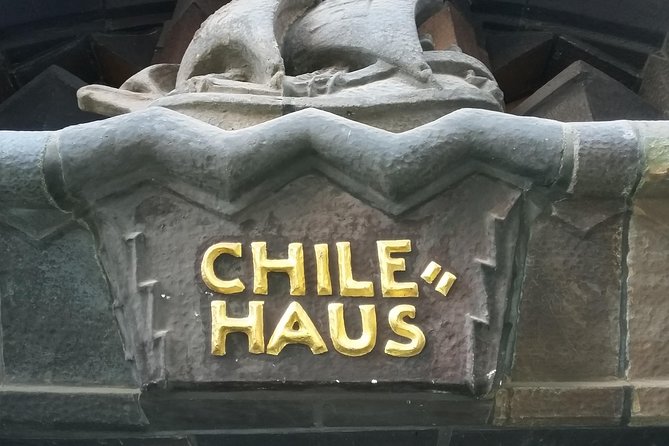
Chilehaus is the head-turner stop. It’s described as the world-famous Kontorhaus with a striking top, and it’s the work of architect Fritz Höger—nicknamed Klinkersticker, tied to his filigree brick architecture.
If you like design, this is where the tour helps you “read” the building. You’re not just looking at brick. You’re learning how a particular architectural language became recognizable: the way brickwork can create rhythm, sharp edges, and a sense of purposeful motion even when the building is basically rigid.
You’ll spend about 10 minutes here, and that time can feel just right. Chilehaus can be visually loud—in the best way—so it’s easy to overstay if you let it. A guided focus helps you choose what to notice: the top shape, the brick pattern logic, and why Höger’s approach became so memorable.
Also, Chilehaus connects to a larger visitor ecosystem. One of the most practical takeaways from guest notes is that there’s a World Heritage Centre in the Chilehaus area. If you want to extend the tour after it ends, that’s an easy place to build on what you learned from your guide.
More of the Hanseatic history, up close



Messberghof: the round staircase and a warning from history
Messberghof adds a different tone to the walk. It’s another Kontorhaus, but the highlight here is architectural and historical: the tour points out a round staircase, and it also explains that the building had a turbulent history during National Socialism in Germany.
What makes this stop valuable is the balance. It’s not just “pretty staircase, move on.” The message is that these business districts didn’t exist in isolation. Buildings with corporate functions were part of the larger world, including the darker parts of European history.
You get about 10 minutes at Messberghof, so don’t expect a full memorial experience. But if you care about how architecture carries meaning across time, this stop helps you connect the physical structure to the human story.
Again, weekday access matters for staircases in general on this tour. If you’re there on a weekday and the route is able to include the staircase experience, this stop is likely to be one of the more memorable moments.
International Maritime Museum: exterior views only, so plan the rest smartly
The tour’s final stop is the Internationales Maritimes Museum Hamburg, but you’ll only see the building from the outside. Admission isn’t included, and the time is about 5 minutes.
So treat this as a “signpost” moment, not a museum visit. If you want museum time, you’ll need to plan that separately, either before or after your 2-hour tour.
Why it’s still worth having it on the route: the museum ties the architecture back to Hamburg’s maritime identity. Even without going in, seeing the building helps reinforce the broader theme that these districts were built for trade, transport, and the movement of goods.
Weekday vs weekend: when the 1920s staircases actually happen
This tour includes a specific promise: experiencing breathtaking staircases inside office buildings from the 1920s. The key detail is that this is only possible on weekdays.
Here’s how I’d use that when choosing dates:
- If staircases are a must for you, prioritize a weekday. That’s when the tour can deliver its most distinctive “inside” feel.
- If you’re going on a weekend, show up with the mindset that you’ll still get strong architecture commentary, but the interior staircase moment may not happen the way the tour describes.
It’s a simple choice, but it can change whether the tour feels like a highlight or just a pleasant walk.
Practical tips for noisy corners and hearing the guide
One drawback shows up in feedback: some people found it hard to understand the guide due to the soundscape and the lack of an obvious mic setup. Another issue was that the group could feel big in outdoor spaces, especially when information is delivered at louder street corners.
You can reduce the frustration with a few habits:
- Pick seats strategically in the walking group if there’s a moment to cluster—closer is usually clearer.
- If you need audio clarity, consider bringing earplugs that cut street noise without killing speech.
- Ask your best question at a natural pause, not mid-crossing or mid-corner, when wind and traffic spike.
Also, because the stops are short, you’ll get more value if you listen for the “what to look at” cues. The guide’s job is to point your eyes to the details; your job is to be ready when the group moves fast.
Who this tour is best for (and who might want a different option)
This works really well if:
- You like architecture with real purpose, not just aesthetics
- You want a structured walk through UNESCO World Heritage without spending all day
- You’re curious about how office buildings functioned in a trading city
- You can do a weekday and want the interior staircase experience
You might choose something else if:
- You need guaranteed quiet and easy-to-hear narration outdoors
- You prefer long museum-style visits rather than quick architectural stops
- You’re strictly looking for a full museum itinerary, since the maritime museum is outside-only
Should you book this UNESCO Speicherstadt and Kontorhaus tour?
I’d book it if you want a focused, high-value architecture walk that turns Hamburg into a readable story: commerce, design, and how city power is built in brick and stone. The biggest “yes” signal is the chance to experience those 1920s staircases on a weekday, plus the fact that major stops on the route include free admission tickets.
If you’re going on a weekend or you’re very sensitive to speech clarity in busy outdoor areas, go in with realistic expectations: you’ll still learn a lot, but the interior staircase moment and audio experience may not match what you hope for.
If you’re the kind of traveler who enjoys noticing what’s behind the postcard, this tour is a strong fit.
FAQ
How long is the UNESCO Speicherstadt and Kontorhaus district tour?
It runs for about 2 hours (approx.).
Where do I meet and where does the tour end?
You meet at Jakobikirchhof 8, 20095 Hamburg, and the tour ends at the International Maritime Museum Hamburg, Koreastraße 1, 20457 Hamburg.
Is there an entrance fee included for all stops?
Sprinkenhof, Chilehaus, and Messberghof list admission tickets as free. The Internationales Maritimes Museum Hamburg building is viewed from the outside and admission is not included.
Do I need to print anything or can I use a mobile ticket?
You use a mobile ticket.
How big are the groups?
The tour has a maximum of 25 travelers.
Are interior staircases included?
The tour includes experiencing staircases of office buildings from the 1920s, but this is only possible on weekdays.
What is the cancellation window for a refund?
You can cancel up to 24 hours in advance for a full refund. If you cancel less than 24 hours before the start time, the amount paid is not refunded.
History Around Hamburg
More Tour Reviews in Hamburg



More of Speicherstadt & HafenCity

Just In: The Newest Hamburg Reviews







Speicherstadt & HafenCity, compared.
 ★ 4.61.5-Hour Harbor and Speicherstadt Day CruiseFrom $4014,200 reviews
 ★ 4.41-Hour Harbor Sightseeing Cruise with HafenCityFrom $303,067 reviews
 ★ 4.7Elbphilharmonie Plaza and HafenCity Food TourFrom $691,711 reviews
 ★ 4.5Eerie Speicherstadt TourFrom $291,394 reviews
 ★ 4.7Speicherstadt and Hafencity Guided TourFrom $161,344 reviews
 ★ 4.8Speicherstadt and HafenCity 2-Hour TourFrom $2821,063 reviews
 ★ 4.7Treasure Hunt Game through HafenCityFrom $29364 reviews
 ★ 4.6Speicherstadt Walking Tour with Coffee TastingFrom $50360 reviews
Browse the lists this tour appears in