
Reviewed · SPEICHERSTADT & HAFENCITY
Down Town to Speicherstadt, HafenCity and Elbphilharmonie
Hamburg’s waterfront tells stories in motion. This 2-hour walk strings together the city’s power, its port evolution, and its big modern comeback, with stops that make each landmark easier to read than if you just wander. You’ll go from the grand Hamburg Town Hall area to the warehouses of Speicherstadt, then finish at the Elbphilharmonie with a view over the harbor.
Two things I like most: first, the tour gives you the connections between buildings and what Hamburg was doing economically and historically, from trade streets to WWII remembrance. Second, you cover three headline waterfront zones in one go—HafenCity, Speicherstadt, and the Elbphilharmonie—so you don’t waste time trying to figure out how they relate.
One consideration: it’s a walking-focused route across the central-to-harbor stretch, so you’ll want comfortable shoes and you should be ready not to linger forever at every stop. The upside is the pacing is tight for a 2-hour experience.
In This Review
- Key Points You’ll Care About
- Why This Downtown-to-Elbphilharmonie Walk Works
- Hamburg Town Hall And Hygieia-Brunnen: Start With Merchant Power
- Trostbrücke To Deichstraße: From Sailing Ships To Container Change
- St. Nikolai Memorial And The Operation Gomorrha Exhibition
- HafenCity’s 157-Hectare Makeover: Urban Renewal You Can See
- Speicherstadt: Red Brick Warehouses On Wooden Piles
- Elbphilharmonie Finale: The 2016 Concert Hall Story And Port Views
- Price And Time: What You Get For $30.04
- Should You Book This Hamburg Walking Tour?
- FAQ
- What is the duration of this Hamburg walking tour?
- Where does the tour start and where does it end?
- Is the tour offered in English?
- Do I need to pay for entry tickets at the stops?
- What kind of ticket do I receive?
- Does the tour run in bad weather?
- What’s the group size?
- Can I cancel if plans change?
Key Points You’ll Care About
- Small group (max 15) keeps the walk feeling personal instead of like a conveyor belt.
- Professional guide in English turns “pretty buildings” into “now I get why this matters.”
- UNESCO Speicherstadt plus the warehouse-pile story makes the district far more than a photo stop.
- HafenCity’s 157 hectares explains how an industrial shoreline became a new neighborhood.
- Elbphilharmonie finale ends at the concert hall where you can visit the platform for port views.
- WWII memory at St. Nikolai adds weight to the lighter sightseeing moments.
Why This Downtown-to-Elbphilharmonie Walk Works
This is the kind of Hamburg tour that helps you get your bearings fast. You start at Rathausmarkt, a good launching pad for understanding how Hamburg’s merchant wealth shaped the city center. Then the route shifts toward the water and you watch the story change from trade power to port infrastructure to regeneration—ending at the Elbphilharmonie, a modern icon that feels like a punchline to all the earlier history.
For me, the sweet spot is that it’s short enough (about 2 hours) to fit a packed day, but full enough to hit “big three” Hamburg waterfront areas. You’ll also appreciate the group size cap of 15, which usually means fewer long waits and more chances to ask questions when something clicks.
Weather is handled too: it runs in all weather, so plan like it’s a real walk, not a museum visit. If rain shows up, bring a rain layer and you’ll be fine.
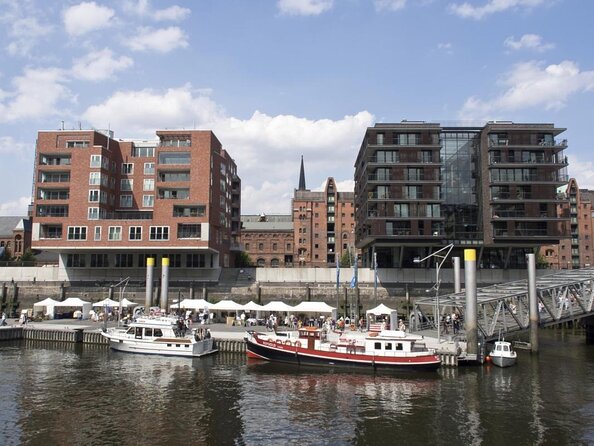
More time in the red-brick Speicherstadt and HafenCity

Hamburg Town Hall And Hygieia-Brunnen: Start With Merchant Power
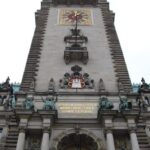
The walk kicks off at Hamburg Town Hall (Neorenaissance, built in 1897). This isn’t just a handsome façade. The tour frames it as a statement by a trader city—Hamburg showing off confidence, money, and organization. Standing here, you start to understand why the later harbor story matters: this power didn’t appear out of nowhere. It was tied to shipping, goods, and the people who coordinated it.
A few steps away is the Hygieia-Brunnen fountain behind the city hall. Even if fountains aren’t usually your thing, it’s a quick, smart stop. The theme is fresh water—and in a port city, water access is more than “nice scenery.” It’s about health, supply, and keeping a dense city running.
You’ll likely notice how the guide uses these openings to set the tone: not just facts, but the idea that Hamburg kept evolving its systems to survive and grow. It’s an efficient way to start, because by the time you reach the harbor crosses later, those stories feel connected instead of random.
Trostbrücke To Deichstraße: From Sailing Ships To Container Change
Next comes Trostbrücke (Consolation Bridge). This is where the tour helps you understand Hamburg’s port origins in a physical way. The bridge is described as the origin point of the port in the city center: sailing ships brought goods from around the world, and merchants waited for those arrivals. It’s a simple idea, but when you connect it to where you are standing, it stops being abstract.
Then the story shifts to how technology changed everything: steam ships, and later container vessels, transformed the port. That matters because HafenCity and modern infrastructure didn’t drop from the sky—they’re the result of centuries of port change. If you like transport and trade history, this is one of the most rewarding segments.
From there you move to Deichstraße, a historic street with houses dating to the 17th century. The big value here is the “live and work” angle. The tour explains how merchants didn’t just own ships—they stored goods, lived, and worked in the same merchant homes. And the buildings have endurance stories too: the area survived a major fire in 1842 and also made it through WWII.
Practical tip: this stretch is a nice moment to look upward at façades and street rhythm. It’s easy to miss street-level history if you only stare at the water, so slow down for a minute here.
St. Nikolai Memorial And The Operation Gomorrha Exhibition
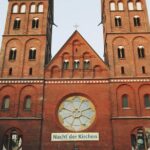
Then the tour changes pace and tone at Mahnmal St. Nikolai. The steeple dates to 1874, and it serves as a memorial for the victims of WWII. Underneath the ruin is an exhibition about Operation Gomorrha.
This is important for two reasons. First, it gives context to what “regeneration” really means in a city like Hamburg. Second, it helps you avoid the common mistake of treating WWII-era damage as background noise. The guide’s approach is typically direct: you’re shown a landmark, then given the reason that landmark still stands.
If you’re traveling with teens or you want history that doesn’t feel like a lecture, this stop often works well because it’s anchored in a real place. The ruined structure makes the story concrete, and the exhibition theme gives you a clearer handle on what happened during the operation.
A consideration: this is a somber segment in an otherwise scenic walking route. If you’re the type who prefers to keep the day light, you might want to pace yourself here—take your time, then move on when you’re ready.
HafenCity’s 157-Hectare Makeover: Urban Renewal You Can See
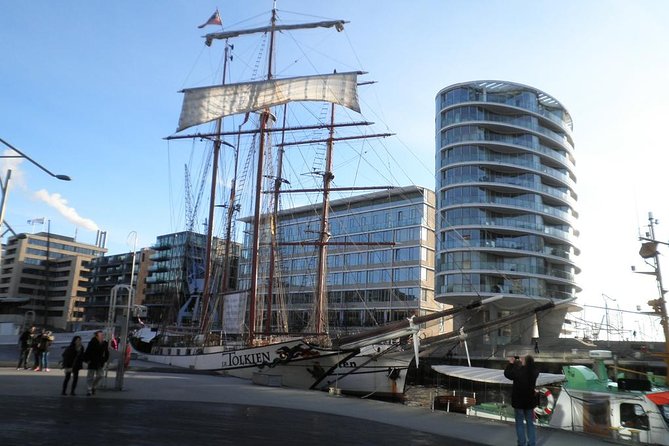
Now you’re into HafenCity, described as Europe’s largest city planning project. The tour highlights the scale: 157 hectares of former industrial area transformed into a completely new district. It’s the kind of number that sounds abstract until you’re walking through it with someone explaining the “before” and “after.”
The value of this stop is that it doesn’t just say Hamburg is modern now. It explains the transformation as a story—industrial land changed into housing, services, and an urban waterfront experience. You start noticing modern design details while still remembering what used to be here: a working port zone with industrial functions.
One thing I like about tours that handle HafenCity well is they prevent “wow, pretty architecture” from becoming the whole story. Instead, you understand it as decision-making over time: what stayed, what changed, and why the city committed to redeveloping such a huge stretch.
If you’re a city-planning fan, this section is a highlight. If you’re not, it still works because it teaches you how to read the waterfront—what you’re seeing is not random, and it’s not just for aesthetics.
More of the Elbphilharmonie and its Plaza





Speicherstadt: Red Brick Warehouses On Wooden Piles
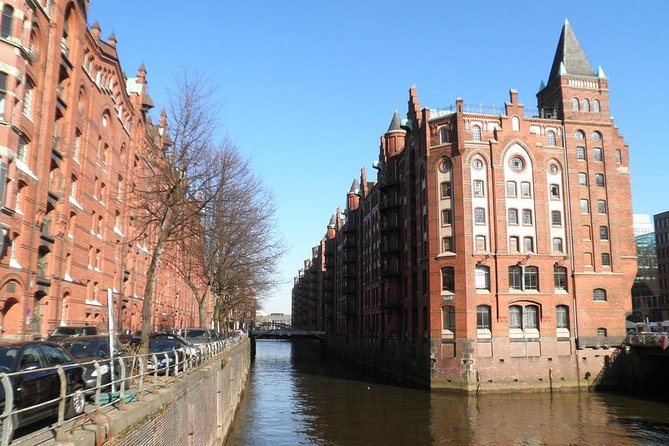
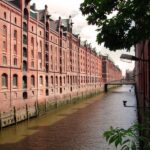
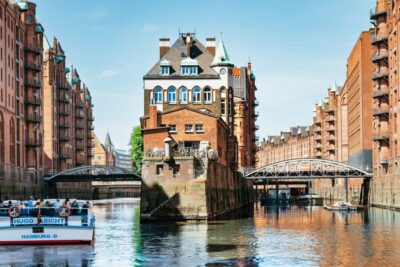
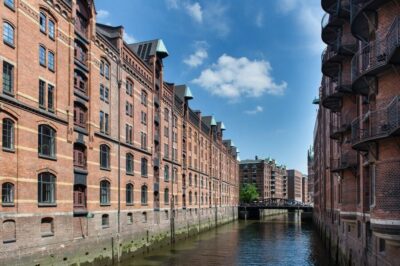
Next is Speicherstadt, and this is where the tour earns a lot of praise on pure “wow” factor. Speicherstadt is described as the largest red brick warehouse district built on wooden piles in the world. It was inaugurated in 1888 and restored after WWII. It’s also part of UNESCO World Heritage.
What makes this stop especially worthwhile is the way the guide connects the design to the environment and function. Wooden piles, warehouses, and red brick don’t just look historic—they tell you how Hamburg stored goods safely and efficiently. Once you know the purpose, the architecture becomes a set of solutions, not just a backdrop.
This is also a great place for quick photo moments. Even when the group is moving, you can usually step in for a short look at the warehouse rows and the canal-like feel of the area. And because it’s UNESCO-listed, it tends to feel meaningful rather than merely “old.”
Practical note: the tour gives you about 15 minutes here. That’s enough time to see the core atmosphere, but not long enough to do deep museum-style exploration. If you want to go further, you’ll know exactly where to return after the tour ends.
Elbphilharmonie Finale: The 2016 Concert Hall Story And Port Views
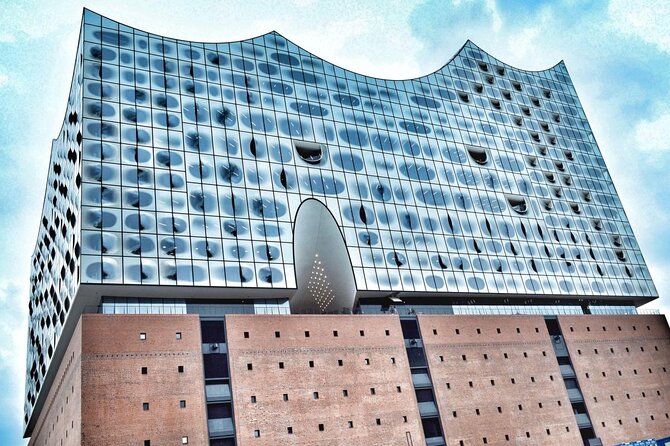
The tour ends in front of the Elbphilharmonie at HamburgPlatz d. Deutschen Einheit (Deutsch Einheit 4). The key details you’ll hear include that it’s a concert hall inaugurated in 2016, with the first concert on 11 January 2017. The story includes why the acoustics are considered nearly perfect, and it ties back to the idea that Hamburg keeps reinventing itself—culturally as well as commercially.
The best practical payoff is that you’ll have the chance to visit the platform and enjoy views over the port. That matters because the Elbphilharmonie can feel abstract from the outside until you see the harbor stretch behind it. On a clear day, port views can put a final stamp on the whole walk, because you finally see the “stage” that earlier trade stories were all about.
Also, ending at a major landmark is a travel gift. You don’t have to figure out what’s next. You can either continue exploring the area on your own or use the building as a simple navigation anchor.
Price And Time: What You Get For $30.04
At about $30.04 per person for roughly 2 hours, this is priced like a guided value walk rather than an all-day sightseeing plan. The included value is the professional guide plus the organized route linking major districts: town center, WWII memorial ground, HafenCity, Speicherstadt, and the Elbphilharmonie.
Transportation isn’t included, so plan to either start near public transit or be ready to handle your own getting-around on either side of the walk. That said, the meeting point at Rathausmarkt is easy enough to reach for most visitors, and the walking route itself does the heavy lifting.
If you’re thinking about booking, also consider timing behavior. The experience is commonly booked well ahead—around three months on average. That’s often a sign that this route is popular and group slots can disappear.
Should You Book This Hamburg Walking Tour?
Book it if you want a tight, high-impact introduction to Hamburg’s waterfront without spending your day sorting out what goes where. I especially think it’s a good fit if you like city history that’s tied to real places—merchant power at the Town Hall, port evolution near Trostbrücke, remembrance at St. Nikolai, then modern waterfront planning in HafenCity, ending with the Elbphilharmonie platform view.
Skip it (or at least temper expectations) if you’re hoping for long stops, lots of inside access, or a slow-paced day with lots of free time. This is built for movement and explanation, not wandering.
One more point: the reviews praise guides who make the route fun and easy to follow. If you end up with someone like Jutta—noted for being funny, knowledgeable in style, and great company—you’ll likely get that rare combo of humor and clarity that turns architecture into understanding.
If your plan is a short Hamburg visit and you want your sightseeing to connect into a single story, this is a very sensible booking.
FAQ
What is the duration of this Hamburg walking tour?
It’s about 2 hours (approx.).
Where does the tour start and where does it end?
It starts at Rathausmarkt, 20095 Hamburg and ends at Elbphilharmonie HamburgPlatz d. Deutschen Einheit 4, 20457 Hamburg.
Is the tour offered in English?
Yes, it’s offered in English.
Do I need to pay for entry tickets at the stops?
The stops listed are shown as admission ticket free for each of those highlights.
What kind of ticket do I receive?
You get a mobile ticket.
Does the tour run in bad weather?
Yes, it operates in all weather conditions, so dress appropriately.
What’s the group size?
The experience has a maximum of 15 travelers per tour, with a minimum of 8 required for the booking.
Can I cancel if plans change?
Yes, you can cancel for a full refund if you cancel up to 24 hours in advance of the start time.
Hamburg Old Town, On Foot



More Elbphilharmonie Plaza Visits
More of Speicherstadt & HafenCity



Just In: The Newest Hamburg Reviews









Speicherstadt & HafenCity, compared.
 ★ 4.61.5-Hour Harbor and Speicherstadt Day CruiseFrom $4014,200 reviews
 ★ 4.41-Hour Harbor Sightseeing Cruise with HafenCityFrom $303,067 reviews
 ★ 4.7Elbphilharmonie Plaza and HafenCity Food TourFrom $691,711 reviews
 ★ 4.5Eerie Speicherstadt TourFrom $291,394 reviews
 ★ 4.7Speicherstadt and Hafencity Guided TourFrom $161,344 reviews
 ★ 4.8Speicherstadt and HafenCity 2-Hour TourFrom $2821,063 reviews
 ★ 4.7Treasure Hunt Game through HafenCityFrom $29364 reviews
 ★ 4.6Speicherstadt Walking Tour with Coffee TastingFrom $50360 reviews
Browse the lists this tour appears in