

Reviewed · HAMBURG MUSEUMS & LANDMARK TICKETS
Hamburg: Museum of Illusions Ticket
Your eyes will argue with you here.
This family-friendly museum turns everyday perception into a hands-on game, with 50+ interactive exhibits built to show how easily your brain can be tricked. I especially like the way it mixes big visual effects (think floating heads and perspective tricks) with fun “try it yourself” challenges, and it’s made for memorable photo moments. The one real drawback to plan for is that the layout can feel tight, so kids may need closer supervision to avoid running into exhibits.
You’re in for a full set of illusion zones designed around physics that feels wrong on purpose, including a chance to defy gravity and try activities that mess with size and space. You’ll also find a “Brain Gym” area with puzzle-style dilemma games that push you to think while you play. Add in skip-the-ticket-line entry and wheelchair access, and it’s a low-stress plan when you want something different in Hamburg.
In This Review
- Key Highlights You’ll Actually Notice
- Why the Museum of Illusions Hamburg Works for a One-Day Visit
- Skip the Ticket Line and Plan Your Time Window
- Walking Through 50+ Exhibits That Challenge Your Brain
- What to watch for at each exhibit type
- Brain Gym: Dilemma Games and Teamwork Time
- A simple way to use Brain Gym well
- Camera-First Photo Moments (and What to Bring)
- What’s not allowed matters more than you think
- Family-Friendly Fun With a Real-World Layout Check
- A practical tip for enjoying it more
- Pricing, Discounts, and Value for Different Visitors
- Who Should Book This (and Who Might Feel Frustrated)
- Should You Book the Museum of Illusions Hamburg?
- FAQ
- How long is the Museum of Illusions Hamburg ticket valid?
- Do I choose a starting time?
- Is there a skip-the-line option?
- What should I bring?
- Are pets allowed?
- Are food and drinks allowed inside?
- Is it wheelchair accessible, and is there a disability discount?
- Can I cancel my ticket?
Key Highlights You’ll Actually Notice

- 50+ interactive exhibits built for hands-on perception tests, not just watching
- Defy gravity style challenges that make the impossible feel doable
- Brain Gym dilemma games that mix teamwork with problem-solving
- Photo-friendly illusions where you can create your own visual effect
- Family-friendly energy with enough variety to keep different ages engaged
Why the Museum of Illusions Hamburg Works for a One-Day Visit
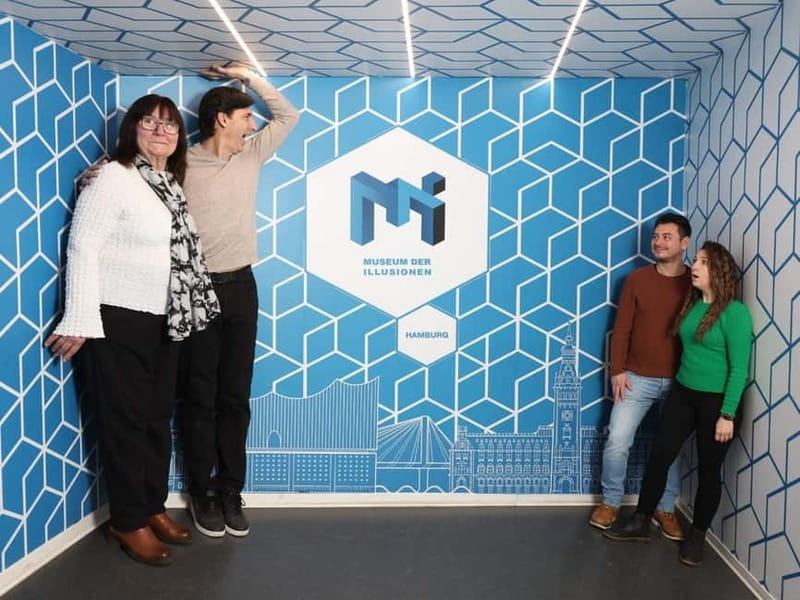
The Museum of Illusions Hamburg is designed for one goal: make you question what you think you’re seeing. With 50+ exhibits, you get constant variety, so you’re not stuck watching the same kind of illusion over and over. The ticket gives you a full day to explore, so you can go at the pace of your group—fast if you’re eager, slower if you want to repeat the ones that really get you.
At about $17 per person, the value comes from the format. This isn’t a passive museum where you read plaques for an hour and move on. You try things. You walk into illusions. You see how your brain fills in missing information. That kind of “learning by doing” tends to feel worth it because you’re actively participating, not just consuming content.
It also helps that it’s clearly built for groups with mixed attention spans. Families, couples, and solo visitors can all find something that fits their style: quick visual stuns for the kids, brain puzzles for the thinkers, and photo setups for anyone who wants proof that the weird stuff really happened.
If you’re the type who loves optical tricks and hands-on experiments, this is a straightforward win. If you prefer quiet galleries and long reading, you might find it a bit more playful than scholarly—by design.
More to see indoors, tickets sorted



Skip the Ticket Line and Plan Your Time Window
Your ticket is valid for 1 day, and you’ll want to check availability for starting times. That matters because it helps you decide when you’ll be in the building—morning for a calmer feel, later in the day if your schedule is tighter. Because the museum includes skip-the-ticket line entry, you spend less time stuck at the entrance and more time doing the fun part.
Practically, I recommend you aim for an arrival time that matches your energy level. If you’re visiting with kids, earlier often means fewer “waiting” moments. If you’re visiting solo or as a couple, later can still work well as long as you’re ready to move and try things without overthinking.
Also, know the basic rules before you go. Pets aren’t allowed, and food and drinks aren’t allowed inside. Bring a camera, since you’ll want to capture the visual effects—some exhibits are best when you can recreate your angle, then take the shot.
One more helpful point: you can cancel up to 24 hours in advance for a full refund, and there’s a reserve-and-pay-later option. That’s useful if you’re building a flexible Hamburg day and want options.
Walking Through 50+ Exhibits That Challenge Your Brain

This museum is built around a simple idea: your senses are helpful, but they’re not perfect. You’ll encounter exhibits designed to make your brain misread reality—especially around perspective, space, and balance. The highlights give you a clear preview of what you’ll keep seeing:
- Floating heads and other visual setups that look normal for a second, then suddenly don’t
- Infinite rooms that mess with depth and distance
- Size-change style illusions that make your body look wrong in the frame
- Ceiling and gravity-defying moments where you try, not just watch
- Physics-like puzzles where it feels like the rules are being rewritten
As you move from station to station, the experience becomes a running experiment. You’ll likely find yourself thinking in real time: Why did that look different a moment ago? What did my brain decide was true before the illusion proved otherwise?
That’s the core value of this place. You’re not just entertained—you’re learning how human perception works in a way that sticks because you lived it with your own eyes. It also makes the experience easy to repeat mentally later. Even after you leave, you’ll notice the same tricks in everyday settings: angles, reflections, and how much context your brain needs to stay confident.
What to watch for at each exhibit type
You might not know exactly what each station looks like before you arrive, but you can still approach them strategically:
- Perspective illusions: slow down and change your position. Small movements matter.
- Balance and gravity moments: follow the station guidance and take a second to reset if you feel unsure.
- Room-based effects: give yourself time. These work best when you can stand back, then step into the “wrong” space the exhibit creates.
- Size and scale tricks: try different distances. Many of these illusions depend on the camera’s viewpoint as much as your body position.
The museum’s wording hints at many different theme types, and that’s what makes it feel fun rather than repetitive.
Brain Gym: Dilemma Games and Teamwork Time
If the illusion rooms are about what your eyes tell you, the Brain Gym is about what your brain does when it needs to make decisions. This area is described as a place for tricky puzzles and “dilemma games” where you can solve problems together and get your brain cells working.
That’s a big deal for family visits. Many kids can lose patience in museums that are heavy on reading. Brain Gym gives you a payoff that’s active and social: you can talk through the problem, test ideas, and then see if the setup reacts the way you expect.
For adults, this section often feels like the most “mind engaged” part of the day, because it turns the curiosity you build in the illusion rooms into a thinking challenge. You’re still playing, but you’re playing with rules, logic, and perception-based prompts.
More tickets and skip-the-line entries






A simple way to use Brain Gym well
Don’t rush it. If you’re with others, split up attention naturally: one person handles the hands-on steps while someone else talks through what you think should happen. Then switch roles. That makes the “dilemma” part actually work, because you’re comparing interpretations instead of just guessing silently.
Also, if you’re visiting with a group that has one person who likes puzzles and another who likes photos, Brain Gym is the compromise zone. It gives both types of visitors something to focus on.
Camera-First Photo Moments (and What to Bring)
Bring a camera. The museum encourages visitors to capture their adventures with unique photos, and that’s consistent with the kinds of illusions featured: angles, perspective shifts, and scale tricks all reward a quick snapshot.
You can treat photos as part of the activity rather than an afterthought. Take one wide shot to understand the setup, then take a second shot once you’ve figured out the right position. A lot of illusion stations depend on where you stand, where your head is, and how the camera frames the effect.
If you’re visiting as a couple or solo, you can still do this without slowing everyone down. Pick two or three “must capture” exhibits and spend your time there. For everything else, enjoy the moment with no pressure to document it.
What’s not allowed matters more than you think
Since pets and food/drinks aren’t allowed, plan for a light day. If you’re coming from a full meal schedule, give yourself time to eat elsewhere before you arrive. Inside, your focus stays on the exhibits, not on managing snacks or carrying extra items around.
Family-Friendly Fun With a Real-World Layout Check

This museum is family-friendly, but the experience can vary based on crowd flow and group behavior. One key consideration: the space can feel small, and exhibits can be close enough that kids running around can cause problems.
Here’s how to set your visit up for less stress:
- Keep an eye on where kids are walking, especially near photo and illusion stations
- Expect people to stop suddenly while trying to get the right angle
- If someone in your group gets overwhelmed, rotate roles: one person tries the exhibit while another takes photos or reads the station cues
Also, the museum is built for trying. That means some exhibits require you to physically move and reposition. If your group has mobility limits, wheelchair accessibility is available, but the best approach is to take it station-by-station and avoid rushing through tightly packed areas.
A practical tip for enjoying it more
Use a simple rhythm: try, react, then repeat if needed. For many illusions, the first attempt surprises you, but the second attempt makes you understand the trick behind it. That turns the experience from random weirdness into a satisfying little experiment.
Pricing, Discounts, and Value for Different Visitors
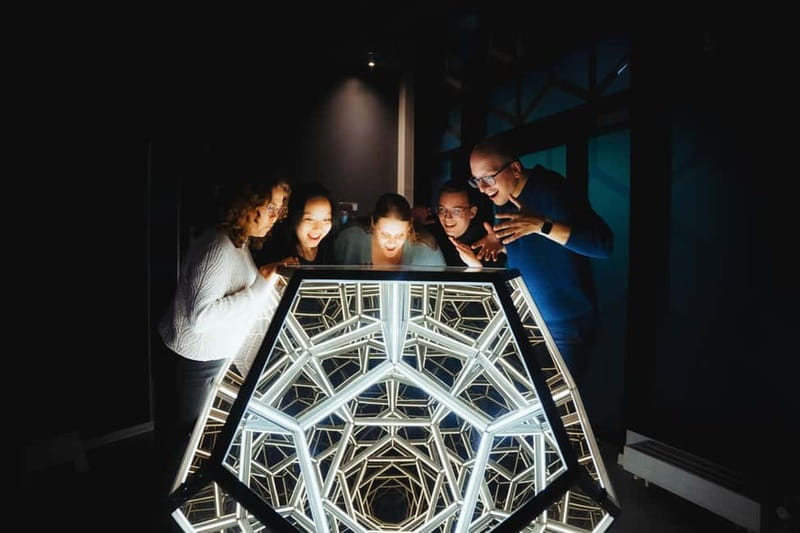
The standard ticket price is about $17 per person. In value terms, that price makes sense when you use the day ticket to hit enough exhibits and spend time on the hands-on stations. If you only do a quick walk-through, you’ll still have fun, but you’ll feel the cost more.
There are also meaningful discounts:
- People with disabilities pay a reduced price of €13 per person
- For visitors with a severe disability (B or H), one accompanying person is free
This is the kind of museum where the companion role can really matter, because you’re moving through stations that are more interactive than traditional exhibits.
Also worth noting: there’s a 4.2 average rating from 122 reviews. That doesn’t guarantee you’ll love it, but it does suggest most people leave thinking it was worth the time—especially for families and first-timers to illusion museums.
Who Should Book This (and Who Might Feel Frustrated)
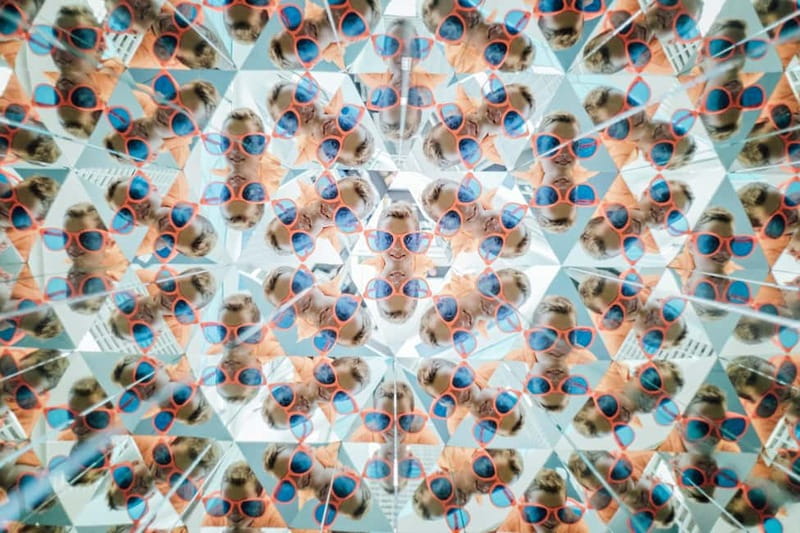
This is a good match if you want:
- Hands-on, interactive fun instead of a quiet museum day
- Optical illusions, perspective tricks, and “wait, how did that happen” moments
- A mix of physical challenges (including gravity-related ones) and brain puzzles
It can be less ideal if:
- You dislike environments where people move around a lot
- Your group needs a super spacious, slow-paced museum with lots of room to spread out
- You’re not interested in photo-style, angle-dependent exhibits
If you’re traveling with kids, the family-friendly design is a strong selling point, and Brain Gym can be a reliable way to keep attention. If you’re a solo traveler who likes visual experiments, you’ll likely enjoy the change of pace between illusion rooms and puzzle time.
Should You Book the Museum of Illusions Hamburg?

I think you should book if your ideal Hamburg day includes playful learning, lots of hands-on stations, and photo-friendly surprises. With a day-valid ticket, skip-the-line entry, a camera-friendly setup, and a clear mix of perception tricks plus Brain Gym puzzles, it’s a solid choice when you want something memorable without a big planning headache.
Don’t book if you need lots of space, quiet corners, or a museum format focused on reading and slow pacing. Also, if your group includes young kids, go in ready to manage walking paths and keep them from charging into exhibits.
If you’re on the fence, here’s the tie-breaker I’d use: if you’d enjoy even one gravity-defying or infinite-room style challenge, the rest of the museum is likely to keep you busy for the whole day.
FAQ
How long is the Museum of Illusions Hamburg ticket valid?
Your ticket is valid for 1 day. You’ll want to check availability to see starting times.
Do I choose a starting time?
Yes, starting times are tied to availability, so you’ll want to check what times are offered when you book.
Is there a skip-the-line option?
Yes. Your ticket includes skip-the-ticket line entry.
What should I bring?
Bring a camera so you can capture the museum’s unique photo moments.
Are pets allowed?
No, pets are not allowed.
Are food and drinks allowed inside?
No, food and drinks are not allowed.
Is it wheelchair accessible, and is there a disability discount?
Yes, the museum is wheelchair accessible. People with disabilities pay a reduced price of €13 per person, and one accompanying person is free for visitors with a severe disability (B or H).
Can I cancel my ticket?
Yes, free cancellation is available up to 24 hours in advance for a full refund.
Hamburg Tickets & Entries

More Tour Reviews in Hamburg






More Hamburg Museums & Tickets

Just In: The Newest Hamburg Reviews











Hamburg Museums & Landmark Tickets, compared.
 ★ 4.7Hamburg Dungeon Admission TicketFrom $335,745 reviews
 ★ 4.3Ticket to the Panoptikum WaxworksFrom $112,489 reviews
 ★ 4.0Hard Rock Cafe Skip-the-Line MealFrom $36945 reviews
 ★ 4.7International Maritime Museum Entrance TicketFrom $16547 reviews
 ★ 4.7Entrance to the Museum Ship Cap San DiegoFrom $14467 reviews
 ★ 4.5Hamburg Dungeon Admission TicketFrom $33438 reviews
 ★ 4.9Dialog im Dunkeln (Dialogue in the Dark)From $28392 reviews
 ★ 4.3Hamburger Bahnhof Museum Entrance TicketFrom $16279 reviews
Browse the lists this tour appears in