
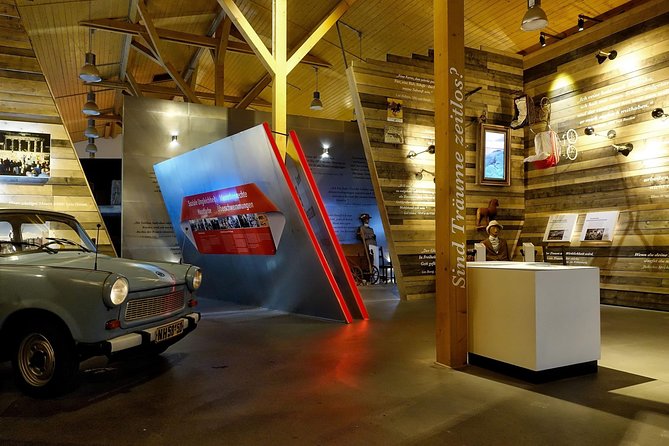
Reviewed · HAMBURG MUSEUMS & LANDMARK TICKETS
Ticket for the Emigration Museum BallinStadt Hamburg
History moves fast at BallinStadt. In Hamburg’s emigration museum, I like the hands-on games and the English audio guide that carries you through four migration eras; one caveat is that the museum takes a wider view of migration, not only departures before 1934. The layout across three houses also makes it easy to dip in and out, but it means you’ll spend time on broader migration themes, even if your main interest is emigration via Hamburg.
What really makes this ticket feel like good value is the mix: you get a story-driven museum route, plus activities that let you try things yourself—genealogy searching included. You’ll also run into key names like Albert Ballin and family-history tools that connect the topic to real people, not just dates. If you’re traveling with kids, there’s even a recurring character moment with the museum rat Jette.
In This Review
- Key highlights to know before you go
- BallinStadt at a Glance: what you’ll cover in 90 minutes
- Three houses, one emigrant journey: how the route works
- The English audio guide and four epochs of migration
- Interactive games and the museum rat Jette for little ones
- Family research center: search your own genealogy on-site
- Albert Ballin and the emigration halls: why the location matters
- Price and value: why $15.62 makes sense
- Who this is best for (and who should think twice)
- Plan your visit: hours, timing, and smart tips
- Should you book BallinStadt Emigration Museum Hamburg?
- FAQ
- How long is the BallinStadt Emigration Museum Hamburg experience?
- What does the ticket include?
- Is the experience available in English?
- What opening hours should I plan for?
- What topics does the museum focus on?
- How many houses are there to visit?
- Are there interactive activities?
- Is the museum suitable for children?
- Are service animals allowed?
Key highlights to know before you go

- Four eras with an English audio guide: You follow migration over four distinct epochs without getting lost in the details.
- Three houses, 2,500 sqm total: The journey is spread out in a way that keeps moving rather than stalling.
- Interactive games for families: Activities help younger visitors stay engaged.
- Family research center for genealogy: You can search your own family history during your visit.
- Hamburg as the central thread (1850–1934): Emigration via Hamburg remains a core focus, especially in House 1 and parts of House 2.
BallinStadt at a Glance: what you’ll cover in 90 minutes

BallinStadt Emigration Museum Hamburg is built around a simple idea: people didn’t leave for one single reason, and the motives change over time. Your visit is about 1 hour 30 minutes on average, which is a comfortable length for a first pass through a museum without turning it into a full-day project.
The museum is focused on emigration via Hamburg from 1850 to 1934, but it also tracks how migration develops across four eras. That broader framing shows up in what you’ll do as well as what you’ll see. You’re not just reading panels—you’re working through sections with an audio guide and interactive elements.
Price matters too. At $15.62 per person, this is positioned as a ticketed museum experience where the ticket includes admission, plus audio and hands-on features. For families and for anyone curious about genealogy, that’s the sweet spot for value.
More to see indoors, tickets sorted



Three houses, one emigrant journey: how the route works
BallinStadt runs through three separate houses, spread over about 2,500 square meters. That matters because each house behaves like its own chapter. You can move steadily through the story without feeling like everything happens in one huge room.
In the first house, you’ll meet the roots of the emigration story connected to Hamburg. The museum also ties in Albert Ballin, the founder associated with the former emigration halls, so the place itself doesn’t feel like a generic museum venue. You’re in a setting built for migration stories, and the content is organized to reflect that.
The overall experience is designed around accompanying people—complete with wishes, dreams, and the practical realities of leaving. You’ll see the emigrant journey as a lived experience rather than just a timeline. One practical benefit of the three-house setup is pacing: if one section is busy or doesn’t click for you, the museum gives you another area to move toward quickly.
The English audio guide and four epochs of migration
This is not a museum where you only rely on your eyes. The experience includes an audio guide that guides you through four distinct eras. That makes the museum easier to follow, especially if you want the big picture without spending time constantly scanning wall text.
The four-epoch approach is also where the museum’s “migration as a whole” perspective shows up. The reasons for migration are presented as timeless: escape from war, hunger, and persecution is paired with the human drive for adventure, curiosity, and a dream of a better life. That framing helps you connect past events with what you’re seeing in the world today.
Here’s the key consideration: if you’re hoping for a museum that focuses only on emigration from Hamburg up to 1934, you may feel the emphasis shifts. The museum still keeps pre-1934 departures central—especially in House 1 and parts of House 2—but you’ll also spend time on migration development beyond that window. If your interests are wide, that’s a plus. If your interests are narrow, plan accordingly.
Interactive games and the museum rat Jette for little ones
One of the best features of BallinStadt is that it’s built to keep people busy. The museum includes interactive games, and it encourages you to search, try, and make connections instead of staying passive. That’s a big deal when you’re visiting with kids or when you just don’t want a museum day full of reading.
There’s also a specific, kid-friendly detail: the museum rat Jette. While you’re not going to treat a museum mascot like a serious academic source, Jette’s presence signals something important—this museum is comfortable meeting younger visitors where they are. That can turn a tough subject into a manageable one for families.
For parents, the practical advantage is simple: interactive stops give you moments where children can move, focus, and participate. That reduces the usual museum friction where kids start getting bored after a short stretch. In my view, that’s one of the reasons this place earns strong family appeal.
Family research center: search your own genealogy on-site
If you like genealogy, this museum gives you a place to use that interest directly. BallinStadt includes a family research center where you can search your own family records during your visit. The idea isn’t just to show how emigration worked; it’s to help you link the topic to people you actually care about.
This can be surprisingly satisfying because it changes your role from visitor to participant. Even if you only find partial leads, the process gives you a clearer sense of what records exist and how migration stories are traced.
It also pairs well with the broader thematic framing. By the time you reach the genealogy-oriented spaces, you’ve already learned the “why and how” of leaving. Then the museum pivots to the “what about my own family?” question—one that stays personal even as the exhibit moves through eras.
More tickets and skip-the-line entries






Albert Ballin and the emigration halls: why the location matters
Albert Ballin is a name you’ll encounter here, and the museum uses him to connect the story to Hamburg’s role in global movement. Ballin is tied to the former emigration halls, so the museum isn’t just explaining a process—it’s anchored in a site that represents that era of travel and departure.
That makes the museum feel less abstract. You’re learning about emigration through Hamburg as a specific historical phenomenon, not only as a general concept. The museum’s structure across eras reinforces that point: motives shift, but departures still reflect a mix of push factors (danger, hardship) and pull factors (opportunity, hope, curiosity).
If you’re a history-minded visitor, this is the kind of context that helps you interpret the exhibits. It gives names and a sense of place, which is often what museum experiences need to turn from information into understanding.
Price and value: why $15.62 makes sense
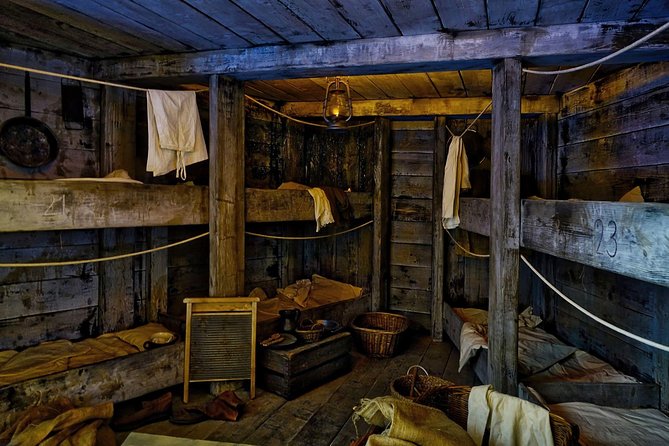
At $15.62 per person for a visit averaging 1 hour 30 minutes, the value comes from the combination of elements. You get admission included, plus an English audio guide and hands-on parts like games and genealogy searching. Many museums charge for the ticket alone and offer minimal interactive value; here, the ticket supports multiple ways to engage.
You also get a clear structure: three houses on a sizable footprint, with four eras threaded through the experience. That structure helps you feel like you used your time well. Even if you move at a moderate pace, you’re still covering several distinct parts of the topic rather than repeating the same message over and over.
The one “value caution” is topic fit. If your dream is a very concentrated deep focus only on emigration via Hamburg up to 1934, the museum’s wider migration angle could feel like time spent elsewhere. But if you’re open to understanding migration as it changes over time, the ticket price feels fair for the range you get.
Who this is best for (and who should think twice)
This museum is a strong match for:
- Families looking for interactive exhibits that keep kids engaged
- Visitors who want an English audio guide to structure a museum visit
- People interested in genealogy and family-history research
- Anyone curious about Hamburg’s role in migration from the mid-1800s into the early 1900s
You might think twice if:
- You want a museum experience focused almost exclusively on emigration from Hamburg up to 1934
- You prefer very traditional, text-heavy museum formats with minimal hands-on elements
- You can only handle English-language audio and materials comfortably
One more practical fit note: the museum says most travelers can participate. That usually makes it a workable option for a mixed group of ages, especially if you’re okay with a walking route across multiple houses.
Plan your visit: hours, timing, and smart tips
BallinStadt is open Tuesday through Sunday from 10:00 AM to 6:00 PM. The hours listed run across a long seasonal range, so you can usually find an option without needing to chase a one-off schedule.
Because the average booking happens about 11 days in advance, it’s smart to reserve ahead rather than assuming you can walk in last minute. Even when tickets are available, planning reduces stress and helps you pick a time that matches your energy level.
You’ll also want to factor in the pace of an audio-guided route. With four eras and activities, 1 hour 30 minutes is a good target, but give yourself a little flexibility if you’re stopping for interactive games or spending extra time in the family research center.
For transit, the museum is near public transportation. That’s helpful in Hamburg, where it’s often easier to hop between neighborhoods by transit than by car.
If you’re the kind of planner who worries about schedule changes: the ticket is non-refundable and cannot be changed for any reason. So lock in your day and time with confidence.
Should you book BallinStadt Emigration Museum Hamburg?
Book it if you want a migration-focused museum in Hamburg that mixes stories with interactive learning. The English audio guide, the four-era structure, and the hands-on genealogy searching make this more than a passive history stop. Add the family-friendly elements (including Jette the museum rat), and it becomes a place where different ages can actually enjoy the same visit.
Skip it or approach with caution if your priority is strictly emigration via Hamburg before 1934. The museum keeps that thread central—especially in House 1 and parts of House 2—but the overall concept also pushes beyond that period to cover migration more broadly.
If you’re on the fence, I’d choose based on your interest in genealogy and family stories. This is the kind of museum where personal curiosity can turn into a genuinely useful experience.
FAQ
How long is the BallinStadt Emigration Museum Hamburg experience?
It lasts about 1 hour 30 minutes on average.
What does the ticket include?
Admission to the museum is included with the ticket.
Is the experience available in English?
Yes, it is offered in English.
What opening hours should I plan for?
BallinStadt is open Tuesday to Sunday from 10:00 AM to 6:00 PM.
What topics does the museum focus on?
It focuses on emigration via Hamburg (1850–1934) and the development of migration across four eras.
How many houses are there to visit?
The experience takes place across three houses.
Are there interactive activities?
Yes. There are interactive games and you can also search your own genealogy in the family research center.
Is the museum suitable for children?
It’s designed to work well for kids, including a section featuring the museum rat Jette and interactive activities.
Are service animals allowed?
Yes, service animals are allowed.
Hamburg Tickets & Entries

More Tour Reviews in Hamburg






More Hamburg Museums & Tickets

Just In: The Newest Hamburg Reviews











Hamburg Museums & Landmark Tickets, compared.
 ★ 4.7Hamburg Dungeon Admission TicketFrom $335,745 reviews
 ★ 4.3Ticket to the Panoptikum WaxworksFrom $112,489 reviews
 ★ 4.0Hard Rock Cafe Skip-the-Line MealFrom $36945 reviews
 ★ 4.7International Maritime Museum Entrance TicketFrom $16547 reviews
 ★ 4.7Entrance to the Museum Ship Cap San DiegoFrom $14467 reviews
 ★ 4.5Hamburg Dungeon Admission TicketFrom $33438 reviews
 ★ 4.9Dialog im Dunkeln (Dialogue in the Dark)From $28392 reviews
 ★ 4.3Hamburger Bahnhof Museum Entrance TicketFrom $16279 reviews
Browse the lists this tour appears in